
March 31, 2026
How Long Is a 10K?
A 10K is 10 kilometers, which equals 6.21 miles or 10,000 meters. In everyday running terms, most people round that to 6.2 miles. It is exactly double the distance of a 5K, which is one reason it is such a popular race distance. It feels long enough to be meaningful, but still approachable for newer runners and experienced runners alike.
That simple answer is usually what people want first. But in reality, when someone asks how long a 10K is, they are often asking two different questions. One is about distance. The other is about how long it takes to finish. Both matter, especially if you are considering your first race or trying to set a realistic goal.
A 10K In Real-World Terms
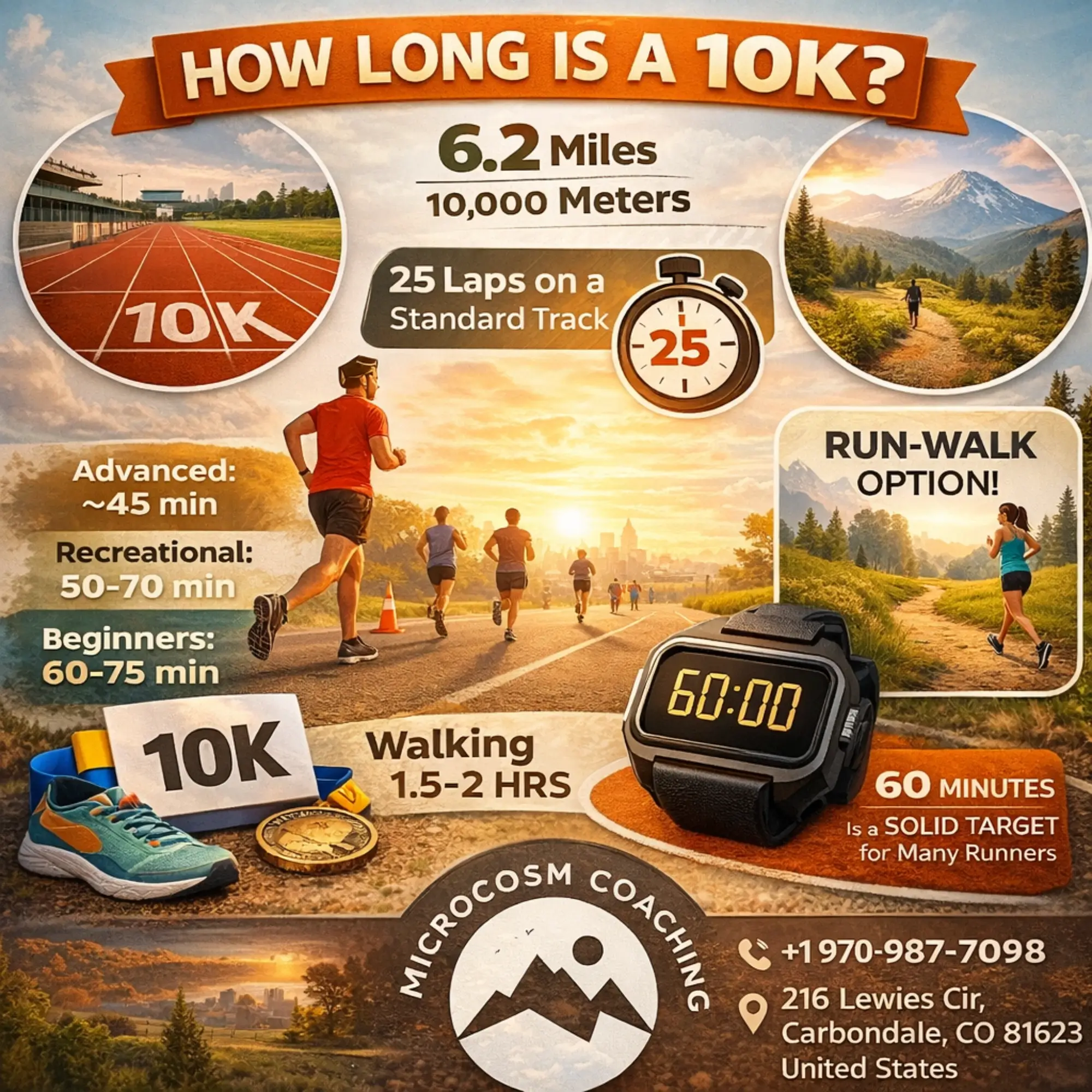
A 10K is 6.2 miles on the road, trail, treadmill, or anywhere else you run. On a standard outdoor track, it is 25 laps. If you are used to a 5K, a 10K is simply twice that distance.
That sounds straightforward, but the jump from 5K to 10K is more than just math. A 5K can sometimes be run on adrenaline and momentum. A 10K asks for a little more control. You need enough endurance to stay steady, enough patience to avoid going out too fast, and enough strength to keep working when the race starts to feel real.
That is why the 10K sits in such a sweet spot. It is long enough to demand smart pacing, but short enough that it does not feel as intimidating as the half marathon or marathon.
How Long Does a 10K Take?
The answer depends on your current fitness, your running background, the course, the weather, and whether you plan to run the whole thing, walk parts of it, or walk the entire distance.
For many recreational runners, a 10K takes somewhere between 50 and 70 minutes. For many beginners, it may take 60 to 75 minutes or more. Faster and more experienced runners may break 50 minutes, while elite runners can finish much faster.
If you are walking, a 10K often takes about 90 minutes to 2 hours. For some walkers, especially on hilly terrain or in warm weather, it may take a little longer.
The biggest thing to remember is that there is no single finish time that defines whether you are doing well. The best 10K time for you depends on your experience, your goals, and where you are in your training.
What Is a Good 10K Time?
This is one of the most common follow-up questions, especially from first-time racers. People often want to know if a 60-minute 10K is good, or whether they should aim for a certain number before signing up.
For many runners, 60 minutes is a very solid 10K. It is a common benchmark because it is both challenging and realistic. Running 6.2 miles in an hour means holding a steady pace without fading too much, which takes some aerobic fitness and pacing discipline.
But “good” is always personal. For one runner, a good 10K might mean breaking 45 minutes. For another, it might mean finishing without walking. For someone coming back from injury, a good 10K might simply mean feeling smooth and strong from start to finish.
That is why a better question is often not “What is a good 10K time?” but “What is a realistic and meaningful 10K goal for me right now?”
What Is A Realistic First 10K Time?
If this is your first 10K, it helps to set a goal that reflects where you are rather than what someone else is doing.
For many first-time runners, a finish between 60 and 75 minutes is completely normal. Some will be faster, especially if they already have a strong 5K background or general endurance base. Others may take longer, especially if they are newer to consistent training or plan to use a run-walk approach.
A realistic first goal is not just about the final number on the clock. It is also about how you get there. Finishing strong, pacing evenly, and feeling like you learned something from the experience often matter more than squeezing out a few extra minutes.
The first 10K is often where runners begin to understand the difference between simply covering distance and actually racing with intention. That is part of what makes the distance so valuable.
Is A 10K Harder Than A 5K?
Yes, and not just because it is longer.
A 10K is exactly twice the distance of a 5K, but it usually feels more than twice as demanding if you do not pace it well. In a 5K, you can sometimes get away with starting too hard and hanging on. In a 10K, that mistake shows up more clearly. The distance asks for patience early and resilience later.
This is one reason many runners love the 10K. It rewards fitness, but it also rewards judgment. You have to settle into rhythm, stay controlled, and manage effort over a longer stretch of time.
For beginners, that can feel intimidating at first. But it is also why the 10K can be such a confidence-building milestone. Once you can run 6.2 miles with purpose, many other goals start to feel more possible.
How Long Does It Take To Walk A 10K?
Yes, you can absolutely walk a 10K.
Many walkers finish a 10K in about 90 minutes to 2 hours. That means walking a 10K in 2 hours is completely realistic. Depending on your pace, it may even be comfortable and enjoyable, especially on a flat course.
Some people also complete a 10K using a run-walk strategy. That can be a great option if you are building endurance, returning after time away from running, or simply want a more manageable first race experience.
There is sometimes unnecessary pressure in running culture to make everything about speed. But a 10K does not only count if you run every step. Covering the distance in a way that matches your current fitness and keeps the experience positive is still a meaningful accomplishment.
10K Pace And Finish Time
One of the easiest ways to understand a 10K is to connect finish time with pace.
If you run a 10K in 50 minutes, you are running about 8:03 per mile. If you run it in 55 minutes, that is about 8:51 per mile. A 60-minute 10K is about 9:39 per mile. A 70-minute 10K is about 11:16 per mile.
This matters because pacing is what often determines whether your 10K feels controlled or chaotic. Many runners start the race based on excitement instead of fitness. Then the final third becomes much harder than it needs to be.
A smart 10K usually feels comfortably hard early, steady through the middle, and focused in the final mile or two. You should not feel desperate in the first half. If you do, you likely started too fast.
Why The 10K Is Such A Good Distance
The 10K is one of the best race distances for building confidence because it teaches so much without demanding the same recovery or training load as longer races.
It is approachable for newer runners, but still plenty challenging for advanced runners. It can be raced aggressively or used as a stepping stone toward half marathon and marathon goals. It also gives you a clearer picture of your aerobic fitness than shorter efforts often do.
For many runners, the 10K becomes the point where training starts to feel more purposeful. Easy runs matter more. Long runs start to have a bigger role. Speed work begins to connect with endurance instead of standing alone.
That balance is part of what makes the distance so rewarding.
How Long Should You Train For A 10K?
The right answer depends on where you are starting.
If you already run consistently a few times per week, you may be ready to train specifically for a 10K in around 6 to 8 weeks. If you are newer to running, a longer build of 8 to 12 weeks may make more sense.
What matters most is not forcing a timeline. A rushed build often leads to inconsistent training, poor pacing, and an experience that feels harder than it should. A steadier build gives your body time to adapt and gives you a better chance of enjoying the process.
That is especially true with the 10K, because the distance rewards aerobic fitness and rhythm. A little patience in training goes a long way on race day.
What Makes A 10K Feel Easier
Most runners assume the answer is simply running more. Volume matters, but it is not the whole story.
A 10K feels easier when your easy runs are truly easy, when your training includes some faster work, and when you learn how to pace yourself instead of fighting the clock too early. It also feels easier when your expectations match your current fitness.
This is where good coaching can make a real difference. At Microcosm Coaching, the focus is not just on chasing a number. The approach is human-first and built around sustainable progress, smart training, and accountability that fits real life. Whether someone is training for a first 10K, a marathon, a trail race, or a cycling goal, the process is designed around the person, not just the event. That kind of support helps runners build fitness over time and show up on race day with more confidence and clarity.
Is A 10K A Good First Race?
For many people, yes.
A 10K can be a great first race if you already have some running consistency and want a goal that feels substantial without being overwhelming. It gives you enough distance to practice pacing and endurance, but it is still short enough that training can fit into a busy life.
For others, a 5K may be the better first step. There is nothing wrong with that. The best first race is the one that helps you build momentum, not the one that makes you feel buried before you begin.
Still, if the idea of running 6.2 miles excites you, the 10K can be a perfect challenge. It is long enough to stretch you and short enough to keep the process manageable.
Final Answer
So, how long is a 10K?
A 10K is 10 kilometers, which equals 6.21 miles or about 6.2 miles. On a standard track, it is 25 laps. Many runners finish a 10K in about 50 to 70 minutes, while many beginners may take 60 to 75 minutes or more. Walkers often complete it in about 90 minutes to 2 hours.
But the most useful answer is this: a 10K is long enough to teach you something. It asks for patience, fitness, and smart pacing. It is one of the most approachable race distances for runners who want a real challenge without stepping all the way into half marathon or marathon territory.
Whether your goal is to run it fast, finish your first one, or simply understand what the distance actually means, the 10K is one of the best places to grow as a runner.
FAQs
What Is 10K In Miles?
A 10K is 6.21 miles, usually rounded to 6.2 miles.
How Long Is A 10K In Minutes?
That depends on your pace. Many recreational runners finish in 50 to 70 minutes, while beginners may take 60 to 75 minutes or more.
Is 10K In 60 Minutes Good?
Yes. For many runners, a 60-minute 10K is a strong and realistic benchmark.
Can You Walk A 10K In 2 Hours?
Yes. Many walkers complete a 10K in around 90 minutes to 2 hours.
How Many Laps Is A 10K On A Track?
A 10K is 25 laps on a standard 400-meter outdoor track.
Is A 10K Harder Than A 5K?
Yes. It is double the distance, so it requires more endurance, pacing, and patience.