
June 30, 2026
Marathon Coach Vs Training Plan: Which Is Best?
Training for a marathon asks a lot from your body, your schedule, and your motivation. Before the first long run, many runners face the same question: should I hire a marathon coach or follow a marathon training plan?
Both options can work. A training plan gives you structure. A coach gives you structure, feedback, accountability, and real-time adjustments when life or training does not go exactly as expected.
The best choice depends on your goals, your experience, your injury history, your budget, and how much support you want during the months leading into race day.
Marathon Coach Vs Training Plan: The Main Difference
A marathon training plan is usually written before you begin. It tells you what to run each week, when to rest, when to build mileage, and when to taper. It can be free, affordable, and simple to follow.
A marathon coach does more than hand you a schedule. A coach watches how you respond to training and adjusts the plan based on your recovery, life stress, fitness, race goals, and feedback.
That difference matters because marathon training rarely happens in a perfect bubble. Work gets busy. Kids get sick. Sleep suffers. A long run goes poorly. A small ache shows up three weeks before race day. A static plan cannot understand those things, but a coach can.
What Is A Marathon Training Plan?
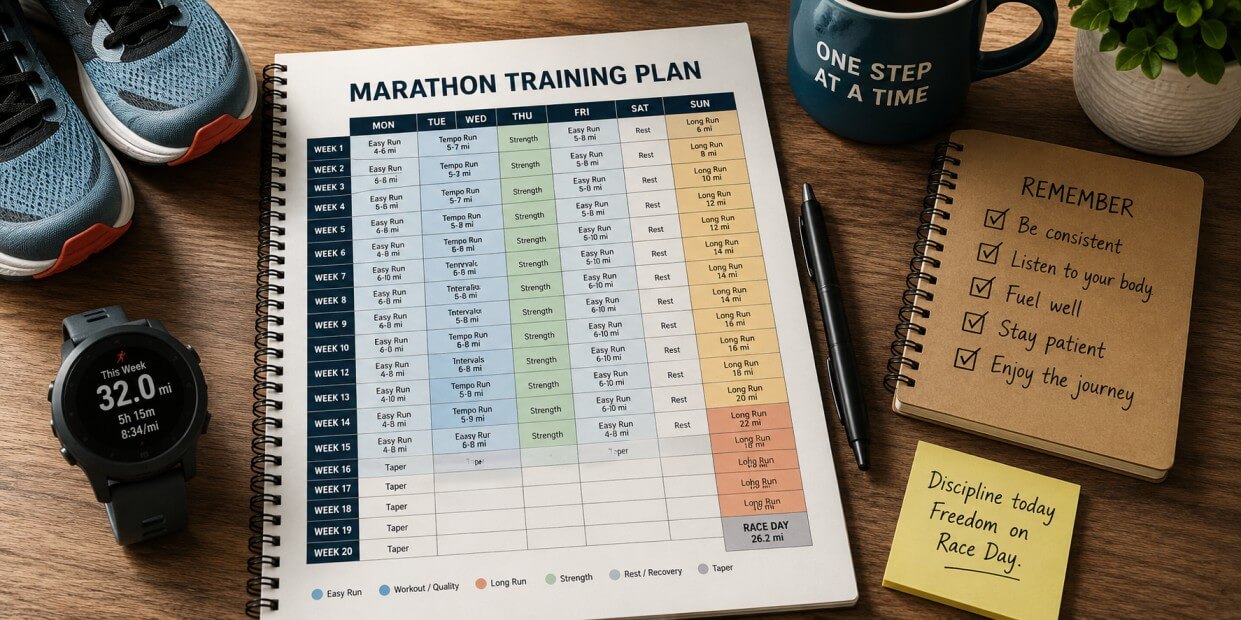
A marathon training plan is a pre-built schedule that guides you from your current fitness toward race day. Most plans include easy runs, long runs, workouts, rest days, cutback weeks, and a taper.
Many runners use free online plans, app-based plans, Garmin marathon plans, or plans from books. These can be useful, especially for runners who want a clear weekly structure without a bigger financial commitment.
Pros Of A Marathon Training Plan
A marathon training plan is affordable and easy to access. For many runners, that is the biggest advantage.
You can download a plan, start immediately, and know what each week is supposed to look like. If you are self-motivated and your goal is simply to finish, a solid plan may be enough.
Training plans also help beginners understand the basic rhythm of marathon preparation. You see how mileage builds, how long runs progress, and how the taper gives your body time to absorb the work.
Cons Of A Marathon Training Plan
The problem is that most plans are written for an average runner, not for your actual life. They do not know if you are coming back from injury, sleeping poorly, traveling for work, or carrying more stress than usual.
A plan may say 18 miles on Saturday, but your body may be saying something else. If you miss a key workout, many plans do not tell you whether to skip it, move it, shorten it, or adjust the rest of the week.
That is where runners often get stuck. They either force the plan and risk overtraining, or they lose confidence because they do not know how to adapt.
What Is A Marathon Coach?
A marathon coach is a guide who helps you train with more context. Instead of following a fixed schedule, you work with someone who understands your goals, schedule, training history, strengths, limitations, and life demands.
A coach builds or adjusts training based on how you are actually responding. That may include changing workouts, modifying mileage, adding recovery, adjusting race goals, practicing fueling, or helping you manage nerves before race day.
Good coaching is not just about harder workouts. It is about better decisions.
Pros Of A Marathon Coach
A marathon coach gives you personalization. Your training is built around your life, not an ideal version of your life.
That means your coach can adjust training when you are tired, sick, busy, traveling, or not recovering well. They can also help you decide when to push, when to rest, and when to stay patient.
A coach also gives you accountability. Not the harsh, guilt-driven kind, but the steady support that helps you keep showing up. For many runners, knowing someone is reviewing their training creates more consistency and reflection.
The right coach can also help with pacing, fueling, race strategy, taper confidence, mindset, and post-race recovery. Those details often matter just as much as the miles.
Cons Of A Marathon Coach
The biggest downside is cost. Hiring a marathon coach is more expensive than downloading a free plan or using a low-cost app.
Coaching also requires communication. You get the most value when you check in honestly, share how workouts felt, and stay open to feedback. If you only want a schedule and do not want interaction, a coach may not be the right fit.
Fit matters too. Every coach has a style, and every runner has different needs. The best coaching relationship feels supportive, clear, and collaborative.
When A Training Plan Is Enough
A training plan may be enough if your goal is straightforward and your life is fairly predictable. Many runners finish marathons with a good plan and disciplined execution.
A plan can be a strong fit if you are healthy, self-motivated, and comfortable adjusting when small issues come up. It may also be the right option if budget is your main concern.
A marathon training plan may work well if:
- Your goal is to finish, not chase a specific time
- You have no major injury history
- Your schedule is predictable
- You can stay motivated without outside support
- You understand how to adjust training when needed
- You want the lowest-cost option
The key is honesty. If you tend to overdo workouts, ignore pain, panic after missed runs, or struggle with consistency, a plan may not give you enough support.
When A Marathon Coach Is Worth It

A marathon coach is often worth it when your goals are more specific, your schedule is complicated, or your body needs more careful management.
If you are chasing a personal best, a Boston qualifying time, or a strong performance after previous setbacks, coaching can help you train with more precision. It can also help you avoid the common marathon trap of doing too much too soon.
A coach may be the better fit if:
- You want a PR or Boston Qualifier
- You have been injured before
- You struggle with consistency
- You overtrain easily
- You need accountability
- You want pacing and fueling guidance
- You feel unsure about tapering
- Your work, family, or life stress changes week to week
Marathon training is not only a physical process. It is emotional too. A coach can help you stay calm when workouts feel hard, stay patient when progress feels slow, and stay connected to the reason you started.
Garmin Coach, Adaptive Apps, And The Middle Ground
Many runners now compare a human coach with app-based tools like Garmin Coach, Runna, or other adaptive marathon training platforms. These options can be helpful because they offer more structure than a static PDF plan.
Adaptive plans may adjust based on training data, pace, completion, or watch feedback. That can be useful for runners who want guidance but are not ready for full coaching.
Still, an app does not fully understand your life. It may see pace and heart rate, but it does not truly understand job stress, poor sleep, motivation, fear, family demands, or the subtle difference between normal soreness and a warning sign.
That does not mean apps are bad. It means they are tools. A human coach brings judgment, context, and relationship to the process.
The Microcosm Coaching Perspective: Humans, Not Just Athletes
Microcosm Coaching is built around the idea that runners are humans first. The team offers virtual 1:1 coaching for road runners, marathoners, trail and ultra runners, skimo athletes, and cyclists, with a focus on mastery, joy, independence, and long-term growth. Instead of treating training as a rigid test of discipline, Microcosm coaches consider the whole athlete: schedule, stress, recovery, motivation, goals, and the real life happening around every workout.
That human-first approach is especially valuable in marathon training. A strong marathon build is not just about following mileage. It is about knowing how to absorb the work, recover well, adjust intelligently, and arrive at the start line with confidence.
Runners who want personalized support can explore marathon coaching built around real life, especially if they are looking for guidance beyond a generic schedule.
Marathon Coach Vs Training Plan Cost: What Are You Really Paying For?
A training plan is usually cheaper. Some are free. Others cost a small one-time fee or come through an app subscription.
A marathon coach costs more because you are not just paying for workouts. You are paying for feedback, interpretation, adjustment, communication, experience, and support.
That distinction matters. The workouts are only one part of training. The bigger value comes when something changes.
A coach helps answer questions like:
- Should I run today or rest?
- Was that workout too hard?
- How should I adjust after missing a long run?
- Is this soreness normal?
- What pace should I target on race day?
- How should I fuel long runs?
- Am I doing enough, or too much?
For runners comparing options, running coach cost often comes down to the level of support they want and how much uncertainty they want to manage alone.
First-Time Marathoners: Coach Or Plan?
Many first-time marathoners can finish successfully with a well-designed training plan. If your main goal is to complete the distance, stay consistent, and enjoy the experience, a plan may give you enough structure.
But first-time marathoners also face a lot of unknowns. How long should the long run be? What should marathon pace feel like? How do you fuel without stomach issues? What happens if you miss two weeks? How tired is too tired?
A coach can make the first marathon feel less overwhelming. They can help you build gradually, understand effort, practice fueling, and avoid measuring success by mileage alone.
If you are new to the distance, first marathon training should feel sustainable, not like a survival test.
Experienced Runners: Coach Or Plan?
Experienced runners often know how to train, but that does not mean they always know how to improve. Many runners reach a point where repeating the same plan produces the same result.
A coach can help identify what is missing. Maybe the runner needs more easy volume, better recovery, smarter workouts, strength work, fueling practice, or a more realistic race strategy.
Experienced runners may also benefit from coaching because the margin for improvement gets smaller. When you are chasing a PR or Boston Qualifier, details matter.
Pacing, workout timing, long-run structure, taper strategy, and recovery all become more important. A coach helps connect those pieces into a plan that makes sense.
How To Choose The Right Option
The best choice is not about proving you are serious. Plenty of serious runners use plans. Plenty of serious runners use coaches. The right choice is the one that fits your goals, needs, and season of life.
Choose A Training Plan If
A training plan may be right if you want structure, have a simple goal, and are comfortable making your own decisions.
It can also work well if you are on a tight budget and already have a good sense of how your body responds to training.
Choose A Marathon Coach If
A marathon coach may be right if you want personalized training, accountability, feedback, and support when life gets complicated.
It is especially useful if you have a specific time goal, a history of injury, a demanding schedule, or a tendency to second-guess your training.
Choose A Hybrid Option If
A hybrid option may work if you want more flexibility than a static plan but are not ready for full coaching.
This could mean using an adaptive app, joining a running community, or getting occasional plan reviews while managing most of the training yourself.
Ready For Marathon Training That Fits Your Life?
A marathon training plan can tell you what to run. A marathon coach can help you understand how to train, when to adjust, and how to stay connected to the bigger goal.
If you want more than a static schedule, Microcosm Coaching offers human-first marathon coaching built around your goals, schedule, stress, recovery, and long-term growth. With daily check-ins, coach feedback, and a supportive endurance community, your training can become more than a plan. It can become a process you trust.
FAQs
Should I Get A Coach For Marathon Training?
You should consider a coach if you want personalized support, have a specific race goal, struggle with injuries, or need accountability. A training plan may be enough if your goal is to finish and you can self-manage well.
Is A Marathon Coach Better Than A Training Plan?
A marathon coach is better for personalization, feedback, adjustment, and support. A training plan is better for affordability and simplicity. The best choice depends on what you need most.
Can I Train For A Marathon Without A Coach?
Yes, many runners train for marathons without a coach. The key is knowing how to adjust when fatigue, soreness, illness, travel, or missed runs interrupt the plan.
Is Garmin Coach Good For Marathon Training?
Garmin Coach and similar tools can be useful for structure and adaptive guidance. They can help runners stay organized, but they do not fully replace human coaching, especially when stress, injury risk, motivation, or race strategy becomes more nuanced.
What Is The 10-10-10 Rule For Marathons?
The 10-10-10 rule can mean different things depending on the runner or coach using it. In many marathon conversations, it refers to mentally breaking the race into manageable sections rather than treating 26.2 miles as one giant effort.
What Is The 70/30 Rule In Coaching?
In endurance training, the 70/30 idea usually points to doing most training at easier intensities and a smaller amount at harder intensities. Many coaches use a similar principle to help runners build aerobic strength without turning every run into a race.
Is A Running Coach Worth It For Beginners?
A running coach can be worth it for beginners who want guidance, confidence, accountability, and help avoiding common mistakes. A beginner plan may be enough for runners who are self-motivated and comfortable training independently.
How Much Does A Marathon Coach Cost?
Marathon coaching costs vary depending on experience, communication, feedback, and support level. Many online coaches charge monthly, with higher-touch coaching usually costing more than basic plan-based support.