
May 14, 2026
22 Tips To Improve Your Running Speed And Endurance
Improving your running speed and endurance is not about forcing every run to feel harder. The best runners do not get faster by racing every workout. They improve because their training has structure, consistency, recovery, strength, and purpose.
Speed and endurance work together. Endurance helps you hold a strong pace for longer. Speed helps your body become more efficient at faster efforts. When you build both carefully, running starts to feel smoother, stronger, and more controlled.
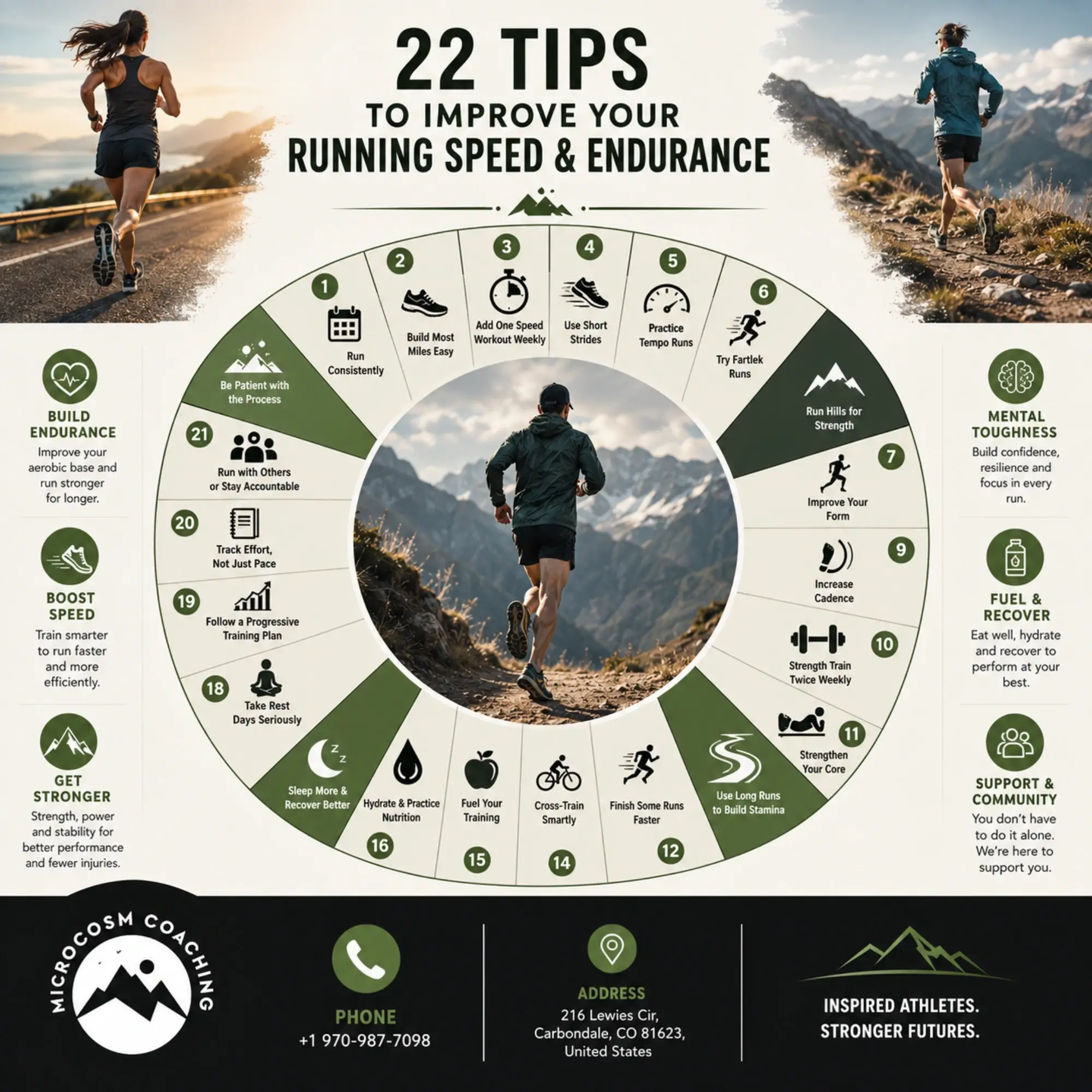
Below are 22 practical tips to help you run faster, last longer, and train with more confidence.
Why Speed And Endurance Improve Together
Running speed is not just about leg turnover. Endurance is not just about running farther. Both depend on your aerobic system, muscular strength, movement efficiency, fueling, and recovery.
A runner with great endurance but little speed may struggle to change gears. A runner with speed but poor endurance may fade quickly. The goal is to build a system that supports both.
That means most of your training should feel controlled, while a smaller amount should challenge your pace, power, and ability to handle discomfort.
1. Run Consistently Before Chasing Speed
Consistency is the foundation of faster running. Before adding hard workouts, build a weekly rhythm you can repeat.
For beginners, this may mean running three times per week. For experienced runners, it may mean holding steady mileage without big jumps. Your body improves through repeated training stress, not random bursts of motivation.
2. Build Most Of Your Mileage At An Easy Pace
Easy running builds the aerobic base that supports endurance and speed. These runs should feel relaxed enough that you can hold a conversation.
Many runners make the mistake of running every day at a medium-hard effort. That often leads to fatigue without real progress. Keep most of your miles easy so your hard workouts can actually be effective.
3. Add One Speed Workout Per Week
Speed workouts help your body learn how to run faster with better control. These can include short intervals, track repeats, hill sprints, or faster efforts during a run.
Start with one speed session per week. More is not always better. If you add too much intensity too soon, your risk of injury and burnout goes up.
4. Use Short Strides To Improve Leg Turnover
Strides are short, relaxed accelerations that usually last 15 to 30 seconds. They are not all-out sprints. They should feel fast, smooth, and controlled.
Add 4 to 6 strides after an easy run once or twice per week. They help improve coordination, cadence, and running economy without creating heavy fatigue.
5. Practice Tempo Runs
Tempo runs teach you how to hold a strong, steady pace. This effort is often described as “comfortably hard.” You are working, but you are not sprinting.
A simple tempo workout could include a 10-minute warm-up, 15 to 25 minutes at tempo effort, and a 10-minute cool-down. These runs help improve your ability to sustain faster paces over time.
6. Try Fartlek Runs
Fartlek means “speed play.” It is a flexible way to mix faster running into a normal run.
You might run fast for 1 minute, jog for 2 minutes, and repeat several times. Or you can surge between landmarks, such as trees, signs, or blocks. Fartlek runs are great because they build speed without the pressure of exact splits.
7. Run Hills For Strength And Power
Hills are one of the best tools for improving running speed and endurance. Running uphill builds strength in your glutes, calves, hamstrings, and core.
Start with short hill repeats on a moderate incline. Keep your posture tall, drive your arms, and focus on effort rather than pace. Hill training helps develop power while reducing some of the impact of flat sprinting.
8. Improve Your Running Form
Good running form helps you move more efficiently. You do not need to look perfect, but small changes can make a big difference.
Keep your upper body tall, shoulders relaxed, and arms moving forward and back. Avoid crossing your arms across your body. Try not to overstride, because landing too far in front of your body can slow you down and increase impact.
9. Increase Cadence Gradually
Cadence is the number of steps you take per minute. A slightly quicker cadence can help reduce overstriding and improve efficiency.
Do not force yourself into a specific number overnight. Instead, focus on quick, light steps. Try increasing cadence slightly during strides, tempo efforts, or short intervals.
10. Strength Train Twice Per Week
Strength training helps runners produce more power and stay healthier. You do not need a complicated gym routine to benefit.
Focus on movements like squats, lunges, deadlifts, calf raises, step-ups, and hip stability exercises. Two short sessions per week can support better speed, endurance, and injury resistance.
11. Strengthen Your Core
A strong core helps you maintain posture when fatigue sets in. This matters during long runs, races, hill climbs, and faster workouts.
Core work does not need to be extreme. Planks, side planks, bridges, bird dogs, and dead bugs can all help build stability. The goal is to stay strong and efficient when your legs are tired.
12. Use Long Runs To Build Stamina
Long runs are essential for endurance. They teach your body to run for longer periods and improve aerobic capacity.
Increase your long run gradually. Most long runs should feel easy and controlled. If you are always pushing hard on long runs, you may struggle to recover for the rest of your training.
13. Finish Some Runs A Little Faster
Fast finishes help train your body and mind to run well when tired. This does not mean sprinting at the end of every run.
Occasionally, finish the last 5 to 15 minutes of a long run or steady run at a slightly quicker pace. This helps build confidence for race day and teaches you how to stay composed under fatigue.
14. Cross-Train To Build Fitness Without Extra Impact
Cross-training allows you to build endurance while reducing repetitive stress from running. Cycling, swimming, hiking, skiing, rowing, and elliptical workouts can all support aerobic development.
This is especially useful for injury-prone runners, busy athletes, or trail and ultra runners who want more volume without pounding their legs every day.
15. Fuel Your Training Properly
You cannot train well if you are under-fueled. Running faster and longer requires enough energy.
Carbohydrates support training intensity. Protein helps with muscle repair. Healthy fats support overall health and hormone function. If you consistently feel flat, tired, or irritable, your fueling may need attention.
16. Hydrate And Practice Race-Day Nutrition
Hydration affects endurance, focus, and performance. For longer runs, especially in heat or on trails, electrolytes and fuel can make a major difference.
Practice your race-day nutrition during training. Do not wait until race day to test gels, drinks, or foods. Your gut needs training too.
17. Sleep More And Recover Better
Fitness improves after training, not during the workout itself. Sleep is when your body repairs tissue, restores energy, and adapts to training.
If you are sleeping poorly, your speed and endurance may stall. Prioritize consistent sleep, especially around hard workouts and long runs.
18. Take Rest Days Seriously
Rest is not a weakness. It is part of the training process.
Hard workouts create stress. Rest allows your body to absorb that stress and come back stronger. Some runners need full rest days, while others recover well with walking, mobility, or very easy cross-training.
19. Follow A Progressive Training Plan
Random workouts can create random results. A strong plan builds gradually and gives each run a purpose.
Your plan should match your current fitness, goals, schedule, injury history, and stress level. Progression is key. Increase volume, intensity, and long-run distance carefully instead of changing everything at once.
20. Track Your Effort, Not Just Pace
Pace does not tell the whole story. Heat, hills, trails, fatigue, sleep, and stress can all affect how fast you run.
Use effort, breathing, heart rate, and workout notes to understand your training. This helps you avoid pushing too hard on days when your body needs more patience.
21. Run With Others Or Use Coaching Accountability
Running with others can help you stay consistent and motivated. A group can push you on workout days and make easy runs more enjoyable.
Coaching accountability can also help. When someone is helping you adjust your training, review your progress, and manage setbacks, it becomes easier to stay consistent over time.
22. Be Patient With The Process
Many runners search for ways to increase running speed in one day, one week, or two weeks. You can improve pacing, confidence, warm-ups, and freshness quickly, but real fitness takes time.
Speed and endurance are built through weeks, months, and years of smart training. The more patient you are, the more sustainable your progress becomes.
How To Improve Running Speed For Beginners
If you are new to running, focus on consistency first. You do not need advanced workouts right away.
Start with easy running, run-walk intervals if needed, and gradual weekly progression. Once you can run consistently, add strides before adding harder speed sessions.
Beginners should also avoid comparing their pace to others. Your current starting point does not limit your future progress. The goal is to build a foundation that keeps you healthy and motivated.
Can You Increase Running Speed In 1 Week Or 2 Weeks?
You can make small improvements in one or two weeks, but they usually come from better pacing, better rest, better warm-ups, and sharper neuromuscular coordination.
For example, adding strides, sleeping better, fueling properly, and reducing unnecessary fatigue can help you feel faster quickly. However, meaningful endurance and speed gains take longer.
A realistic goal is to start the process in one week, not complete it.
How To Improve Running Speed At Home
You can improve speed at home with treadmill workouts, strength training, mobility, and drills.
A treadmill can be useful for controlled intervals or incline work. Strength exercises like lunges, calf raises, squats, and core work can improve power. Mobility work can help you move more freely and reduce stiffness.
Home training works best when it supports your running instead of replacing every run.
A Simple Weekly Structure For Speed And Endurance
A balanced training week might include easy running, one faster workout, one long run, strength work, and recovery.
For many runners, that could look like this:
- One speed, hill, fartlek, or tempo workout
- Two to three easy runs
- One long run
- One to two strength sessions
- At least one recovery or rest day
The exact structure should depend on your experience, goals, and life schedule.
How Microcosm Coaching Helps Runners Improve Speed And Endurance
Microcosm Coaching helps runners build speed and endurance through human-first, virtual endurance coaching designed around the whole athlete. Instead of handing out generic plans, Microcosm creates individualized training that considers your goals, schedule, stress, recovery, and long-term development. Their team supports road runners, marathoners, trail runners, ultra runners, skimo athletes, and cyclists with evidence-based training, daily check-ins, coach feedback, community support, and sustainable progression. If you want more structure and accountability, their running coaching can help you train smarter while building fitness that lasts.
FAQs
How Can I Increase My Running Speed And Stamina?
Run consistently, keep most runs easy, add one speed workout per week, strength train, fuel properly, and recover well. Speed and stamina improve best when training is balanced.
How Can Beginners Improve Running Speed And Endurance?
Beginners should first build a consistent running habit. Start with easy runs, gradual mileage, strides, strength work, and enough rest before adding harder workouts.
Can I Increase Running Speed In 1 Week?
You may feel faster in one week by improving sleep, warming up better, adding strides, and reducing fatigue. True speed gains usually require more time.
How Can I Increase Running Speed In 2 Weeks?
In two weeks, you can build momentum with consistent easy runs, short strides, one controlled workout, and strength training. Larger improvements require continued training.
What Exercises Increase Running Speed?
Helpful exercises include squats, lunges, step-ups, calf raises, deadlifts, planks, hill repeats, strides, and short intervals.
Should I Build Speed Or Distance First?
Most runners should build consistency and endurance first. Once you have a base, speed work becomes safer and more effective.
How Many Days A Week Should I Run To Get Faster?
Many runners improve with three to five runs per week, depending on experience and recovery. Quality, consistency, and progression matter more than simply adding more days.
Do Hills Improve Running Speed?
Yes. Hills build strength, power, and running efficiency. They are especially useful for runners who want to improve speed without relying only on flat sprint workouts.
Does Strength Training Help Runners Get Faster?
Yes. Strength training improves power, stability, posture, and injury resistance. Stronger runners often hold better form when tired.
How Long Does It Take To Improve Running Endurance?
Many runners notice changes within a few weeks, but meaningful endurance gains usually take several months of consistent training.