
April 14, 2026
How to Run a Marathon for Beginners
Running your first marathon is a big goal, and it should feel that way. Covering 26.2 miles asks a lot from your body, your mind, and your schedule. But that does not mean marathon running is only for advanced athletes. With enough time, a smart plan, and realistic expectations, beginners can absolutely train for and finish a marathon.
The biggest mistake first-time marathoners make is treating the marathon like a one-day challenge instead of a long-term process. A marathon is not something you muscle through on motivation alone. It rewards patience, consistency, recovery, and a willingness to build step by step. If you approach it the right way, your first marathon can become the start of a long and rewarding relationship with running.
Can a Beginner Really Run a Marathon?
Yes, a beginner can run a marathon. But it helps to define what “beginner” means.
A beginner marathoner is not always someone who has never run before. In many cases, it is someone who is new to the marathon distance but has already built some basic running consistency. That distinction matters. If you are completely new to running, your first goal should not be jumping straight into a marathon block. Your first goal should be building the habit of running regularly and staying healthy while doing it.
That foundation makes everything else easier. It helps your body adapt to impact, teaches you how to pace yourself, and gives you time to learn the basics of shoes, fueling, recovery, and training structure. The marathon becomes much more manageable when it sits on top of a steady foundation instead of wishful thinking.
Build Your Base Before Marathon Training Starts
Before you begin a formal marathon plan, you should be able to run consistently for several months. That does not mean you need to be fast. It means you need to be comfortable with the routine of running multiple times per week and gradually building volume without breaking down.
For true beginners, that often starts with shorter goals. A 5K, 10K, or half marathon can be a great stepping stone before marathon training. These shorter milestones help you develop confidence while teaching your body to handle regular training. They also show you how to manage the ordinary ups and downs that come with running, including tired legs, missed workouts, motivation dips, and the need to recover well.
If you can already run three to four days per week and handle longer runs without feeling wrecked for days afterward, you are in a much better place to begin marathon-specific training.
How Long Should a Beginner Train for a Marathon?
Most beginner marathon plans last about 16 to 20 weeks. That is the race-specific portion of training. What many people forget is that this often comes after months of building a base.
If you already have some running background, 16 to 20 weeks may be enough to prepare for your first marathon. If you are starting from zero, your total timeline may be much longer. There is nothing wrong with that. In fact, giving yourself more time is often the smartest move.
The goal is not simply to survive race day. The goal is to arrive at the starting line healthy, prepared, and confident that your training matches the demands of the event.
What a Beginner Marathon Plan Should Include
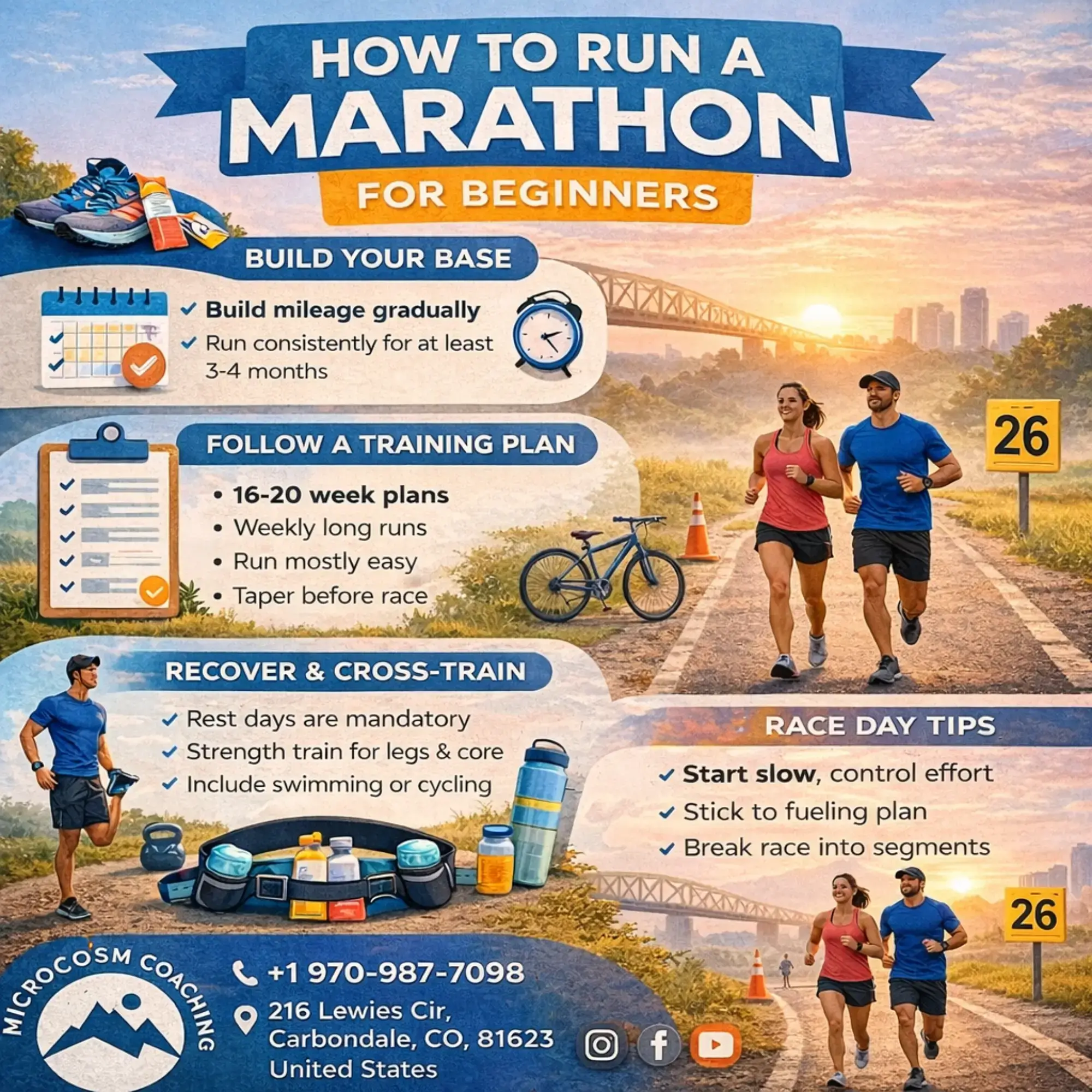
A good beginner marathon plan does not need to be complicated, but it does need structure.
Most of your week will be made up of easy runs. These runs build aerobic fitness, teach efficiency, and help you accumulate time on your feet without too much stress. If you are breathing hard during every run, you are probably running too fast. Easy running should feel controlled enough that you could hold a conversation.
The weekly long run is the centerpiece of marathon training. This is where you gradually prepare your body and mind for longer efforts. Long runs teach patience, pacing, fueling, and mental control. They should build gradually over time, not jump dramatically from week to week.
Recovery also needs to be built into the plan. Rest days are not signs of weakness. They are when your body adapts to training. Skipping recovery because you want to “do more” often backfires for beginners. The runners who stay healthy are usually the runners who know when to back off.
Strength training and cross-training can also help. A little work on your glutes, core, calves, and hips can improve durability and support better movement patterns. Activities like cycling or swimming can build fitness without adding as much impact as extra running.
Finally, every beginner marathon plan should include a taper. In the final weeks before race day, training volume drops so your body can recover and absorb all the work you have already done. Many beginners get nervous during the taper because they feel like they are doing less. In reality, that reduction is part of the training process.
What Is the 80% Rule in Running?
You may hear runners talk about the 80% rule, which usually means that most running should be done at an easy effort while a smaller portion is done at a harder effort.
For beginners, this is a simple but powerful idea. Not every run should feel like a test. In fact, most of your training should feel controlled and sustainable. Easy running builds the foundation that lets harder workouts and long runs actually work.
A lot of first-time marathoners struggle because they run their easy days too hard and arrive at important sessions too tired. The result is flat workouts, slow recovery, and a higher risk of injury. The beginner who learns how to truly run easy often progresses better than the beginner who tries to prove fitness every time they head out the door.
Nutrition, Hydration, and Gear for Beginners
One of the best things you can do during marathon training is practice the basics early. That includes what you wear, what you eat, and how you hydrate.
Your long runs are the time to test shoes, socks, clothing, and fueling. Race day should not be the first time you try a gel, sports drink, or new pair of shorts. Small problems become big problems over 26.2 miles.
As your long runs get longer, fueling becomes more important. You need to learn what your stomach tolerates and how often you need to eat or drink to feel steady. Hydration matters too, but more is not always better. You want a balanced approach that supports your effort without leaving you overfull or depleted.
Shoes also deserve attention. Beginners do not need a magical shoe, but they do need one that feels comfortable and supports regular training. Getting fitted at a running store can be a smart starting point if you are unsure what works for you.
How to Pace Your First Marathon
Pacing is one of the most important parts of beginner marathon success. It is also one of the easiest things to get wrong.
Most first-time marathoners go out too fast. The early miles feel smooth, the crowd energy is high, and adrenaline makes everything seem easier than it really is. The problem is that the marathon is long enough to punish impatience.
A smarter approach is to start slightly easier than you think you need to. Let the race come to you. The goal is not to “bank time” in the first half. The goal is to stay controlled long enough to keep moving well in the later miles.
It helps to break the race into smaller pieces. Instead of thinking about 26.2 miles all at once, think about getting through the early miles relaxed, settling into the middle of the race with good rhythm, and staying mentally steady when it starts to get hard. A calm first half usually sets up a much better finish.
Common Beginner Marathon Mistakes
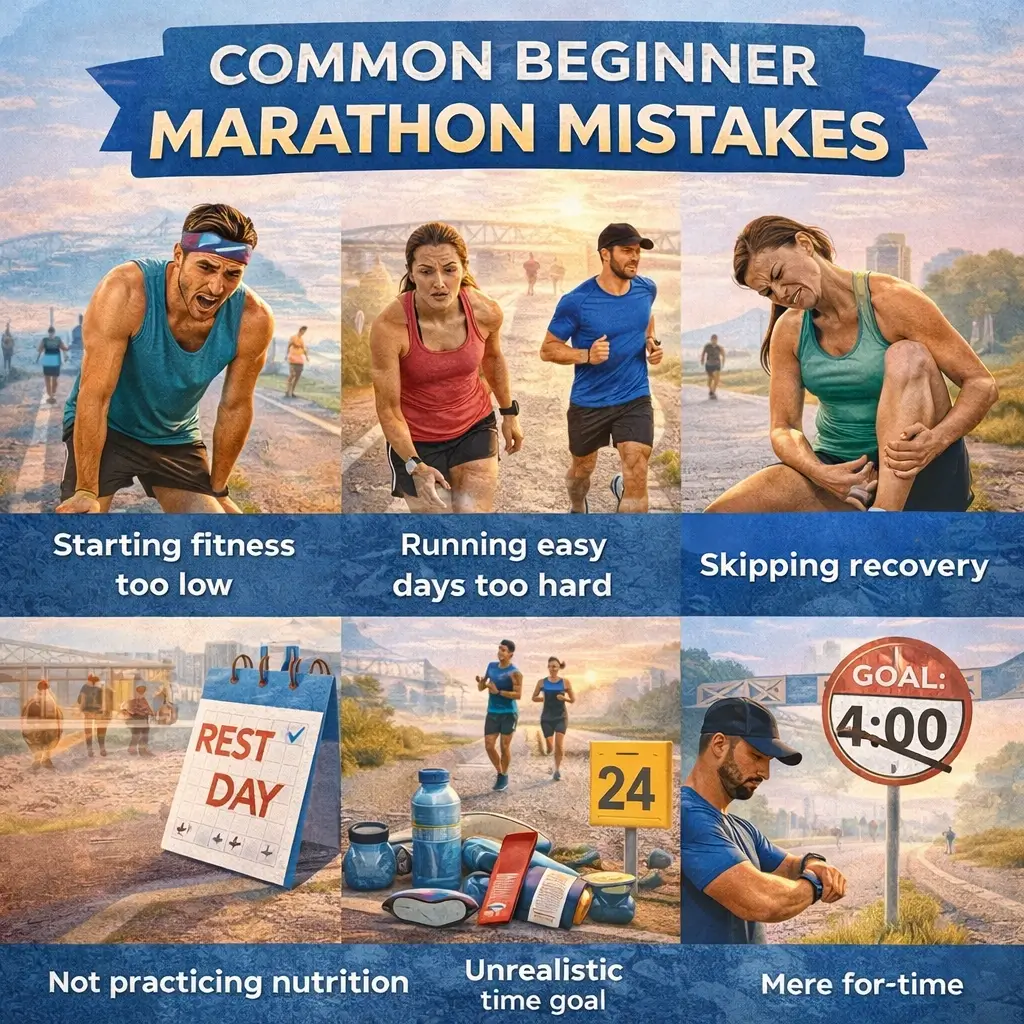
The most common mistake is doing too much too soon. That might mean building mileage too quickly, racing workouts, or trying to make up for missed days with extra running. Marathon training works best when it is consistent, not frantic.
Another major mistake is ignoring recovery. New runners often think rest days are lost days. In reality, they are part of the reason your training works. Recovery supports adaptation and helps reduce the chance of injury.
Fueling is another area where beginners get caught off guard. If you do not practice nutrition in training, race day can turn into a long lesson in stomach problems and energy crashes.
Some beginners also choose unrealistic time goals. It is fine to be ambitious, but your first marathon should be approached with humility. A strong, steady finish is a much better first-marathon outcome than blowing up because you tried to force a pace your training did not support.
Race Week and Race Day Tips
In race week, the biggest priority is not squeezing in extra fitness. It is arriving fresh, calm, and prepared.
That means keeping things familiar. Eat foods you know work for you. Protect your sleep as much as possible. Get your gear ready early. Review your race morning logistics so you are not solving avoidable problems at the last minute.
On race day, keep your breakfast simple and tested. Start slower than your ego wants to. Stick to the fueling plan you practiced in training. Stay patient when others surge around you early. There is a good chance you will feel emotional at some point during the race. That is normal. The marathon has a way of exposing everything, including excitement, doubt, discomfort, and pride.
What Success Looks Like in Your First Marathon
Success in your first marathon is not only about your finish time. It is about building the fitness, confidence, and awareness to handle the process well. It is about learning how to train consistently, how to pace yourself, and how to keep moving when the day becomes difficult.
For many beginners, the best first marathon is the one that leaves them wanting to keep running. That usually comes from training with patience instead of pressure. When you respect the process, your finish line experience tends to mean more.
Why Coaching Can Help Beginner Marathoners
At Microcosm Coaching, we believe marathon training should support the whole person, not just the workout on the calendar. Our coaching is built around real life, with individualized, evidence-based training that takes into account your goals, schedule, stress, and long-term development as an athlete. Whether you are chasing your first marathon finish or trying to build confidence for the distance, our human-first approach helps beginners train with more clarity, consistency, and support.
A coach can help beginners avoid many of the mistakes that derail marathon training. Instead of guessing how hard to push, when to rest, or what to do when life interrupts the plan, you have guidance. That support can make the process feel more manageable and more personal.
For first-time marathoners, the biggest advantage is often not just performance. It is confidence. Knowing your plan fits your life and your current fitness can remove a lot of the stress that beginners feel.
Final Thoughts
Running a marathon as a beginner is absolutely possible, but it should be approached with patience and respect. Build your base first. Follow a structured plan. Keep most of your running easy. Practice fueling. Recover well. Start race day slower than you think you should.
Most of all, remember that marathon training is not about proving your toughness every day. It is about stacking enough smart, steady work that you can show up ready when it matters. That is what gives beginners the best chance not just to finish, but to finish proud.
FAQs
How should a beginner run a marathon?
A beginner should train for a marathon with a structured plan, plenty of easy running, one weekly long run, and enough recovery to stay healthy. The goal is to build endurance gradually rather than rush the process.
How long should a beginner train for a marathon?
Most beginners need about 16 to 20 weeks of marathon-specific training, but many runners also need extra time before that to build a base. If you are brand new to running, your full preparation may take several months longer.
What is the 80% rule in running?
The 80% rule generally means that most of your running should be done at an easy effort, while a smaller portion is done at a harder effort. For beginners, this helps build fitness without burning out or getting injured.
How many days a week should I run for my first marathon?
Most beginner marathoners do well running three to five days per week, depending on their experience, schedule, and recovery. The key is consistency and gradual progression, not packing in extra runs just for the sake of volume.
How long should my longest long run be before race day?
For many beginner marathoners, the longest long run falls somewhere between 18 and 20 miles. What matters most is building toward that effort gradually and giving yourself enough time to recover before race day.
Do beginners need strength training for marathon prep?
Yes, strength training can be very helpful for beginners. Even one or two short sessions per week focused on the core, glutes, calves, and hips can improve durability and support better running mechanics.
When should I start using gels or sports drinks?
You should start practicing with gels or sports drinks during long runs in training, not on race day. This gives you time to learn what works for your stomach and how often you need fuel to stay steady.
Can I walk during my first marathon?
Yes, absolutely. Many beginners use short walk breaks during training and even on race day. Walking does not mean you failed. It can be a smart pacing strategy that helps you manage effort and finish stronger.
What should I do if I miss a week of training?
If you miss a week, do not try to make up every lost run. The best move is usually to return calmly, rebuild your rhythm, and continue forward. Marathon training works through consistency over time, not perfection every single week.
Can I run a marathon with heart disease?
That depends on your specific health situation, so this is something you should discuss with your doctor before beginning marathon training. If you have heart disease or any cardiovascular concerns, medical clearance should come first, followed by a training approach that matches your health needs and current fitness.