
July 14, 2026
Runner Pros/Cons: Wearing A Hydration Pack On Race Day
Race morning comes with plenty of decisions. What should you eat? Which shoes should you wear? How early should you arrive? Somewhere in that list, many runners also wonder whether they should wear a hydration pack on race day.
A running hydration pack can give you continuous access to water, electrolytes, fuel, and essential gear. It can also add weight, hold heat against your body, and create chafing or bouncing if the fit is not right.
There is no universal answer. The best choice depends on your race distance, expected finish time, weather, course support, personal hydration needs, and what you have practiced throughout training.
Should You Wear A Hydration Pack On Race Day?
A hydration vest can be a smart race day choice when it helps you follow a familiar fueling and hydration strategy. It may be especially useful during trail races, ultramarathons, hot events, and races with widely spaced aid stations.
For a well-supported road marathon or half marathon, the answer is less obvious. Some runners appreciate having full control over their fluids. Others prefer to carry as little as possible and use the aid stations provided along the course.
Your decision should not be based on what other runners are wearing. It should be based on the system that allows you to run confidently, stay comfortable, and execute your own race plan.
The Pros Of Wearing A Hydration Pack During A Race

A hydration pack gives you more independence from the race course. That control can be valuable when your hydration needs are specific or when course support is limited.
Consistent Access To Fluids
With a hydration pack, you can drink when you feel ready instead of waiting for the next water station. This can help you take smaller, more consistent sips rather than drinking a larger amount all at once.
Easy access may also be helpful on crowded courses. You do not have to change direction suddenly, slow down to grab a cup, or navigate around runners stopping at the same table.
More Control Over Electrolytes
Not every race provides the drink mix you use in training. Even when a familiar brand is available, the concentration may be different from what your stomach expects.
Carrying your own fluids allows you to use the electrolyte or carbohydrate drink you have already tested. This can reduce uncertainty and help you follow the same routine you used during long runs.
A solid race strategy begins long before the starting line. Practicing what to eat and drink while running gives you time to identify what supports steady energy without upsetting your stomach.
Convenient Storage For Fuel And Essentials
Most hydration vests include front and side pockets that can hold gels, chews, a phone, medication, sunscreen, gloves, or a light layer.
This storage is especially useful during longer trail races, where weather and terrain may change over several hours. It also keeps fuel within reach so you do not have to struggle with a tightly packed belt or shorts pocket.
Less Dependence On Aid Stations
Aid stations can be crowded, particularly during the early miles of a large road race. Carrying your own water may allow you to move through these areas more smoothly.
It also gives you more flexibility if a station runs low, cups are difficult to grab, or the spacing between stations feels longer than expected.
Greater Self-Reliance On Trails
A hydration pack becomes more valuable when the environment is remote and aid stations are far apart. Trail runners may also need to carry mandatory equipment, extra calories, layers, and emergency supplies.
Thoughtful trail running coaching prepares athletes for more than distance alone. Terrain, elevation, weather, equipment, fueling, and the length of unsupported sections should all shape the race plan.
The Cons Of Wearing A Hydration Pack On Race Day
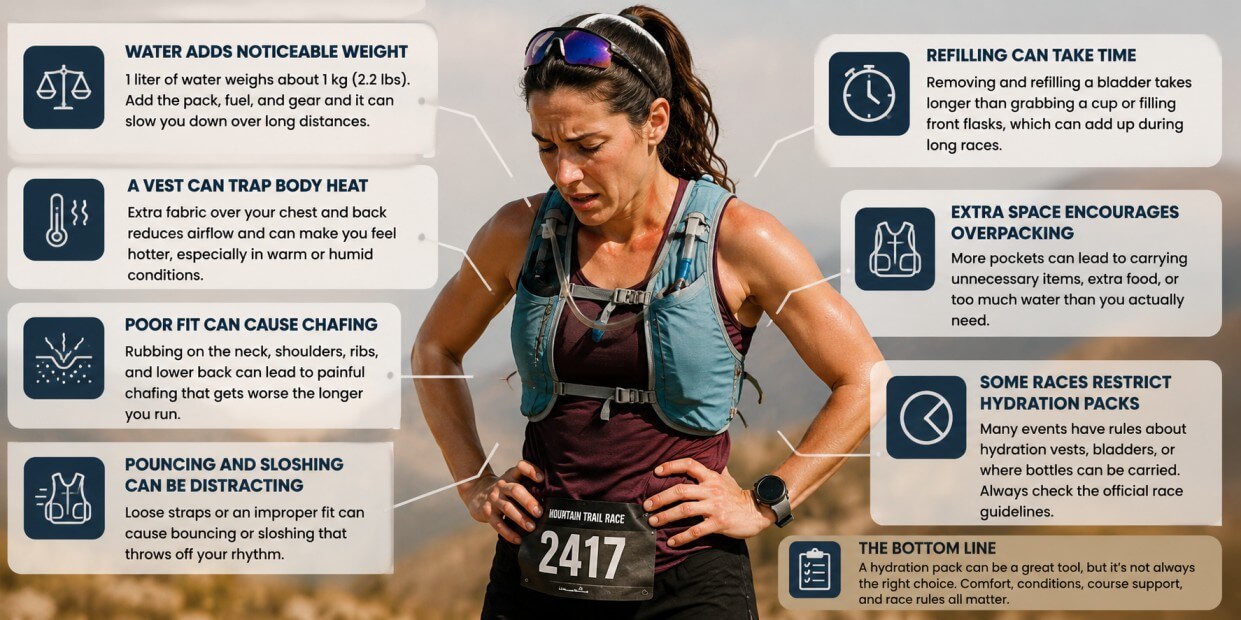
More carrying capacity does not automatically mean a better setup. A pack that solves one problem can create another if it is too heavy, too warm, or poorly fitted.
Water Adds Noticeable Weight
One liter of water weighs approximately one kilogram, or a little more than two pounds. Add the weight of the pack, fuel, phone, and other gear, and the total can become significant.
That weight may matter to a road runner trying to maintain an aggressive marathon pace. It may matter less to an ultrarunner who needs enough fluid to safely reach the next aid station.
The goal is not to carry as much as possible. It is to carry enough for the conditions and refill opportunities you will encounter.
A Vest Can Trap Body Heat
Hydration vests cover part of the chest, shoulders, and back. In warm or humid weather, this extra material can reduce airflow and make the runner feel hotter.
Some runners barely notice the added layer. Others find it uncomfortable after only a few miles. Heat tolerance is individual, which is why testing the pack in race-like weather matters.
Poor Fit Can Cause Chafing
A vest that moves against the body can rub the neck, shoulders, ribs, chest, and lower back. Small areas of irritation during an easy run can become painful during a marathon or ultra.
The risk may increase as the fluid level changes and the load shifts. Clothing also matters. A vest that feels comfortable over a winter layer may rub differently over a lightweight race top.
Bouncing And Sloshing Can Become Distracting
Loose straps, partially filled bottles, and an incorrectly sized vest can create movement with every stride. Even minor bouncing can become frustrating over several hours.
A rear bladder may also slosh if excess air remains inside it. Front soft flasks are easier to monitor, but they can bounce when they are not secured properly.
Refilling Can Take Time
Rear hydration bladders often take longer to remove, open, fill, close, and return to the vest. During an ultramarathon, those extra steps can add up over several aid stations.
Front soft flasks are generally easier to refill. However, runners still need to practice opening, filling, and replacing them efficiently.
Extra Space Encourages Overpacking
When a vest has several empty pockets, it is tempting to fill them. Runners may carry too much water, excessive food, duplicate layers, or supplies already available on the course.
Every item should have a clear purpose. Mandatory gear comes first, followed by the hydration, fuel, clothing, and safety items needed to reach the next reliable support point.
Hydration Pack Considerations By Race Distance
Distance affects how much fluid and fuel you may need, but it should not make the decision by itself. Weather, pace, terrain, and aid station spacing can make two races of the same distance feel completely different.
5K And 10K Races
Most runners will not need a hydration pack for a supported 5K or 10K. These events are generally short enough that runners can hydrate before the start and use a course station if needed.
Exceptions may include extreme heat, medical needs, limited course support, or runners who expect to spend considerably longer on the course.
Half Marathon
A hydration vest for a half marathon is optional. It can help runners who prefer frequent access to fluids, use a specific drink mix, or expect to be running for several hours.
It may be unnecessary when aid stations are frequent and the runner is comfortable using them. For some athletes, a small handheld bottle or running belt provides enough capacity without the coverage of a full vest.
Marathon
Wearing a hydration vest during a marathon gives you greater control, but it also means carrying the weight for 26.2 miles.
Review the course map, aid station locations, expected temperature, drink options, and race rules. Consider your finishing time and how often you normally drink during long runs.
Personalized marathon coaching can help runners connect pacing, hydration, fueling, recovery, and race logistics rather than treating each one as a separate decision.
Trail Marathon And Ultramarathon
Hydration packs are common in trail marathons and ultras because support can be limited and the required equipment list is often longer.
Choose capacity based on the longest gap between aid stations, not the full race distance. A well-supported loop course may require less water than a shorter mountain race with long, remote sections.
Hydration Pack Vs Other Race Day Options
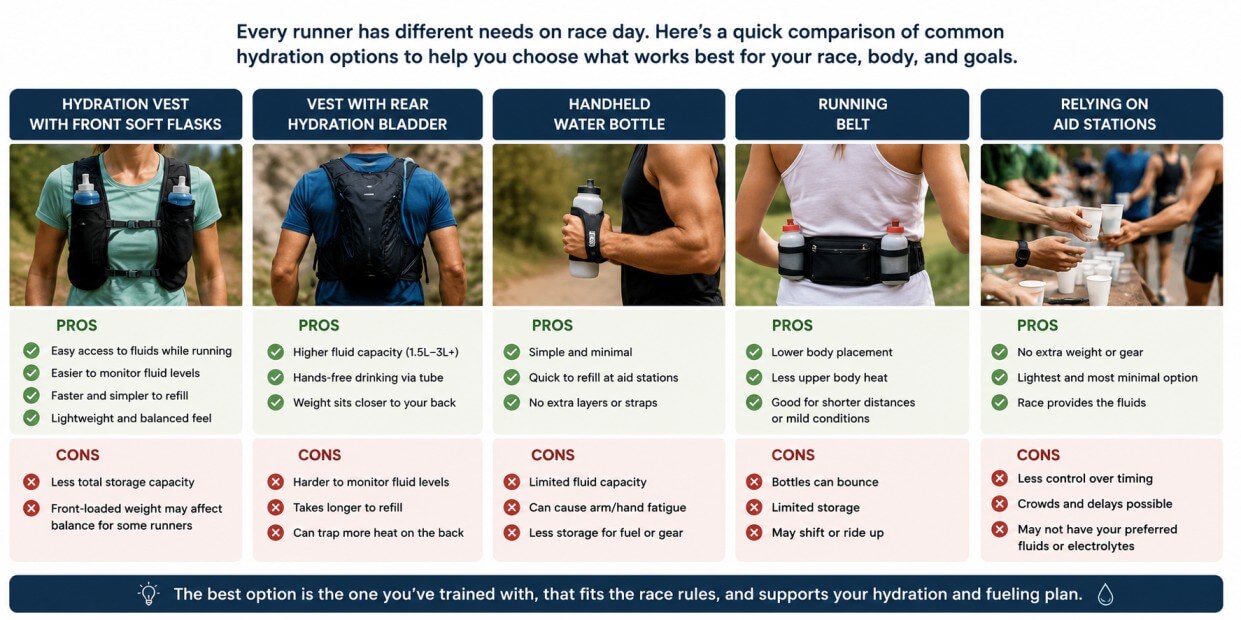
A vest is only one way to carry fluids. The right alternative depends on how much you need and where you prefer to carry it.
Front soft flasks are easy to reach, monitor, and refill. A rear bladder offers more capacity but can hold heat against the back and makes it harder to see how much fluid remains.
A handheld bottle is simple and quick to refill, although it can cause hand or arm fatigue. A running belt keeps the upper body uncovered but may bounce around the waist.
Using course aid stations is the lightest option. The tradeoff is having less control over when you drink and which products are available.
How To Test A Hydration Pack Before Race Day
Nothing new on race day applies to hydration equipment too. One short jog is not enough to determine whether a vest will remain comfortable through a marathon or ultra.
Test your setup during multiple long runs and include at least one session that resembles your expected race conditions. Wear the same shirt, sports bra, shorts, and layers you plan to race in.
Fill the pack with the amount of water you expect to carry at the start. Add your planned fuel and equipment so you can evaluate the complete load.
During the run, practice reaching every pocket, drinking at race effort, opening food, and adjusting the straps. Afterward, inspect your skin for redness and note any pressure, movement, or heat buildup.
Use long runs to refine your race fueling strategy rather than waiting until the final weeks of training.
A Coach’s Take On Race Day Hydration
Microcosm Coaching uses a human-first approach because no two athletes have the same life, body, goals, or response to training. Through individualized plans, daily check-ins, and practical feedback, coaches help road, trail, and ultra runners develop hydration and fueling systems that reflect their pace, environment, preferences, and real-world schedule.
For one athlete, a hydration vest creates confidence because everything they need is within reach. For another, it feels heavy, hot, and distracting.
The best setup is not the most popular or expensive one. It is the setup that has been tested, fits your race, follows the event rules, and supports your ability to stay present throughout the effort.
Final Verdict: Is A Hydration Pack Worth Wearing?
A hydration pack is often worth wearing for trail races, ultramarathons, hot events, and courses with limited aid stations. It can also help runners who rely on a specific drink mix or need to carry medication and equipment.
It may be less useful during short, well-supported road races or for runners prioritizing minimal weight. It is also a poor choice when it causes chafing, bouncing, overheating, or distraction.
Check the current rules for your event, test your complete setup in training, and carry only what supports your plan. Race day is not about proving how much you can carry. It is about making thoughtful choices that help you move well from start to finish.
Frequently Asked Questions
Can You Wear A Hydration Pack During A Marathon?
Many marathons allow hydration packs, while others restrict backpacks, rear bladders, or container sizes. Review the current participant guide for your specific event before finalizing your race setup.
Should I Wear A Hydration Vest For A Marathon?
A vest may be helpful if you want continuous access to personal fluids, electrolytes, fuel, or medication. It may be unnecessary if aid stations are frequent and you have practiced using them.
Is A Hydration Vest Necessary For A Half Marathon?
Most runners do not need one for a supported half marathon. It can still be useful in hot weather, on a course with limited stations, or when a runner needs a personalized hydration system.
Does A Hydration Pack Slow You Down?
A full pack adds weight and may trap heat, which can affect comfort and pace. However, it may also reduce time spent at aid stations. The impact depends on the runner, race, fit, and amount carried.
Is A Hydration Bladder Or Soft Flask Better For Racing?
A bladder provides greater capacity, while soft flasks are easier to monitor and refill. Choose the system that remains stable, comfortable, and accessible during long training runs.
How Do I Prevent Hydration Vest Chafing?
Use the correct size, secure the straps to reduce movement, and test the vest with your complete race kit. Anti-chafe products can help, but they should not replace proper fit and preparation.
How Much Water Should I Carry During A Race?
Carry enough to support your needs until the next reliable refill point. Your amount should account for weather, pace, sweat rate, aid station spacing, and the hydration plan you practiced in training.
Should Trail Runners Carry A Hydration Pack?
A hydration pack is often practical for trail races because runners may need water, calories, clothing, safety supplies, and mandatory gear. The required capacity depends on the terrain and distance between aid stations.