
October 20, 2026
Boston Marathon Fueling Strategy for a Later Start
Most marathon runners are used to waking up, eating breakfast, getting to the start line, and racing relatively early in the morning. The Boston Marathon creates a very different race-day routine.
Depending on your wave, you may spend several hours awake before you actually cross the starting line in Hopkinton. That longer morning changes how you should think about breakfast, snacks, hydration, caffeine, and your first miles of fueling.
A good Boston Marathon fueling strategy is not simply about eating more food. The goal is to arrive at the start fueled but comfortable, then maintain steady energy throughout the race so you still have something left when the course gets harder.
Why Boston’s Later Start Changes Your Fueling Strategy
Boston requires more patience before the race even begins. You wake up, eat, travel, wait, move toward the corrals, and finally start running.
If your normal marathon begins around 7:00 a.m., you may only be awake for a couple of hours before racing. At Boston, some runners can be awake for four or five hours before their wave starts.
That means a breakfast that normally works perfectly may leave you hungry well before the gun. The solution is to think of race morning as a series of fueling opportunities rather than one large meal.
Start Fueling Before Marathon Morning
Race-day nutrition works best when it begins before race morning. Your body stores carbohydrate as glycogen in your muscles and liver, and those stores provide an important source of energy during the marathon.
A thoughtful carbohydrate-loading strategy during the final 36 to 48 hours can help you begin the race with stronger energy reserves.
Spread Your Carbohydrates Across the Day
Carb loading does not mean eating one enormous bowl of pasta the night before Boston.
Instead, increase carbohydrate intake across several familiar meals and snacks. Rice, potatoes, bread, oatmeal, fruit, pancakes, cereal, bagels, sports drinks, and other foods you already tolerate can all play a role.
Keeping meals familiar is important. Race weekend is not the best time to experiment with unusually rich foods, excessive fiber, or a restaurant meal your stomach has never encountered during training.
What to Eat for Breakfast Before the Boston Marathon
Breakfast should provide plenty of carbohydrate without leaving you overly full.
For many athletes, eating the main breakfast roughly three to four hours before their start works well. Because everyone’s digestion is different, however, the timing and amount should be practiced during training.
Good race-morning foods may include oatmeal with banana and maple syrup, a bagel with jam, toast, pancakes, cereal, cream of rice, or another familiar carbohydrate-rich meal.
The most important rule is simple: eat foods your body already knows.
Should You Eat Two Breakfasts Before Boston?
For some runners, splitting race-morning nutrition into two smaller eating periods works better than having one enormous breakfast.
You might eat your main breakfast after waking and then have a smaller carbohydrate snack later in the morning.
That second serving does not need to feel like another full meal. A banana, half a bagel, applesauce, an energy bar, sports drink, chews, or another simple carbohydrate source may be enough.
The purpose is to prevent the long gap between breakfast and your wave from quietly draining the energy you planned to save for the race.
Fuel During the Trip to Hopkinton
Boston race morning includes transportation and waiting, which makes logistics part of your nutrition strategy.
Bring the foods you have planned rather than assuming you will find exactly what you want when you need it. Know what you will eat, approximately when you will eat it, and how much you actually need.
This is one reason race-specific training matters. Preparing for Boston includes rehearsing the practical demands of race morning, not simply completing workouts that build fitness.
If your training never includes a late-start long run, you may arrive in Boston without knowing how your stomach responds to eating breakfast several hours before running.
How to Fuel While Waiting Before the Start
Waiting creates two common problems. Some runners become nervous and stop eating entirely. Others keep snacking because they have nothing else to do.
Neither approach is ideal.
Plan your food before race morning. If you know you will have a small snack two hours before starting and perhaps another small carbohydrate serving closer to the race, you remove much of the decision-making from an already busy morning.
Your pre-race top-up might be a gel, chews, sports drink, banana, or another carbohydrate source you have used successfully before.
Do not suddenly choose something because another runner in Athletes’ Village says it works for them. Their stomach is not your stomach.
Hydrate Without Overdoing It
Because you have more time before the Boston Marathon starts, it can be tempting to constantly drink water.
More is not always better.
The goal is to arrive hydrated, then maintain hydration gradually throughout the morning. Sip according to thirst and your practiced hydration plan rather than repeatedly drinking large bottles simply because you are waiting.
Electrolytes can also be useful, particularly if conditions are warm or you know you lose significant sodium through sweat.
Avoid trying to “get ahead” on hydration by drinking huge amounts immediately before the race. That can leave you uncomfortable and create unnecessary bathroom stops before or during the opening miles.
Think Carefully About Caffeine Timing
If coffee or caffeine is already part of your marathon routine, Boston’s later start changes the timing.
Drinking all your caffeine immediately after waking may mean several hours pass before you start running. On the other hand, dramatically increasing caffeine because you feel tired from waiting can create stomach problems, jitters, or an urgent bathroom situation.
Practice your caffeine strategy during training.
You may prefer your normal morning coffee with breakfast, a smaller amount later, or caffeine through gels during the race. The right approach depends on your normal habits and tolerance.
Boston Marathon Fueling During the Race
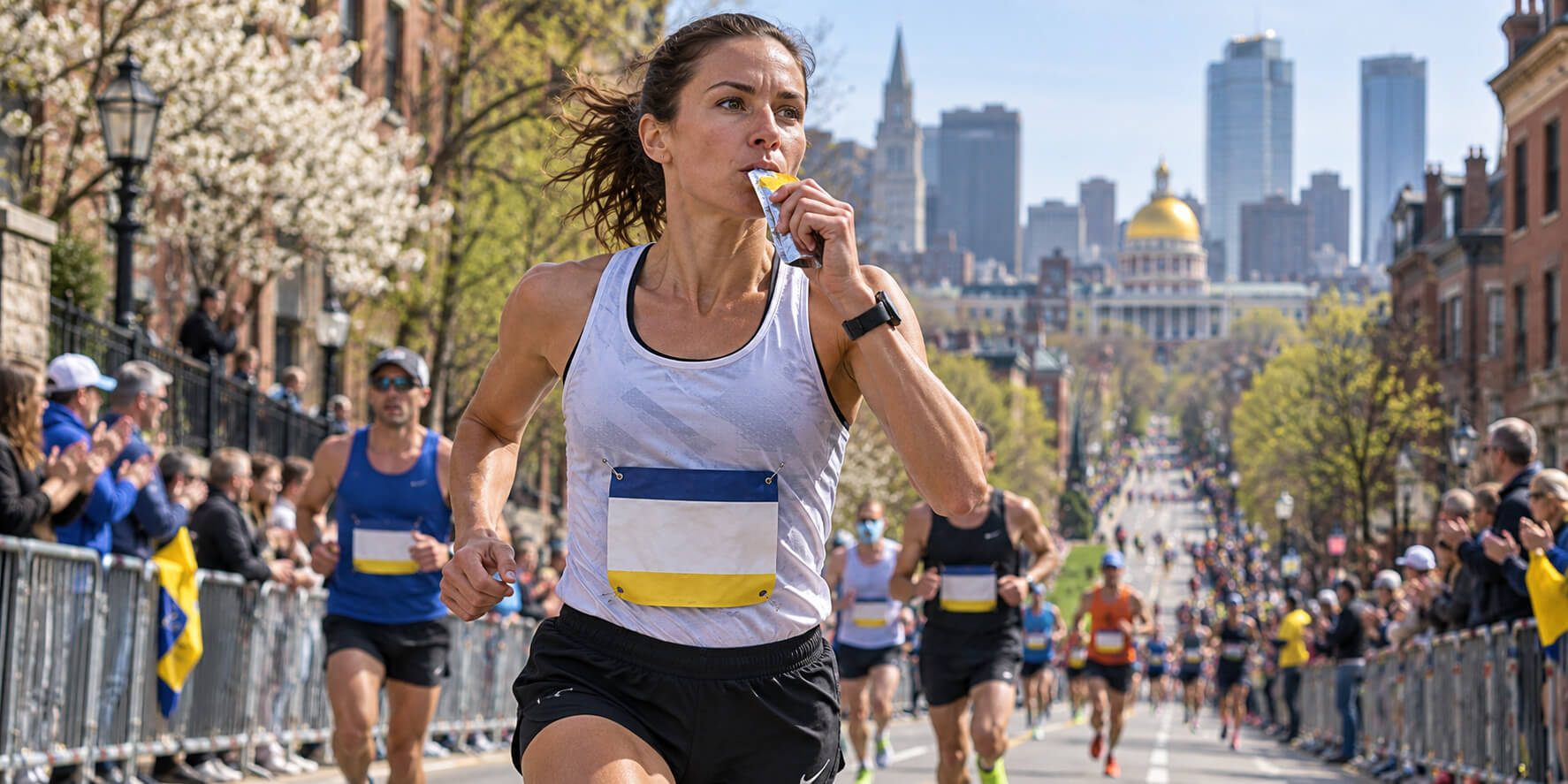
Once the race begins, the strategy becomes more familiar. The biggest principle is to start fueling before you feel like you need it.
Waiting until you feel hungry, weak, or depleted usually means you are already trying to recover from an energy deficit.
Start Taking Carbohydrates Early
Many marathoners can work toward consuming approximately 60 to 90 grams of carbohydrate per hour, although the appropriate amount depends on body size, pace, gut training, product choice, and experience.
You do not need to suddenly force yourself to hit the highest possible number.
If you currently tolerate 40 grams per hour, jumping to 90 grams on Marathon Monday is more likely to create problems than improve your race.
Practice gradually throughout your long-run build and learn what your digestive system can comfortably handle.
Carry Fuel You Already Trust
Boston is not the day to depend completely on an unfamiliar product.
If you know certain gels, chews, drink mixes, or other carbohydrate sources work well for you, carry what you need to execute your plan.
Course nutrition can provide useful support, but your primary strategy should not depend on something you have never tested.
Fuel Before You Reach the Newton Hills
One of the biggest Boston Marathon fueling mistakes is thinking only about what happens when you reach Heartbreak Hill.
By then, the work has already been underway for nearly 20 miles.
Your fueling during the first half of the race helps determine what kind of energy you have available when the terrain becomes more demanding. Eat consistently during the easier early miles rather than waiting until the Newton Hills remind you that you need fuel.
If Boston is your goal race, learning how to train for Heartbreak Hill and the Newton Hills can also help you understand why late-race strength depends on much more than hill repeats alone.
Your Pacing Strategy Affects Your Fueling Too
Fueling and pacing are connected.
The downhill opening section of Boston can make goal pace feel deceptively easy. If you run significantly faster than planned because the course feels generous, your body may use carbohydrate more aggressively while your legs absorb additional muscular stress.
That combination can become expensive later.
A disciplined marathon pacing strategy helps protect the energy you are working so carefully to replace throughout the race.
You cannot completely out-fuel an overly aggressive first 10K.
Practice Your Boston Race Morning During Training
Do not wait until Marathon Monday to discover whether your fueling plan works with a late start.
Choose one or two important long runs during your Boston training cycle and rehearse the morning as realistically as possible.
Wake up around your expected race-day time. Eat your planned breakfast. Wait several hours. Have your planned top-up snack. Then begin your long run near your anticipated Boston start time.
During the run, practice the same gels, drinks, caffeine, and carbohydrate schedule you expect to use during the race.
A rehearsal like this gives you far more useful information than simply writing a fueling plan in your phone.
Sample Boston Marathon Fueling Timeline
Your exact schedule will depend on your wave and personal nutrition needs, but a later-start morning might look something like this:
- 6:00–6:30 a.m.: Wake up and begin normal hydration.
- 6:30–7:00 a.m.: Eat your main carbohydrate-focused breakfast.
- 8:30–9:00 a.m.: Have a smaller carbohydrate snack if appropriate.
- Before your corral: Sip fluids and use your planned final carbohydrate top-up.
- Early in the race: Begin fueling before hunger or fatigue appears.
- Throughout the marathon: Continue your practiced carbohydrate and hydration plan at consistent intervals.
Use this only as a starting framework. Your wave time, digestion, pace, weather, and previous experience should shape the final plan.
Common Boston Marathon Fueling Mistakes
Even experienced runners can make simple mistakes when Boston’s unusual schedule disrupts their normal routine.
Watch for these common problems:
- Eating breakfast too early and nothing afterward.
- Eating an enormous meal because the race starts late.
- Drinking excessive water while waiting.
- Trying a new gel or sports drink on race morning.
- Delaying race fuel until fatigue appears.
- Taking far more carbohydrate than you practiced.
- Changing caffeine habits at the last minute.
- Running the opening downhill miles too aggressively.
Most of these problems are preventable when race-day nutrition becomes part of training rather than something planned during race week.
Build a Boston Strategy Around the Athlete
At Microcosm Coaching, we believe marathon preparation should fit the individual athlete rather than force every runner into the same formula. Our Boston Marathon coaching can incorporate race-specific training, pacing, fueling practice, strength work, recovery, and day-to-day adjustments based on your schedule and life outside running. The goal is not simply to reach Hopkinton fit. It is to arrive knowing how you want to execute the entire day.
Arrive in Hopkinton Fueled, Not Full
Boston’s later start does not require a completely different nutrition philosophy. It requires better timing.
Build your carbohydrate stores before race morning, eat a familiar breakfast, add planned carbohydrate as the morning progresses, hydrate gradually, and start fueling early once the race begins.
Most importantly, practice the entire process beforehand.
Your best Boston Marathon fueling strategy is not the one that looks perfect on paper. It is the one your body has already shown you it can handle.
Frequently Asked Questions
What should I eat before the Boston Marathon?
Choose a familiar, carbohydrate-focused breakfast that is relatively easy to digest. Foods such as oatmeal, bagels, toast, bananas, cereal, pancakes, or rice-based options can work well. Avoid experimenting with unusual foods on race morning.
How early should I eat before the Boston Marathon?
Many runners eat their main meal roughly three to four hours before their wave begins. Because Boston can have a long gap between waking and racing, you may also benefit from a smaller carbohydrate snack closer to your start.
Should I eat while waiting before the Boston Marathon?
For many runners, yes. A planned small carbohydrate snack can help maintain energy during the long wait between breakfast and the race. Practice the exact foods and timing during training.
How many gels should I take during the Boston Marathon?
There is no universal number. Calculate your strategy based on how many grams of carbohydrate each gel provides and your practiced hourly carbohydrate target. Your finishing time also affects how much total fuel you will need.
What is the 10-10-10 rule for marathons?
Runners sometimes use the 10-10-10 concept as a mental pacing strategy: manage the first 10 miles, stay controlled through the second 10 miles, and focus on racing the final 10K. It is not a standardized marathon fueling rule.
How should I fuel after the Boston Marathon?
Start replacing carbohydrates, protein, fluids, and electrolytes after finishing. Your stomach may need time before a large meal sounds appealing, so begin with foods and drinks you tolerate comfortably and continue eating throughout the rest of the day.
Why do runners eat gummy candy during marathons?
Gummy candy provides simple carbohydrates that can be absorbed relatively quickly, which is why some endurance athletes use it as fuel. Sports gels and chews can make carbohydrate amounts easier to measure and may also include sodium or caffeine.