
October 20, 2026
CIM Race-Week Checklist: Taper, Travel and the Start Line
The final week before the California International Marathon should feel different from the hard weeks that came before it. The long runs are done, the biggest workouts are behind you, and there is very little fitness left to gain.
Race week is about arriving in Folsom rested, fueled, organized, and mentally ready to use the fitness you already built. Because CIM is a point-to-point race with specific transportation requirements and a deceptively rolling course, getting the logistics right matters almost as much as getting the taper right.
This CIM race-week checklist will help you move through the final days with less guesswork and more confidence.
One Week Before CIM: Let the Training Work
The biggest mistake runners make during taper week is trying to squeeze in one final confidence-building workout. At this point, another hard session is more likely to create fatigue than improve your marathon fitness.
Your training volume should decrease while your routine stays familiar. Easy running, a few strides, or a small amount of race-specific work may still be included depending on your plan, but nothing should leave you sore or depleted.
If you are feeling unusually energetic, that is often a good sign. You do not need to spend that energy before race day.
Do Not Test Your Fitness
Tapering can make runners restless. Lower mileage sometimes creates the false feeling that fitness is disappearing, especially after months of consistent training.
Trust the work you have already done. Your goal this week is not to prove that you are fit. It is to arrive at the start line fresh enough to use that fitness for 26.2 miles.
If you are still refining the final stage of your build, understanding how a proper marathon taper works can help you avoid doing too much when recovery matters most.
Three Days Before CIM: Fuel, Hydrate and Simplify
As race day gets closer, training becomes less important and recovery becomes more important. Your focus should gradually shift toward sleep, hydration, carbohydrates, and keeping your routine predictable.
This is not the time to introduce new foods, supplements, shoes, gels, or race-day gear.
Stick With Familiar Foods
Carbohydrates become especially important in the final few days because they help maximize muscle glycogen before the marathon.
That does not mean you need to eat enormous meals. Instead, increase the proportion of familiar, easy-to-digest carbohydrates while avoiding foods you know can create stomach problems.
Rice, bread, potatoes, oats, bananas, bagels, pasta, and other foods you have already used during training can all work well.
Your full CIM fueling strategy should already have been practiced during long runs rather than invented during race week.
Hydrate Consistently
There is no benefit to spending Saturday desperately drinking water because you forgot to hydrate earlier in the week.
Drink consistently throughout race week and pay attention to thirst, urine color, and your normal habits. The goal is to arrive adequately hydrated without creating unnecessary discomfort from overdrinking.
Traveling to Sacramento for CIM
Travel can quietly add stress and fatigue to race week. Long flights, hours in the car, delayed luggage, sightseeing, and standing around the expo can all take more out of your legs than expected.
Keep travel as simple as possible.
Put Race Essentials in Your Carry-On
If you are flying to Sacramento, keep anything you cannot easily replace with you.
Your carry-on should ideally include:
- Race shoes and socks
- Race-day shorts or tights
- Singlet or shirt
- Watch and charger
- Gels and familiar nutrition
- Anti-chafe products
- Essential medications
- Warm start-line layers
You can replace casual clothes if luggage is delayed. Replacing the shoes you trained in the night before CIM is a much bigger problem.
Limit Time on Your Feet
Sacramento is worth exploring, but race weekend is probably not the best time for a full day of sightseeing.
Walk enough to stay loose, but avoid turning packet pickup into hours of wandering around. Save that energy for Sunday.
CIM Expo and Packet Pickup
Give yourself enough time to collect your bib without rushing. Review the official race instructions before traveling so you know what identification, confirmation information, and pickup requirements are needed.
There is no advantage to leaving this until the latest possible moment.
Should You Run a Shakeout?
A short shakeout can help some runners feel loose after traveling, while others feel better with complete rest.
There is no universal answer. If your normal routine includes an easy pre-race run, keep it easy. Ten to twenty minutes with a few relaxed strides may be enough.
The goal is to finish feeling better than when you started.
The Night Before CIM
Race morning becomes much easier when decisions have already been made.
Lay everything out before going to bed so you are not searching for gels, safety pins, gloves, or your watch charger at four in the morning.
A simple night-before checklist should include:
- Bib attached to your race kit
- Watch fully charged
- Shoes and socks ready
- Fuel organized
- Breakfast prepared
- Warm layers ready
- Transportation location confirmed
- Alarm set
- Weather forecast checked
- Finish-line meeting plan confirmed
Once those things are done, stop preparing. Race week can become mentally exhausting when runners keep checking and rechecking every detail.
Getting to the CIM Start Line
CIM logistics deserve extra attention because the race begins near Folsom and finishes in Sacramento.
You cannot approach race morning exactly as you would for a marathon where your hotel is a short walk from the starting line.
Plan Your Bus Transportation Early
Choose your official transportation location before race morning and understand when buses leave.
Do not plan around catching the final available bus. Give yourself buffer time so a long bathroom line, forgotten item, or unexpected delay does not turn race morning into a sprint before the actual marathon begins.
Your bib also matters for transportation, so keep it accessible.
What to Expect at the CIM Start Line
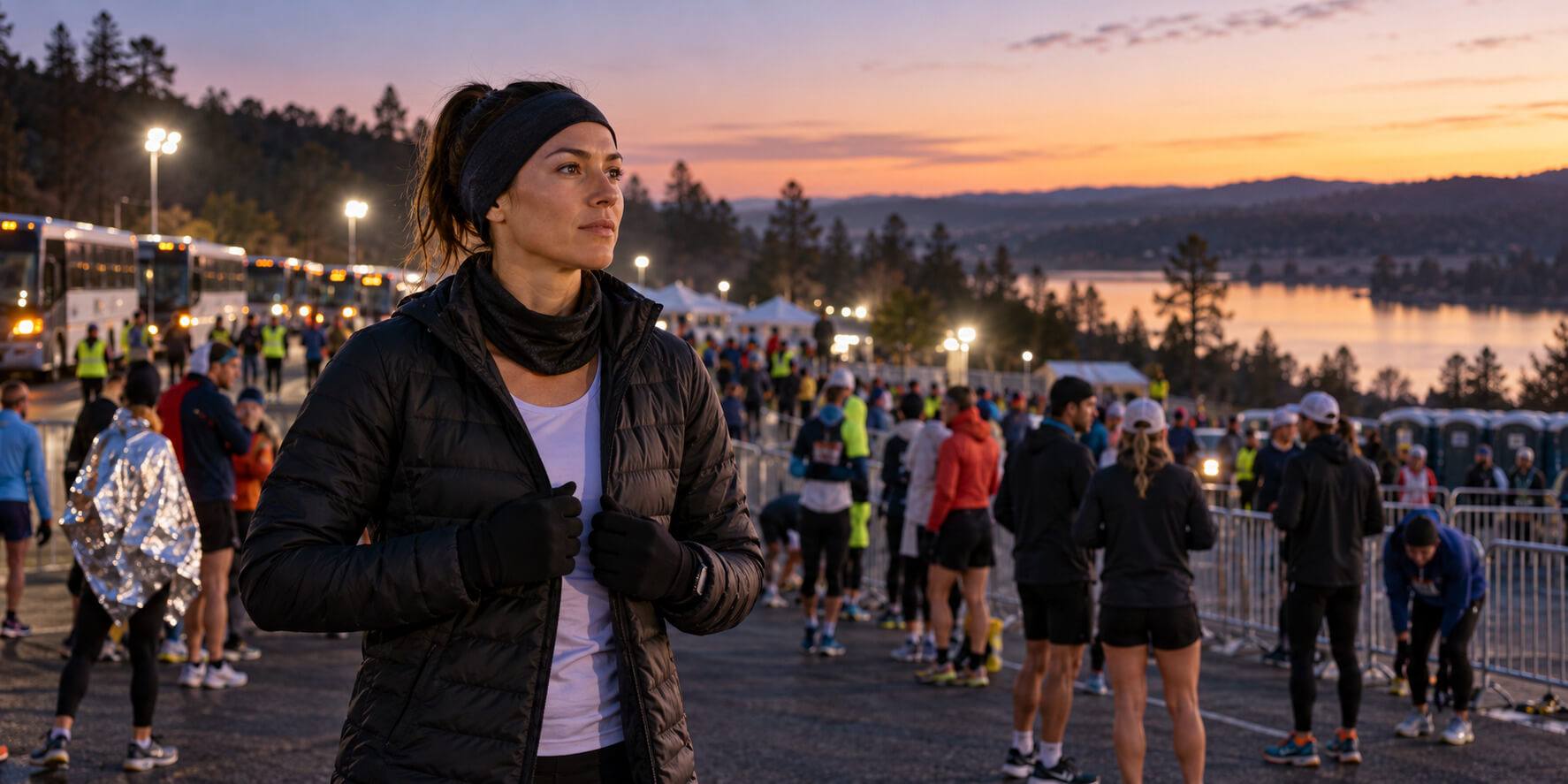
The start can involve a long period of waiting, especially because runners arrive by bus well before the gun.
That waiting period is part of the race-day challenge.
Dress for the Wait, Not Just the Race
Early December mornings in Folsom can be cold. Standing still feels very different from running a marathon.
Bring inexpensive layers you are comfortable leaving behind when it is time to enter your corral. An old sweatshirt, sweatpants, gloves, or hat can make the waiting period much more comfortable.
Do not waste energy shivering for an hour because you dressed only for mile five.
There Is No Need for a Big Warm-Up
For most marathoners, an extensive warm-up is unnecessary.
The opening miles can serve as part of the transition into race effort. Stay mobile while waiting, walk around when practical, and avoid doing anything that turns your warm-up into another workout.
CIM Race-Morning Breakfast and Fueling
Race morning nutrition should be boring.
That is a good thing.
Eat a breakfast you have already practiced during training. Give yourself enough time to digest it before the start, and account for the early bus schedule when deciding when to eat.
Some athletes also benefit from a small carbohydrate top-up closer to the start, such as a familiar gel or banana. Again, this should be something you already know works for you.
If you are unsure how to structure the entire morning, your CIM fueling plan should connect breakfast, pre-race carbohydrates, gels, hydration, and aid stations into one practiced routine.
Do Not Let CIM’s Downhill Reputation Fool You
CIM has a reputation for being fast, and it can absolutely produce fast marathon times.
But net downhill does not mean continuously downhill.
The early and middle sections include repeated rollers that can punish runners who force the pace too early. The danger is especially high when race-day excitement makes goal pace feel unusually easy.
Run the Early Miles With Patience
Your best race may feel almost too controlled during the opening miles.
Let your effort rise slightly on climbs and allow your pace to come back naturally on descents. Avoid trying to hit the exact same split on every mile.
Our CIM course and pacing guide goes deeper into how to handle the rollers, descents, and flatter closing miles.
Do Not Bank Time
Running significantly faster than goal pace early rarely creates free time for later.
It usually creates fatigue.
If you are chasing a PR or Boston qualifying time, disciplined pacing gives you a much better chance of still running well after mile 20 than aggressively attacking the opening 10K.
For runners pursuing a BQ, understanding both race selection and execution matters. Our guide on how to qualify for the Boston Marathon explains how qualifying standards, training, and pacing fit together.
A Simple CIM Race-Morning Timeline
Your exact timing will depend on where you are staying and which transportation option you use, but the basic sequence should stay simple.
Eat your practiced breakfast several hours before the start. Complete your final gear check before leaving. Arrive for your selected bus with extra time, then use the wait in Folsom to stay warm, use the bathroom, and take any planned final fuel.
As the start approaches, remove extra layers, move toward the appropriate staging area, and settle into your own race.
You do not need to feel spectacular at the start line. You only need to feel ready to begin.
Race Week Is About Removing Variables
At Microcosm Coaching, we approach marathon preparation around the athlete rather than forcing every runner into the same schedule. Personalized California International Marathon coaching brings training, pacing, fueling, recovery, work, family, and race-day execution into one plan that can adapt as you progress.
Race week follows the same philosophy. You are not trying to create new fitness in the final few days. You are trying to remove unnecessary problems so the fitness you built has the best possible chance to show up.
Final CIM Race-Week Checklist
Before heading to the start, make sure the important pieces are already handled.
Your taper is complete. Your race shoes and clothing are tested. Your fuel is familiar. Your bus transportation is confirmed. Your watch is charged. Your warm layers are ready. Your breakfast is planned. Your pacing strategy is clear.
Then stop trying to perfect everything.
Marathons rarely unfold exactly as expected. The goal is to arrive prepared enough that you can adapt when something small changes.
FAQs About CIM Race Week
Where Is the CIM Marathon Start Line?
The California International Marathon begins near Folsom and runs point-to-point into Sacramento, finishing near the California State Capitol.
What Time Does CIM Start?
CIM traditionally begins early in the morning. Always confirm the current year’s official start time and transportation schedule before race weekend because logistics can change.
How Do Runners Get to the CIM Start Line?
Runners use official race transportation to reach the start area. Select your pickup location in advance and arrive well before the final departure window.
Can Someone Drop Me Off at the CIM Start Line?
Direct runner drop-off near the start is restricted. Plan to use the official transportation system rather than relying on private vehicle access.
Is CIM a Hard Marathon?
CIM can be fast, but it is not effortless. The early rolling terrain, repeated descents, and full marathon distance can create significant muscular fatigue if you pace too aggressively.
How Should I Taper the Week Before CIM?
Reduce overall training volume, keep running familiar and controlled, prioritize sleep and recovery, and avoid trying to gain fitness with hard last-minute workouts.
What Should I Wear While Waiting at the CIM Start?
Wear warm, removable layers over your race kit. Old sweatshirts, sweatpants, gloves, and hats can help you stay comfortable while waiting without forcing you to race in extra clothing.
What Is the Biggest CIM Race-Week Mistake?
Trying to improve fitness during race week is one of the biggest mistakes. By this point, the most valuable things you can do are recover, fuel, organize your logistics, trust your training, and start the race patiently.