
May 18, 2026
How To Build Stamina And Endurance For Running
Building stamina and endurance for running is not about forcing harder workouts every day. It is about helping your body handle more time on your feet, recover better, and stay consistent long enough for real fitness to develop.
Many runners make endurance harder than it needs to be. They run too fast too often, increase mileage too quickly, skip recovery, and then wonder why every run feels difficult.
The truth is simple: strong endurance comes from smart training. You need easy running, gradual progression, focused workouts, recovery, nutrition, and patience.
Whether you are training for your first 5K, a marathon, a trail race, or an ultra, the goal is the same. Build an aerobic engine that supports your running without pushing your body into constant fatigue.
Stamina Vs Endurance: What’s The Difference?
Stamina and endurance are closely related, but they are not exactly the same. Stamina is your ability to sustain effort at a certain intensity, such as holding a strong pace during the final mile of a race. Endurance is your ability to keep going over a longer period of time, maintain steady effort, and recover well between workouts.
For most runners, endurance is the foundation. When your aerobic system improves, your stamina improves too because your body uses oxygen better, manages fatigue more efficiently, and recovers faster. This is why beginners should build endurance before focusing heavily on speed.
Why Most Runners Plateau Early
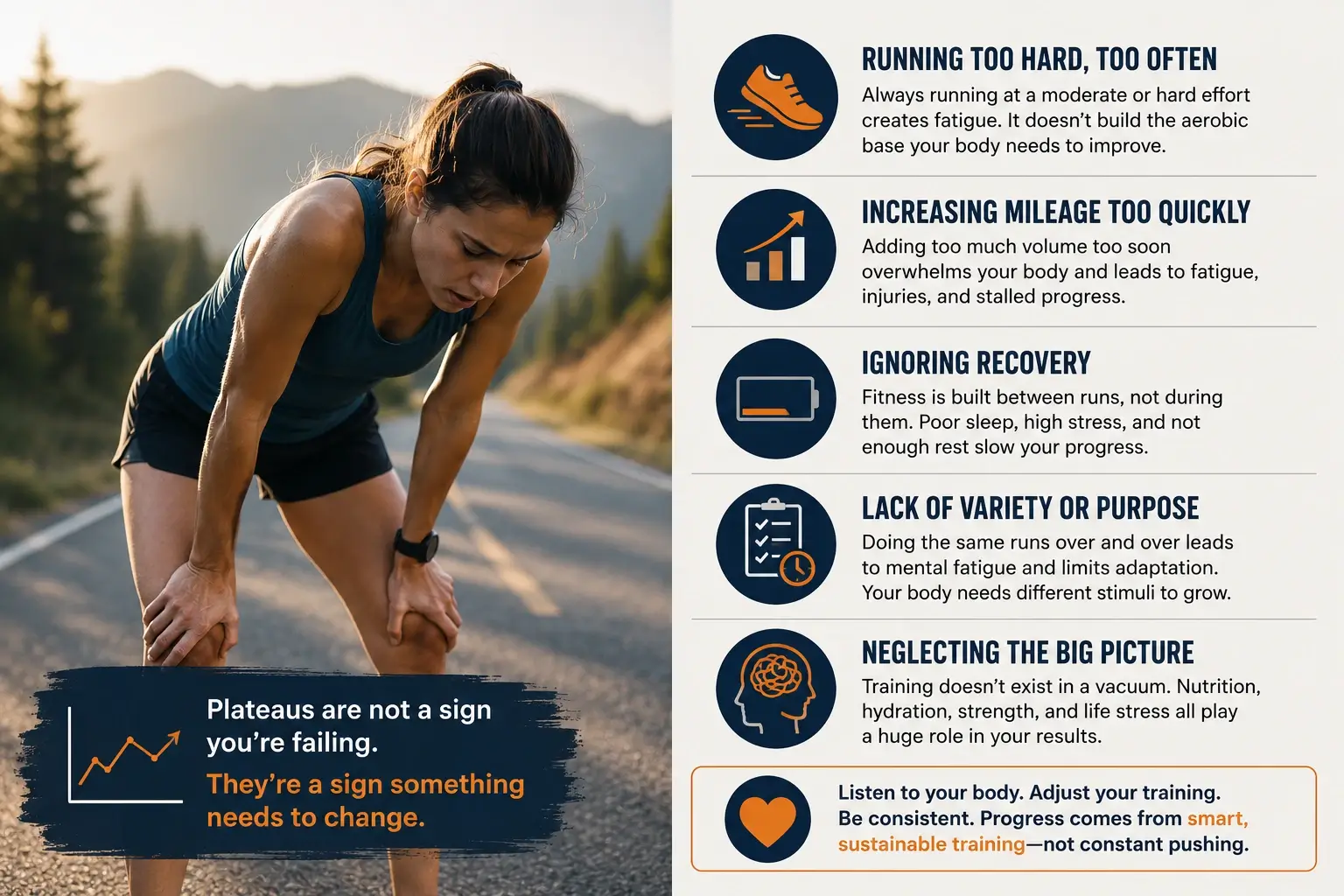
Many runners start with motivation, but progress often slows after a few weeks because they run too hard too often. They treat every run like a test, pushing the pace until each session feels stressful. This creates fatigue without giving the body enough time to adapt, so even though the effort feels high, it does not always build lasting endurance.
Another common reason runners plateau is increasing mileage faster than the body can handle. Your heart and lungs may adapt before your muscles, tendons, bones, and connective tissue are ready. Recovery also plays a major role because sleep, stress, nutrition, work, family responsibilities, and mental energy all affect training. Your body does not separate life stress from running stress. It only responds to the total load.
Build Your Aerobic Base First
Your aerobic base is the foundation of running endurance. It helps you run longer, recover better, and eventually run faster with less effort.
Aerobic training improves how efficiently your body uses oxygen. Over time, easy running supports stronger cardiovascular fitness, better fat metabolism, and improved muscular endurance.
This does not happen from one hard workout. It happens from repeated, consistent efforts at manageable intensities.
How To Find Your Easy Running Pace
The best way to build your aerobic base is through easy running. An easy run should feel controlled and conversational, meaning you should be able to speak in full sentences without gasping for air. For many runners, this pace feels too slow at first, but that is normal. Easy running is not wasted training. It is the work that helps you build durability without breaking down.
A helpful rule is the 80/20 principle. Around 80% of your weekly running should be easy, while about 20% can be moderate or hard. Some runners may even need 90% easy running depending on their experience, schedule, stress, and injury history. This balance allows you to build endurance while still including enough intensity to improve speed and stamina.
The Best Running Workouts For Endurance
Endurance training does not mean doing the same run every day. A smart weekly structure includes different types of runs, each with a clear purpose.
The goal is not to do everything at once. The goal is to build a rhythm your body can absorb.
Long Runs
The long run is one of the most important workouts for building endurance.
It teaches your body to stay efficient over longer periods of time. It also builds mental confidence because you learn how to keep moving when your legs feel tired.
Long runs should usually be done at an easy pace. The goal is not to prove fitness every weekend.
The goal is to extend your ability to spend time on your feet.
Tempo Runs
Tempo runs help improve stamina and pace control.
A tempo run is done at a comfortably hard effort. It should feel controlled but challenging.
This kind of workout helps you hold a stronger pace before fatigue builds too quickly.
Tempo work is useful, but it should not dominate your week. Most runners only need one focused harder session per week.
Interval Training
Intervals can help improve stamina, especially when used carefully.
Short repeats, such as 30 seconds fast followed by easy jogging, can improve leg turnover and cardiovascular fitness.
Longer intervals can help runners develop speed endurance.
The key is to recover well between efforts and avoid turning every interval session into an all-out race.
Hill Workouts
Hill workouts are valuable for trail runners, ultra runners, and road runners.
Hills build strength, power, and durability. They can also improve running economy without needing to run as fast as you would on flat ground.
Hill training is especially helpful if you are preparing for trail races, hilly marathons, or mountain events.
How Beginners Can Increase Running Stamina Safely
Beginners do not need to run continuously to improve. Run-walk training is one of the safest ways to build stamina, especially when your body is still adapting to regular running.
For example, you can run for two minutes, walk for one minute, and repeat that pattern for 20 to 30 minutes. Over time, reduce the walking breaks and increase the running time as your fitness improves.
Focus on time before distance, and build gradually. Trying to improve too quickly can lead to plateaus, burnout, or injury, while steady progress gives your body the time it needs to build real endurance.
Nutrition And Recovery For Better Endurance
Running endurance is not built only during the run. It is built between runs, when your body repairs and adapts.
Fueling matters. Carbohydrates help provide energy for training, especially longer runs and harder workouts.
Protein supports muscle repair. Hydration and electrolytes help maintain performance, especially in hot weather or during longer sessions.
You do not need a complicated diet to build endurance. But you do need enough food to support your training.
Many runners underfuel without realizing it. Then they feel flat, tired, and unable to progress.
Sleep is just as important. Most runners perform better when they consistently get 7 to 9 hours of sleep.
Poor sleep affects recovery, motivation, hormone regulation, and perceived effort.
Stress management also plays a role. A runner dealing with high work stress, family stress, travel, or poor sleep may need a lighter training load.
Pushing harder during stressful seasons often leads to burnout.
Strength Training For Runners
Strength training can support endurance by improving durability.
Stronger hips, glutes, calves, hamstrings, and core muscles can help you hold form longer and reduce injury risk.
You do not need an overly complicated routine. A simple strength routine two times per week can make a difference.
Focus on controlled movements, good form, and consistency rather than trying to lift as hard as possible.
Helpful strength exercises may include:
- Squats
- Lunges
- Step-ups
- Calf raises
- Glute bridges
- Planks
The goal is not to become sore after every session. The goal is to build a stronger body that can handle more running over time.
How To Improve Running Stamina Without Burnout
The fastest way to lose consistency is to make training feel impossible to sustain. Running endurance improves when your plan fits your life instead of constantly fighting against it.
Avoid the all-or-nothing mindset. Missing one run or having a tough week does not mean you are failing. Endurance is built through months of repeated effort, not perfect training every day.
Listen to your body and adjust when needed. Fatigue, soreness, poor sleep, low motivation, or unusually hard easy runs can be signs that your body needs recovery. A strong endurance plan should include variety, flexibility, and room for real life.
How Microcosm Coaching Helps Runners Build Endurance
Microcosm Coaching offers virtual endurance coaching for runners, trail runners, ultra runners, marathoners, skimo athletes, and cyclists who want a smarter, more sustainable way to train.
Their coaching approach is human-first. That means training is built around the whole athlete, not just mileage, pace, or race goals.
Coaches use individualized, evidence-based plans, daily check-ins, regular feedback, and long-term support to help athletes build stamina, endurance, confidence, and consistency.
This approach also considers stress, recovery, work, family, and life outside of training.
For runners who want more than a generic plan, Microcosm’s running coaching offers a supportive path toward steady growth, better decision-making, and a stronger relationship with the training process.
Final Thoughts
Building stamina and endurance for running is not about chasing shortcuts. It is about creating a training process you can repeat, recover from, and trust.
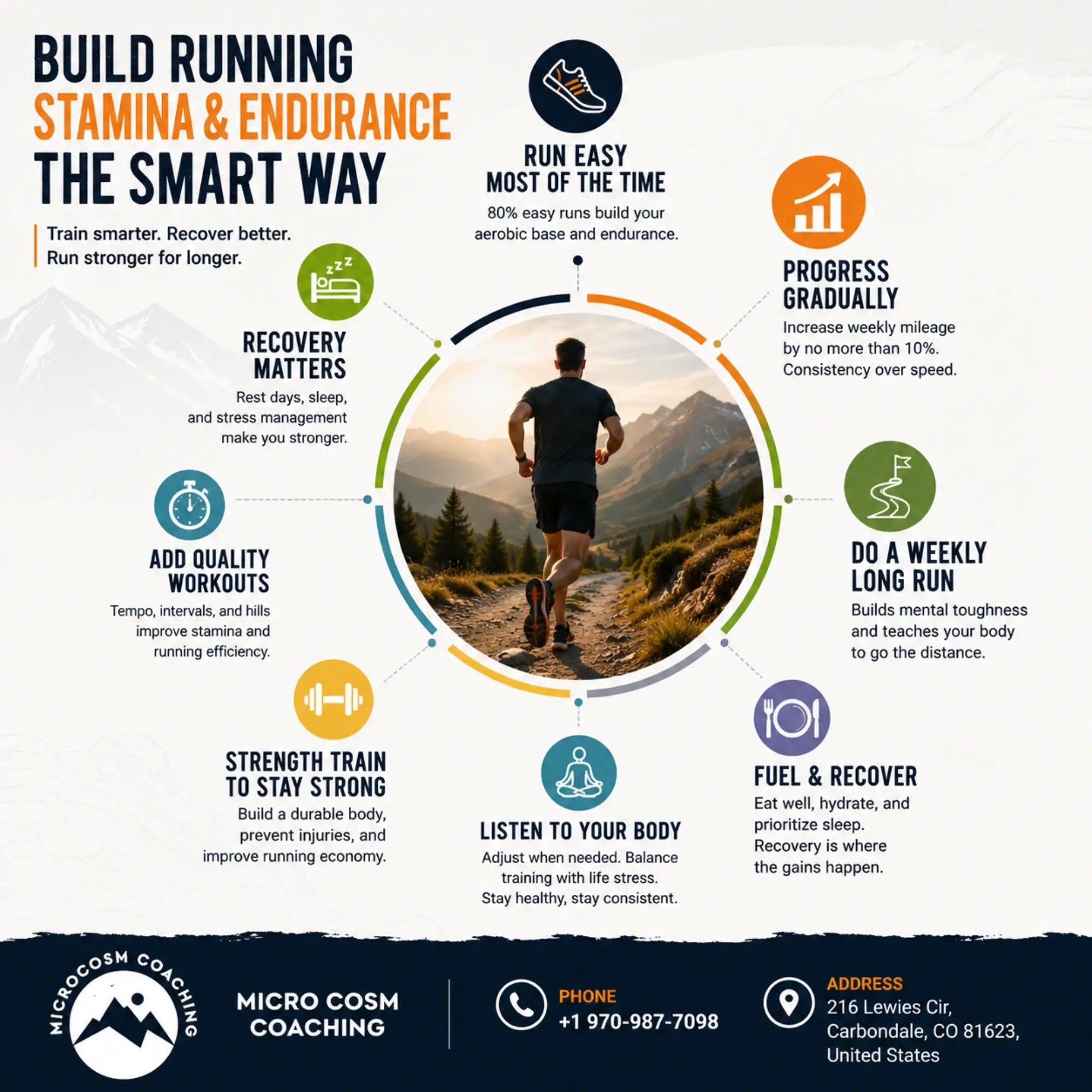
Run easy most of the time. Build gradually. Add focused workouts when your body is ready.
Take recovery seriously. Fuel your training. Respect your life outside of running.
The runners who improve the most are not always the ones who push hardest every day.
Frequently Asked Questions
How Long Does It Take To Build Running Endurance?
Most runners can feel early improvements within a few weeks.
Meaningful endurance usually takes several months. The timeline depends on your starting fitness, consistency, recovery, training history, and goals.
Can I Improve Running Stamina In 2 Weeks?
You can improve how you feel in two weeks by running easier, recovering better, and following a consistent plan.
However, major endurance gains take longer. Think of two weeks as the beginning of the process, not the finish line.
How Can Beginners Increase Running Stamina?
Beginners should start with easy run-walk sessions, focus on time rather than pace, and slowly build weekly consistency.
The goal is to make running repeatable and sustainable.
What Foods Help Improve Running Stamina?
Carbohydrates provide energy for running. Protein helps repair muscles after training.
Hydration, electrolytes, fruits, vegetables, and enough total calories also support endurance.
Is It Better To Run Longer Or Faster For Endurance?
Most of the time, running longer at an easy pace is better for building endurance.
Faster workouts can help, but they should be used carefully and balanced with plenty of easy running.
Why Do Easy Runs Feel So Slow?
Easy runs feel slow because they are meant to stay controlled.
Over time, your easy pace often gets faster as your aerobic fitness improves.
Can Strength Training Improve Running Endurance?
Yes. Strength training can improve durability, running form, and fatigue resistance.
It helps your body handle more training without breaking down.
What Is The Difference Between Stamina And Endurance?
Stamina is your ability to sustain effort.
Endurance is your ability to continue activity over time.
For runners, endurance creates the foundation that allows stamina to improve.