
October 20, 2026
Marathon Recovery Timeline: When to Run Again After CIM or Another Race
You crossed the finish line after 26.2 miles. Maybe you raced the California International Marathon chasing a personal best or Boston qualifier. Maybe you simply finished a marathon that required months of consistent training. Either way, the next question often comes surprisingly quickly: when should you start running again?
For many runners, marathon recovery takes about three to four weeks before normal structured training feels appropriate. You may be ready for a short easy run much sooner, but being able to run and being fully recovered are not the same thing.
The best marathon recovery timeline depends on how hard you raced, your training history, soreness, sleep, life stress, and what you want to do next.
How Long Does It Take to Recover From a Marathon?
There is no exact recovery period that applies to every runner. Some experienced marathoners may feel comfortable testing an easy run within four or five days. Others benefit from a full week or longer without running.
Your recovery timeline can also change from one marathon to the next. An all-out race where you pushed through the final miles creates a different recovery demand than a marathon completed comfortably as part of a longer season.
The goal is not to prove how quickly you can start training again. It is to allow enough recovery that your next training block starts from a healthy foundation instead of carrying fatigue forward.
If you are already thinking about another race, remember that the weekly volume you eventually rebuild should still reflect your experience and recovery capacity. Our guide to how many miles per week to run for marathon training explains why more mileage is not automatically better.
What Happens to Your Body After a Marathon?
A marathon creates much more than sore legs. Your muscles, connective tissues, energy stores, nervous system, and overall fatigue levels have all been affected by several hours of running.
Muscle soreness may peak during the first couple of days and then improve quickly. That does not necessarily mean every system has recovered. Your legs can feel relatively normal while deeper fatigue is still present.
That is why marathon recovery should be treated as a progression rather than a single rest day followed by normal training.
Marathon Recovery Timeline: Day by Day and Week by Week
Think of this timeline as a framework rather than a strict schedule. Your body should determine when you move forward.
A runner coming off a controlled first marathon may recover differently than someone who raced CIM at the edge of their ability trying to earn a Boston qualifying time.
Race Day Through Day 3: Rest and Recover
The first few days should be simple. You have already done the hard work. There is no fitness to gain by forcing an immediate recovery run.
Walking can be helpful if it feels comfortable, but keep movement easy. Focus on eating enough carbohydrates to restore energy, consuming adequate protein to support muscle repair, hydrating, and getting as much quality sleep as your schedule allows.
Your legs may feel especially stiff after sitting for long periods. Gentle movement can help, but avoid turning recovery into another workout.
Days 4-7: Should You Run Yet?
By the second half of the first week, some runners begin wondering whether they should test their legs.
A short easy run may be reasonable if normal walking feels comfortable, soreness has mostly resolved, stairs are manageable, energy is returning, and there is no sharp or localized pain.
Your first run does not need to prove anything. Fifteen to thirty minutes at an easy conversational effort is enough to learn how your body responds.
If the run feels awkward or unusually tiring, stop and take another day or two. Waiting longer will not erase the fitness you built during your marathon cycle.
Week 2: Keep Running Easy
During the second week, many runners can begin reintroducing short easy runs if recovery is progressing well.
The key word is easy.
Avoid trying to return immediately to the pace or mileage you were handling before the race. Your marathon fitness does not disappear because you temporarily reduce your training.
Run conversationally, take recovery days between sessions when needed, and avoid demanding intervals or long marathon-pace workouts.
This is also a good time to stop paying too much attention to pace. Your normal easy pace may temporarily feel harder than expected. That is useful information, not a problem that needs to be corrected.
Week 3: Gradually Rebuild Your Routine
By the third week, many runners can begin adding a little more frequency and volume.
You might extend one or two easy runs, reintroduce light strength work, or add a few relaxed strides if your legs have consistently felt good. The goal is still to rebuild rather than immediately start another peak training cycle.
This is where individual response matters. One runner may comfortably reach 60 to 70 percent of normal mileage while another still benefits from substantially less.
Pay attention to what happens after your runs, not just during them. If a seemingly easy session leaves you unusually fatigued the following day, that is a reason to hold your current workload rather than increasing it again.
Week 4 and Beyond: Return to Structured Training
Around week four, runners who have recovered well can often begin thinking about more structured training.
Strides, moderate hill work, controlled tempo running, and longer runs can gradually return. More demanding intervals and major long-run workouts should come later once your body is consistently handling easier training without problems.
If your next goal is another marathon, there is no need to jump directly back to peak mileage. Build gradually so your fitness from the previous cycle becomes a foundation rather than fatigue you are constantly trying to outrun.
How Do You Know You Are Ready to Run Again?
The calendar is useful, but your body gives better information.
Before progressing your running, look for signs such as:
- Normal walking and stair climbing
- No sharp, localized, or worsening pain
- Minimal soreness during everyday movement
- Energy levels returning toward normal
- Stable sleep and appetite
- Easy running feeling genuinely easy again
- Normal motivation to train rather than feeling mentally drained
Resting heart rate or HRV data can provide additional context if you normally track them, but they should not override how you actually feel.
One good run does not automatically mean you are ready for normal training. Look for consistency across several days.
When Can You Start Speed Work After a Marathon?
Speed work should generally return later than easy running.
Start with short relaxed strides once your easy runs feel normal. From there, moderate efforts can gradually return before harder threshold work or intervals.
If you are already planning another marathon, resist the urge to prove your fitness immediately. The fitness you built is still there. Good recovery allows you to actually use it in your next cycle.
When structured training does return, having a clear marathon pacing strategy can help you separate appropriate marathon effort from running harder simply because your legs finally feel fresh again.
When Can You Strength Train After a Marathon?
Light mobility and basic strength movements may feel appropriate fairly early if they are comfortable. Heavy lower-body lifting should usually wait until significant soreness and movement limitations have resolved.
Your first strength sessions back should not be attempts to set personal records. Reduce the load, volume, or both and observe how your legs respond.
Strength training should support your return to running, not create another large dose of soreness while your body is still recovering from the marathon.
When Can You Race Again After a Marathon?
The answer depends heavily on the race distance and how seriously you intend to race it.
A relaxed 5K several weeks after a marathon creates a very different demand than trying to set another marathon personal best. An experienced runner may also tolerate racing sooner than someone completing their first 26.2 miles.
A half marathon soon after a marathon can sometimes work as a controlled or social effort, but racing it hard requires more recovery. Another all-out marathon deserves considerably more time.
If Boston is your next major goal, use recovery to decide when your next build should begin rather than rushing because you are excited about qualifying. Our breakdown of how to qualify for the Boston Marathon can help you think through the larger training and race-selection process.
Does Recovery After CIM Require Anything Different?
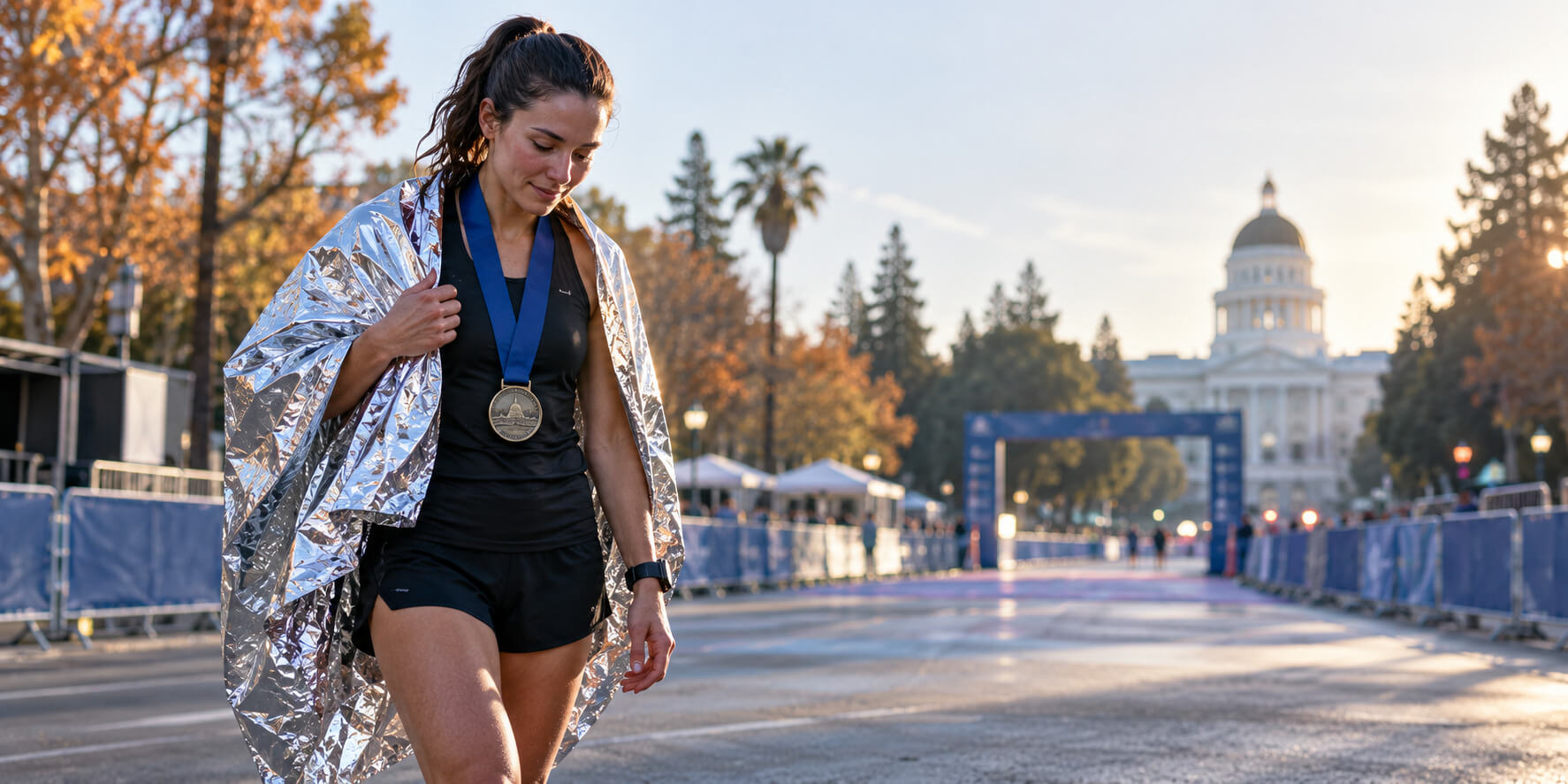
The basic recovery principles after the California International Marathon are the same as any marathon, but your race experience matters.
CIM attracts many runners chasing personal bests and Boston qualifying times. That often means the race is run very aggressively. Its rolling and net-downhill profile can also create significant muscular fatigue, particularly through the quadriceps.
If you raced CIM hard, do not let a fast finish or successful BQ convince you that your body needs less recovery.
Understanding the demands of the California International Marathon course can also explain why your legs may feel different after CIM than after a flatter marathon.
Recovery Is Part of Marathon Training
At Microcosm Coaching, recovery is not treated as time lost between training blocks. It is part of becoming a stronger, more durable athlete. Personalized California International Marathon coaching considers the full athlete, including training history, race goals, work and family demands, sleep, recovery, and how the body responds after hard efforts. The goal is to build fitness you can continue developing instead of constantly starting over after exhausting yourself.
Finishing your marathon is only the end of one training cycle. What you do afterward affects the next one.
Give yourself enough time to absorb the race, rebuild gradually, and return to harder training when your body is ready. A few extra recovery days will rarely hurt your long-term progress. Rushing back before you are ready can.
Frequently Asked Questions About Marathon Recovery
How Soon Can I Start Running Again After a Marathon?
Many runners benefit from several days to a week without running before trying a short easy run. Your soreness, energy, training background, race effort, and injury status should guide the exact timing.
How Many Days Should I Rest After a Marathon?
Taking at least several days away from running is common. Some runners benefit from a full week or longer. Gentle walking and normal daily movement can still be appropriate if they feel comfortable.
Should I Do a Recovery Run the Day After a Marathon?
Usually, there is little benefit to forcing a run the day after a marathon. Walking and gentle movement can promote circulation without adding another round of impact stress to already fatigued legs.
What Is the 10-10-10 Rule for Marathons?
The 10-10-10 rule is generally a marathon pacing concept rather than a recovery rule. It divides the marathon into the first 10 miles, second 10 miles, and final 10K to help runners manage their effort across the race.
When Can I Do Speed Work After a Marathon?
Wait until easy running consistently feels normal before reintroducing demanding workouts. Strides and moderate efforts can usually return before hard intervals or sustained threshold sessions.
How Soon After a Marathon Can I Run a Half Marathon?
It depends on whether you plan to race the half marathon hard or complete it comfortably. A relaxed event may fit sooner, while another peak race effort deserves additional recovery.
When Should I Lift Weights After a Marathon?
Light mobility and easy strength work may return once they feel comfortable. Heavy lower-body lifting should wait until significant soreness, stiffness, and movement limitations have resolved.