
June 4, 2026
How To Breathe While Running
Breathing is one of the most overlooked skills in running. Many runners spend time thinking about pace, mileage, shoes, and training plans, but very few think about how they breathe. Then, somewhere during a hard workout, a steep climb, or a long run, they find themselves gasping for air and wondering what went wrong.
The good news is that better breathing is a skill you can develop. While breathing may seem automatic, learning how to breathe efficiently while running can help you feel more comfortable, improve endurance, reduce fatigue, and make running more enjoyable. Whether you’re training for your first 5K, preparing for a marathon, or tackling mountain trails, understanding your breathing can help you become a stronger runner.
Why Breathing Feels Hard When You Run
Running places increased demands on your body. As your muscles work harder, they require more oxygen and produce more carbon dioxide. Your breathing naturally speeds up to meet those demands.
However, breathing difficulties are not always caused by fitness limitations. Many runners start too fast, carry unnecessary tension, or spend too much time training at moderate intensities. These habits can make breathing feel harder than it needs to be.
Breathing can also be affected by stress, lack of sleep, poor recovery, anxiety, weather conditions, and even your posture. Understanding these factors is often the first step toward improving your running experience.
The Best Way To Breathe While Running

The most effective approach is to breathe deeply, stay relaxed, and establish a rhythm that matches your effort level. Breathing should feel controlled rather than forced.
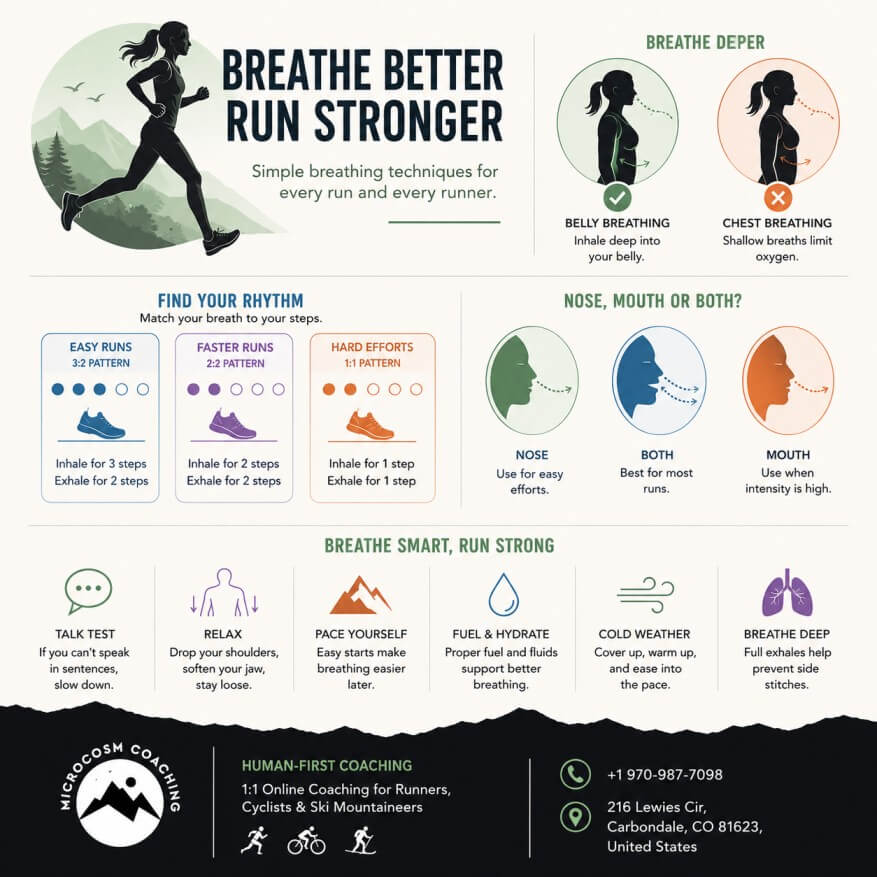
Many runners unknowingly take shallow breaths from their chest. While this may work during daily activities, it becomes less efficient during exercise. Deep breathing allows your body to take in more oxygen while reducing tension throughout the run.
Start With Belly Breathing
Belly breathing, also called diaphragmatic breathing, involves expanding your stomach and lower ribs as you inhale. Instead of lifting your shoulders and chest, you allow the diaphragm to do most of the work.
This technique helps maximize oxygen intake while reducing unnecessary tension in your neck, shoulders, and upper body. Over time, belly breathing can improve endurance and help maintain a steadier effort during longer runs.
Avoid Shallow Chest Breathing
Shallow breathing often occurs when runners become anxious, fatigued, or begin running too hard too soon. It creates a cycle where breathing feels increasingly difficult and the body becomes more tense.
Pay attention to your posture while running. Keep your shoulders relaxed, your jaw loose, and your chest open. These simple adjustments can make a significant difference in how easily you breathe.
Nose Or Mouth Breathing While Running: Which Is Better?
One of the most common questions runners ask is whether they should breathe through their nose or mouth. The answer depends largely on your effort level.
During very easy runs, breathing primarily through the nose can help regulate effort and encourage relaxation. Many runners use nasal breathing as a tool to ensure they are staying within an easy aerobic zone.
As intensity increases, however, most runners benefit from breathing through both the nose and mouth. This allows more oxygen to enter the body and supports higher workloads. The goal is not to force a specific method but to use the approach that feels natural and effective for the pace you are running.
Rhythmic Breathing Patterns For Running

Rhythmic breathing refers to coordinating your breathing with your footsteps. This technique can help create consistency and prevent random gasping during a run.
Developing a breathing rhythm also helps runners stay focused and relaxed. Rather than constantly thinking about pace or fatigue, they can settle into a sustainable pattern that matches the workout.
3:2 Breathing Pattern For Easy Runs
A popular breathing rhythm for easy running is the 3:2 pattern. This means inhaling for three steps and exhaling for two steps.
This pattern works particularly well during easy runs, recovery runs, and long aerobic efforts. It encourages deeper breathing while helping runners maintain a comfortable effort level.
2:2 Breathing Pattern For Faster Running
As pace increases, a 2:2 rhythm often becomes more practical. In this pattern, you inhale for two steps and exhale for two steps.
This breathing rhythm is commonly used during tempo runs, hill workouts, and race efforts where oxygen demands are higher. It provides a balance between control and efficiency.
1:1 Breathing Pattern For Hard Efforts
During very hard efforts, such as sprint finishes or steep climbs, breathing may naturally shift to a 1:1 rhythm.
This is completely normal during short bursts of intense work. However, if you find yourself stuck in this breathing pattern for extended periods, it may be a sign that you are pushing harder than intended for that particular workout.
How To Breathe While Running Long Distance
Long-distance running requires patience and efficiency. Many runners struggle with breathing during longer efforts because they begin too fast and spend too much energy early in the run.
A sustainable pace should allow breathing to remain relatively controlled for most of the session. If you are gasping for air within the first few miles, it is often a sign that the pace needs adjustment.
Focus on maintaining a relaxed rhythm and using the talk test. If you can comfortably speak in short sentences, you are likely running at an appropriate effort for long-distance training.
How To Breathe While Running For Beginners
New runners often assume they are out of shape when breathing feels difficult. In reality, many beginners simply run faster than their current fitness level supports.
The easiest solution is often slowing down. Running at a conversational pace allows the cardiovascular system to adapt while making breathing more manageable.
Instead of focusing on complicated breathing techniques, beginners should prioritize:
- Running easy enough to hold a conversation
- Practicing belly breathing during warmups
- Staying relaxed through the shoulders and jaw
- Building consistency over time
As fitness improves, breathing naturally becomes more efficient.
How To Breathe While Running A 5K Or 10K
The breathing demands of a 5K and 10K differ from those of easy runs or long runs. These races require sustained effort that pushes closer to your physical limits.
In a 5K, breathing will feel noticeably harder because the pace is faster. Most runners naturally transition to a 2:2 breathing rhythm as the race progresses. The key is remaining relaxed rather than fighting the sensation.
A 10K requires a slightly more controlled approach. Starting conservatively allows breathing to stay under control early, making it easier to maintain pace during the later stages of the race.
How To Breathe While Running Fast
Fast running requires more oxygen and places greater demands on your respiratory system. Rather than trying to slow your breathing, focus on keeping your body relaxed while allowing breathing to increase naturally.
Many runners make the mistake of tensing their shoulders, clenching their fists, or tightening their jaw during harder efforts. These habits can make breathing feel more difficult and waste valuable energy.
A few simple cues can help:
- Keep your shoulders low and relaxed
- Maintain tall posture
- Exhale fully
- Relax your hands and face
- Focus on smooth, controlled breathing
These adjustments can make faster running feel significantly more manageable.
How To Breathe While Running In The Cold
Cold air presents unique challenges for runners. Breathing can feel harsher, especially when temperatures drop significantly.
A gradual warmup becomes even more important in colder conditions. Starting slowly gives your respiratory system time to adapt and reduces discomfort.
Many runners find that wearing a neck gaiter or buff over their mouth helps warm the air before it enters the lungs. Breathing through the nose during the first few minutes of a run can also help make the transition more comfortable.
What To Do If You Get Out Of Breath Mid-Run
Even experienced runners occasionally find themselves struggling to catch their breath. When this happens, the first step is not to panic.
Slow your pace and focus on a complete exhale. Many runners concentrate on inhaling but fail to fully exhale, which can create a feeling of breathlessness.
Check your posture and effort level. Often, a slight reduction in pace combined with relaxed breathing is enough to restore control within a few minutes.
How To Prevent Side Stitches With Better Breathing
Side stitches are a common frustration for runners. While the exact cause varies, shallow breathing, poor pacing, and tension often contribute to the problem.
If a side stitch develops, slow down and focus on longer exhales. Applying gentle pressure to the affected area while breathing deeply may also help relieve discomfort.
Starting runs more gradually and maintaining a consistent breathing rhythm can reduce the likelihood of side stitches occurring in the first place.
Breathing Is Also A Pacing Skill
One of the biggest lessons runners can learn is that breathing reflects effort. In many cases, breathing problems are actually pacing problems.
At Microcosm Coaching, athletes are encouraged to use breathing as a tool for awareness rather than something to fight against. Whether training for a marathon, ultra, trail race, ski mountaineering event, or simply improving overall fitness, breathing provides valuable feedback about effort, stress, and recovery.
Through individualized coaching, daily check-ins, and evidence-based training plans, athletes learn how to use breathing, pacing, and effort together to build sustainable performance over months and years rather than chasing short-term results.
Final Thoughts On Breathing While Running
Breathing well while running is not about finding a secret technique. It is about developing awareness, staying relaxed, and matching your breathing to the demands of the workout.
Start with belly breathing, establish a comfortable rhythm, and allow your pace to guide your breath. Over time, your breathing will become more efficient, your confidence will grow, and running will feel more natural.
The best runners are not necessarily the ones who breathe the hardest. They are the ones who have learned how to work with their breathing rather than against it.