
June 12, 2026
What To Do The Day Before A Marathon
The day before a marathon is not the time to gain fitness, prove anything, or squeeze in one more confidence-building workout. The training is already in your body. Your job now is to protect that work.
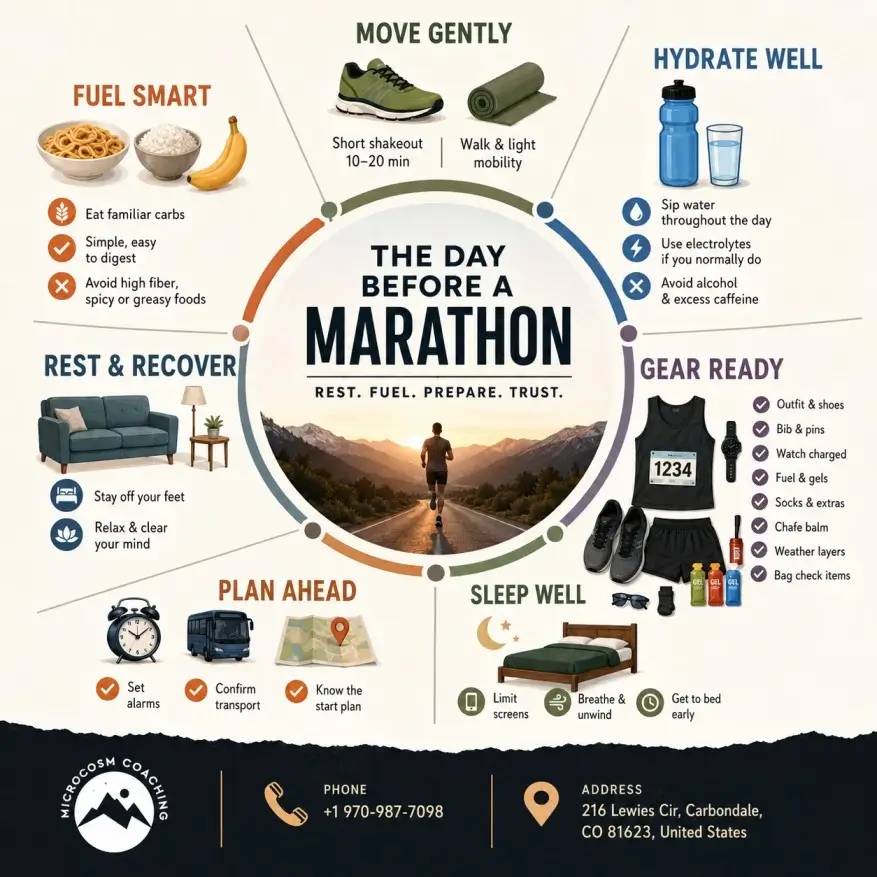
The final 24 hours are about keeping things simple: rest your legs, eat familiar foods, hydrate steadily, organize your gear, and reduce stress wherever you can.
A great marathon eve does not have to feel perfect. You may feel nervous. You may sleep poorly. You may question your training. That is normal. What matters most is making calm, familiar choices that help you arrive at the start line prepared.
The Main Goal The Day Before A Marathon
The day before a marathon should feel almost boring. That is usually a good sign.
You are not trying to unlock a new level of fitness. You are trying to avoid unnecessary fatigue, stomach issues, stress, and last-minute decision-making.
The best rule is simple: nothing new.
Do not try new shoes, socks, fuel, supplements, restaurant meals, stretching routines, or race strategies. Stick with the habits you practiced during training.
This is why structured marathon preparation matters long before race weekend. A strong first marathon training plan gives you time to test fueling, pacing, gear, long-run routines, and recovery habits before the final week arrives.
Should You Run The Day Before A Marathon?
Some runners like doing a short shakeout run the day before a marathon. Others feel better taking complete rest. Both approaches can work.
A shakeout run should be very easy. Think 10 to 20 minutes of relaxed jogging, maybe followed by a few gentle strides if that is already part of your routine. The goal is to loosen your legs, calm your mind, and remind your body that running can feel smooth.
It should not become a workout.
If you are a beginner, dealing with soreness, recovering from a small injury, traveling, or simply feeling tired, rest is completely fine. Walking around the expo or airport may already be enough movement.
The right choice is the one that leaves you feeling calm and fresh, not the one that checks an imaginary box.
What To Eat The Day Before A Marathon
The day before a marathon, your meals should be familiar, simple, and carbohydrate-focused.
Carbohydrates help top off glycogen stores, which your body uses during long endurance efforts. This does not mean forcing down an enormous plate of pasta at 9 p.m. It usually works better to spread carbohydrates throughout the day.
Good options include:
- Rice, pasta, potatoes, or bread
- Oats, pancakes, bagels, or toast
- Bananas, applesauce, or familiar fruit
- Simple sauces and low-risk meals you already tolerate well
Keep meals balanced, but do not make them too heavy. A moderate amount of protein is fine. A little fat is fine. The main idea is to keep digestion easy.
For many runners, lunch or an early dinner can be the biggest meal of the day. Then the evening meal can stay simple and comfortable.
Foods To Avoid The Day Before A Marathon

The day before a marathon is not the day for food adventures.
Avoid anything that has not been tested during training. That includes new restaurants, spicy meals, rich sauces, unfamiliar supplements, and random samples from the race expo.
You may also want to reduce foods that are more likely to upset your stomach, including:
- High-fiber meals
- Greasy or fried foods
- Heavy dairy if you are sensitive
- Large salads or lots of raw vegetables
- Excessive protein
- Alcohol
This does not mean you need to eat “perfectly.” It means you should eat in a way that gives your stomach fewer surprises.
Your best pre-marathon meal is not the fanciest meal. It is the meal your body already knows.
How To Hydrate The Day Before A Marathon
Hydration the day before a marathon should be steady, not extreme.
Sip fluids throughout the day. Do not wait until bedtime and then chug a huge bottle of water. That usually leads to bathroom trips, poor sleep, and a stressed-out race morning.
Electrolytes can be useful, especially if the race will be warm or you know you are a salty sweater. But again, only use what you have already practiced.
Your goal is to start the race normally hydrated, not overhydrated. More is not always better.
Avoid alcohol the day before the race. Keep caffeine close to your normal routine so you do not create withdrawal headaches or overstimulation.
Should You Stretch The Day Before A Marathon?
Gentle movement can feel good the day before a marathon, but aggressive stretching is not necessary.
Avoid deep stretching, hard foam rolling, intense massage guns, heavy mobility sessions, or anything that leaves your muscles sore. You do not want to create new tissue stress the day before racing 26.2 miles.
Better options include a short walk, light mobility, relaxed breathing, or 10 to 15 minutes with your legs elevated.
Think gentle, not heroic.
Prepare Your Race Gear The Night Before

Race morning is much easier when your gear is ready before you go to bed.
Lay everything out in one place. This helps reduce stress and keeps you from searching for safety pins, socks, gels, or your watch in the dark.
Your gear may include:
- Race shoes and socks
- Shorts, singlet, sports bra, or race outfit
- Bib and safety pins
- GPS watch and charger
- Gels, chews, bottles, or fuel
- Anti-chafing balm
- Hat, sunglasses, gloves, or layers
- Throwaway warm clothes
- Bag check items
- Post-race clothes
Pin your bib to your race top the night before. Charge your watch and phone. Set out breakfast. Put your fuel where you cannot forget it.
Small details create calm.
Plan Race Morning Logistics
A marathon morning can feel chaotic even when everything goes well. Reduce the number of decisions you need to make.
Know when you need to wake up, when you need to leave, how you are getting to the start, and where you need to go once you arrive.
Check transportation, parking, shuttle times, bag drop, bathroom access, corral closing times, and the weather forecast.
Set two alarms. Tell your support crew where to meet you after the race. Save important addresses in your phone.
The goal is not to control every variable. The goal is to remove the stress you can control.
What To Do At The Expo
If you need to visit the race expo, go early if possible.
Pick up your bib, confirm your race packet, and get out before you spend hours on your feet. Expos are exciting, but they are also full of temptations: new gear, new fuel, new shoes, and too much walking.
Enjoy the energy, but protect your legs.
Do not buy something new and decide to race in it the next morning. Do not test random nutrition samples because they look interesting. Race day is not the time to experiment.
Calm Your Mind Before The Marathon
Nerves are part of racing. Feeling anxious does not mean you are unprepared.
Take a few minutes to review your race plan. Think through your pacing, fueling, and how you want to respond when the marathon gets hard.
You can write down a few simple cues:
- Start controlled
- Fuel early
- Stay patient
- Relax the shoulders
- One mile at a time
Visualization can help, but keep it grounded. Imagine yourself handling normal marathon moments: crowded early miles, a tough patch, a hill, a missed split, or late-race fatigue.
Confidence does not mean believing the race will feel easy. It means trusting that you can respond well when it gets difficult.
This is where the human-first side of coaching matters. Microcosm’s running coaches help athletes prepare for the full experience of racing, including the nerves, doubts, logistics, and emotional swings that come with big goals.
What Beginners Should Do The Day Before A Marathon
If this is your first marathon, keep the day very simple.
You do not need to copy what experienced runners are doing. You do not need to make your final 24 hours look impressive. You need to arrive rested, fueled, and organized.
Eat foods you know. Stay off your feet as much as possible. Prepare your gear early. Review your plan once, then give your mind something else to do.
Watch a movie. Read. Call a supportive friend. Take a short walk if it helps you relax.
Most first-time marathoners feel nervous the day before the race. That is not a problem. It means the goal matters.
Common Mistakes To Avoid
The biggest mistakes the day before a marathon usually come from panic, excitement, or overthinking.
Avoid doing too much because you feel restless. Avoid changing your plan because someone at the expo gave you advice. Avoid eating a giant late dinner because you are afraid of running out of energy.
Also avoid walking all over the host city. Sightseeing can wait. Your legs need rest more than they need another museum, hilltop view, or shopping district.
The day before a marathon, boring is often brilliant.
Day Before Marathon Checklist
Use this as a simple final check before bed.
Gear is laid out. Bib is pinned. Watch is charged. Fuel is packed. Breakfast is ready. Transportation is confirmed. Alarm is set. Weather is checked. Race plan is reviewed. Body is rested. Mind is allowed to be nervous.
Once those things are handled, stop preparing.
There is a point where more checking does not make you more ready. It just makes you more anxious.
Microcosm Coaching Perspective
The best marathon-eve routine is not created the day before the race. It is built during training.
Your long runs are where you test breakfast, fuel, shoes, socks, pacing, hydration, and mental strategies. Your training log is where you notice what works. Your coach helps you adjust the plan around real life, stress, travel, sleep, and the normal ups and downs of being a human athlete.
That is the heart of Microcosm Coaching’s personalized programs. Marathon training is not just a spreadsheet of miles. It is a process of learning how to prepare, adapt, recover, and stay connected to the reason you started.
The day before a marathon should feel like a continuation of that process.
Simple choices. Familiar routines. Calm confidence. Big dream, small details.
FAQs
What Should I Do The Day Before A Marathon?
Rest your legs, eat familiar carbohydrate-rich foods, hydrate steadily, organize your race gear, and plan your morning logistics. Keep the day simple and avoid trying anything new.
Should I Run The Day Before A Marathon?
A short 10 to 20 minute shakeout run can help some runners feel loose, but complete rest is also fine. Choose the option that leaves you feeling fresher and calmer.
What Should I Eat The Night Before A Marathon?
Eat a familiar, easy-to-digest meal with carbohydrates such as rice, pasta, potatoes, bread, or oats. Avoid making dinner too heavy or too late.
What Foods Should I Avoid The Day Before A Marathon?
Avoid high-fiber foods, greasy meals, spicy foods, alcohol, unfamiliar restaurant meals, and anything you have not tested in training.
Should I Stretch The Day Before A Marathon?
Gentle mobility is fine, but avoid deep stretching, aggressive foam rolling, or hard massage. You do not want to create soreness before race day.
How Much Water Should I Drink The Day Before A Marathon?
Sip fluids steadily throughout the day and use electrolytes if they are already part of your routine. Do not overdrink at night.
Is It Normal To Sleep Poorly Before A Marathon?
Yes. Many runners sleep poorly the night before a marathon. One imperfect night of sleep will not erase your training, especially if you rested well earlier in the week.
What Should Beginners Do The Day Before A Marathon?
Beginners should keep everything simple: rest, eat familiar meals, prepare gear early, avoid unnecessary walking, and trust the training they have already done.