
June 4, 2026
How To Train For Gravel Racing And Riding
Gravel racing and riding ask more from you than simple fitness. You need endurance for long miles, strength for rough climbs, confidence on loose terrain, and the patience to fuel properly when the race gets hard.
Unlike smooth road riding, gravel changes constantly. One mile might feel fast and flowing, while the next might bring washboards, chunky rock, sand, mud, wind, or steep climbs. The best gravel riders are not just powerful. They are adaptable, calm, well-fueled, and prepared for a long day outside.
What Makes Gravel Racing Different?
Gravel racing sits somewhere between road cycling, mountain biking, and endurance adventure. You may start in a fast group, settle into hours of steady effort, then find yourself riding solo into a headwind or climbing loose terrain when your legs are already tired.
That mix is what makes gravel so rewarding. To prepare well, your training should include aerobic endurance, high-intensity work, bike handling, nutrition practice, strength training, and equipment confidence.
Build A Strong Aerobic Base First
The foundation of gravel training is easy to moderate endurance riding. Most of your training should happen at a pace where you can still speak in full sentences. This is often called Zone 2 training.
These steady rides help your body become more efficient. Over time, you improve your ability to use oxygen, burn fuel, and keep moving without fading early. For gravel racing, this matters because many events last several hours or more.
Make Long Rides A Priority
Your weekly long ride is one of the most important parts of gravel preparation. It teaches your body and mind how to stay steady, eat consistently, manage fatigue, and handle time in the saddle.
If you are training for a 50 mile gravel race, you may build toward 3 to 4 hour rides. If you are training for 100 miles, you may need rides closer to 5 or 6 hours when your schedule and recovery allow.
Train Around Real Life
Not every athlete has unlimited hours to ride. Work, family, travel, and stress all affect training. A strong gravel plan should fit your actual life instead of forcing you into a schedule that breaks down after two weeks.
This is where consistency matters more than perfection. A shorter weekday ride, a focused interval session, and a solid weekend long ride can take you a long way when repeated over time.
Add Gravel-Specific Intensity

Gravel racing is not always steady. You may need to push over short climbs, close gaps, respond to surges, or keep momentum through rough terrain.
Once your endurance base is developing, add one or two harder sessions each week. These workouts should have a purpose. You do not need to smash every ride. You need enough intensity to build power while still leaving room for recovery.
Use Sweet Spot And Threshold Work
Sweet spot and threshold intervals are helpful for gravel because they build the ability to ride “comfortably hard” for longer periods. This is the kind of effort you may need on rolling roads, long climbs, or fast group sections.
A simple workout might include 2 x 20 minutes at a strong but controlled effort. Another option is 3 x 12 minutes with short recovery between each interval. These sessions should feel challenging but sustainable.
Practice Low-Cadence Torque Work
Gravel often forces you to grind up steep or loose climbs while seated. Low-cadence torque work helps build the muscular strength needed for these moments.
You can practice this with seated efforts in a harder gear at 50 to 60 RPM. Keep your upper body steady, stay smooth through the pedal stroke, and avoid turning the workout into an all-out effort.
Include Short Surge Work
Many gravel races include quick accelerations, short hills, and moments where you need to close a gap. Short, hard efforts help prepare you for those changes in pace.
You might include 4 to 6 repeats of 3 minutes hard, short hill repeats, or 30-second hard efforts followed by 30 seconds easy. Use these workouts carefully because they create more fatigue than steady endurance riding.
Practice Riding On Real Gravel
Fitness helps, but gravel skill saves energy. If you only train on smooth roads, race day can feel stressful once the surface gets loose or unpredictable.
Try to ride gravel, dirt roads, or mixed terrain at least once each week when possible. Practice braking before corners, staying relaxed through your arms and shoulders, and looking ahead instead of staring at your front wheel.
Build Better Bike Handling
Good gravel handling is not about being fearless. It is about staying calm and making small adjustments before problems become bigger.
Focus on these skills during training rides:
- Choose smooth lines through rough sections
- Stay seated on loose climbs when traction matters
- Brake before turns instead of inside them
- Keep your gaze farther down the road
- Let the bike move slightly underneath you
- Practice drinking and eating on rough terrain
The more familiar you become with changing surfaces, the less mental energy you spend worrying about them on race day.
Train Your Fueling Early
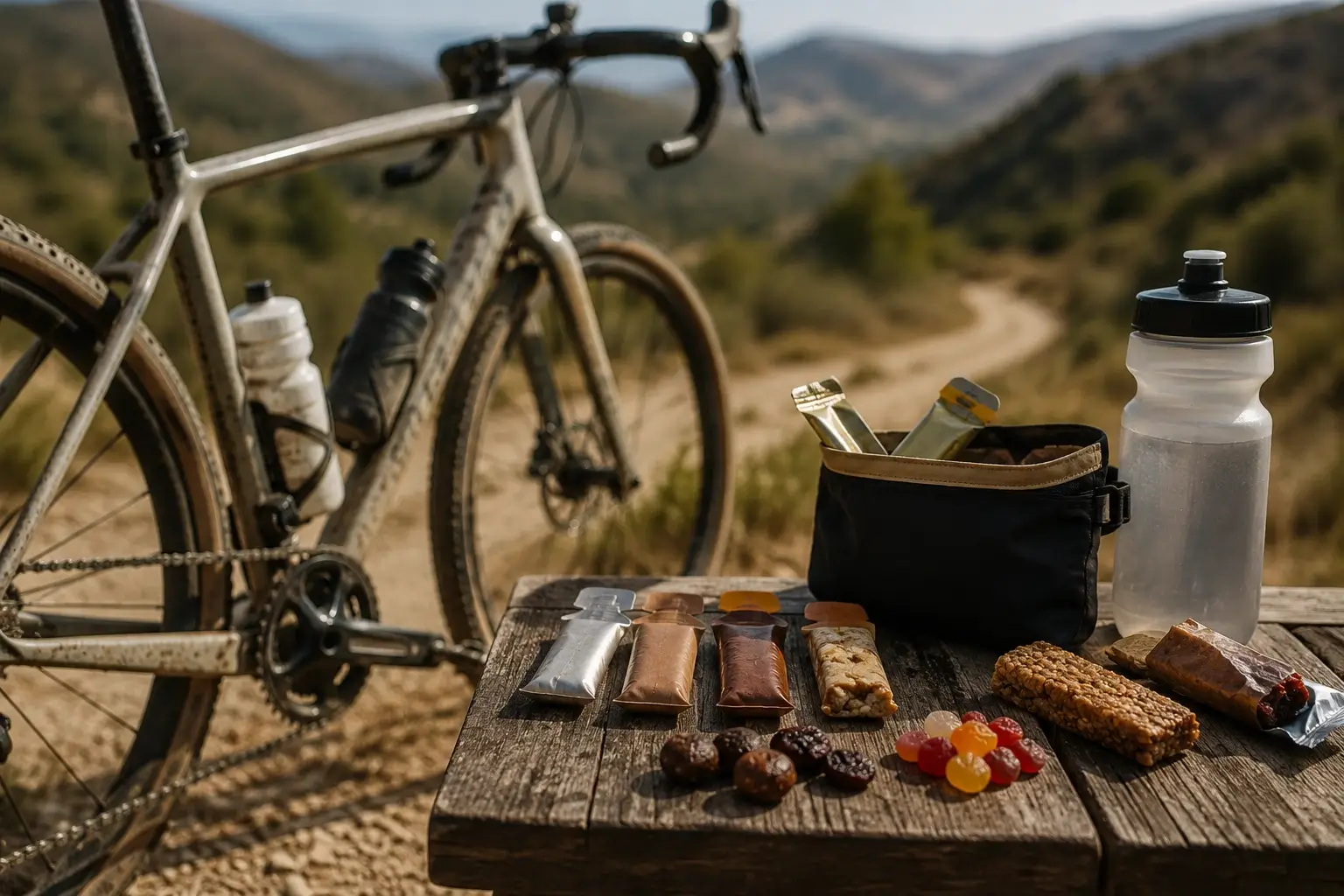
You cannot wait until race day to figure out nutrition. Gravel races often last 4, 6, 8, or more hours, and poor fueling can turn a good fitness day into a survival day.
Start practicing during long rides. Many riders aim for 200 to 300 calories per hour, mostly from carbohydrates. Some athletes can handle more, but your gut needs time to adapt.
Find What Your Stomach Handles
Your fueling plan should be tested in training, not guessed at the start line. Try different combinations of sports drink, gels, chews, bars, bananas, rice cakes, or other simple foods.
Pay attention to what works when the ride gets hot, rough, or intense. A food that feels fine on an easy spin may not sit well during a hard 5 hour gravel ride.
Hydration Matters Too
Gravel races can have long gaps between aid stations. That means you need to know how much fluid you typically need and how you will carry it.
Practice with bottles, hydration packs, or frame bags before race day. Make sure you can drink while riding rough terrain, and consider electrolytes when heat, sweat rate, or race duration becomes a factor.
Build Strength For Long, Rough Miles
Strength training helps gravel riders stay durable. Long hours on rough roads can fatigue your back, shoulders, neck, hips, and core, not just your legs.
You do not need a complicated gym routine. Two short strength sessions per week can help improve stability, posture, and fatigue resistance.
Good movements may include:
- Squats
- Lunges
- Step-ups
- Romanian deadlifts
- Planks
- Dead bugs
- Side planks
Keep strength training consistent and controlled. The goal is to support your riding, not leave your legs too sore for key bike sessions.
Dial In Your Gravel Bike Setup
Your equipment should make the race feel smoother, not more stressful. Training is the time to test your setup, tire pressure, gearing, shoes, saddle, hydration, and repair kit.
Tubeless tires are common in gravel because they can reduce flats and allow lower pressures for better traction and comfort. Wider tires can also help on rougher terrain, depending on the course.
Practice With Your Gear
Do not wait until race week to test new equipment. Ride with the same bottles, bags, shoes, tires, tools, and nutrition you plan to use on race day.
You should also know how to fix basic problems. Practice using a plug tool, changing a tube, inflating with CO2 or a hand pump, and making small adjustments before you are tired and stressed mid-race.
Create A Simple Weekly Gravel Training Structure
A good gravel training week should include endurance, intensity, skills, recovery, and strength. The exact mix depends on your experience, race distance, schedule, and goals.
A simple week might look like this:
- Monday: Rest or mobility
- Tuesday: Intervals or torque work
- Wednesday: Easy endurance ride
- Thursday: Gravel skills ride or tempo ride
- Friday: Rest or strength training
- Saturday: Long gravel ride
- Sunday: Recovery ride or easy endurance
This structure can be adjusted based on fatigue, weather, work stress, and family commitments.
How To Train For A 50 Mile Gravel Race
A 50 mile gravel race is a great goal for newer riders and experienced cyclists who want a challenging but manageable event. Most athletes benefit from 8 to 12 weeks of consistent preparation.
Your main goals should be building endurance, getting comfortable on gravel, and practicing fueling. You do not need to ride 50 miles every weekend, but building toward 35 to 45 miles on mixed terrain can help create confidence.
How To Train For A 100 Mile Gravel Race
A 100 mile gravel race requires more patience and durability. You need to manage pacing, fueling, mental focus, and fatigue for a much longer day.
A 12 to 16 week training block is a strong starting point for many riders. Long rides, steady endurance, back-to-back riding days, and race-simulation workouts can all help prepare your body for the demands of the event.
Avoid Common Gravel Training Mistakes
Many riders make gravel harder than it needs to be by training too hard too often. If every ride becomes a race, you may build fatigue faster than fitness.
Other common mistakes include skipping recovery, ignoring strength work, never practicing on gravel, testing new gear on race day, underfueling long rides, or choosing tire pressure without considering the terrain.
Use Recovery As Part Of The Plan
Recovery is not wasted time. It is where your body absorbs the training and becomes stronger.
Easy days should feel easy. Rest days should be respected. If life stress is high, your body may need more recovery even if your riding volume looks normal on paper.
How A Coach Can Help With Gravel Racing
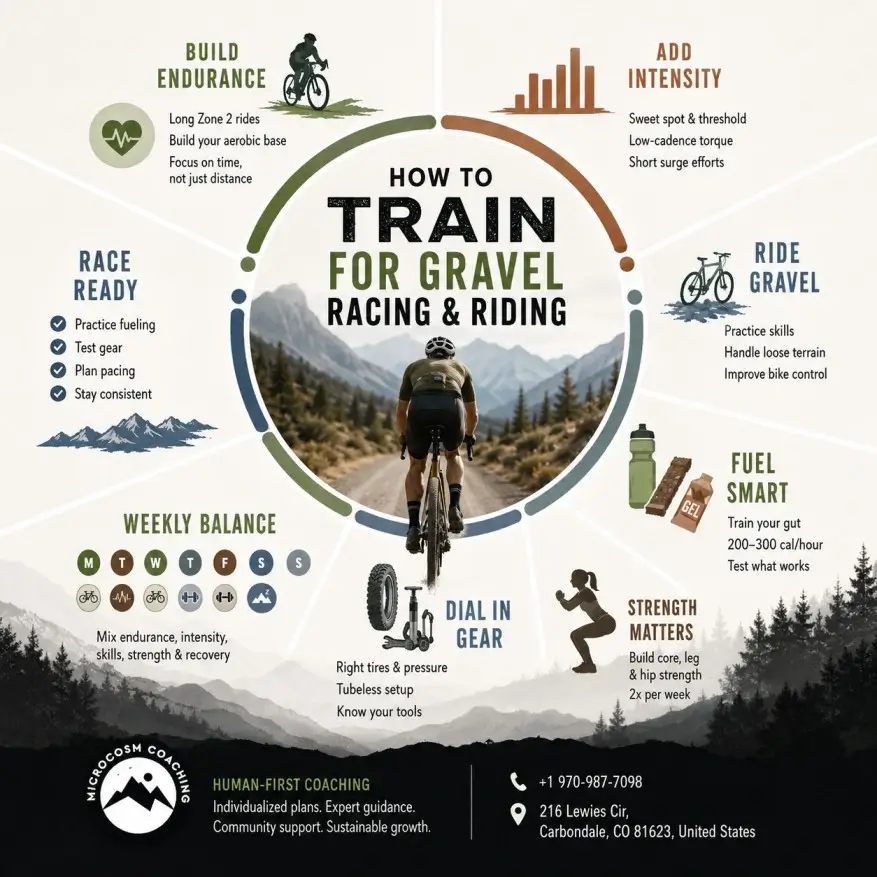
Gravel racing rewards smart, consistent training, and Microcosm Coaching helps athletes build that fitness around real life. Through individualized cycling and endurance coaching, riders can prepare for gravel events with structured endurance rides, interval work, fueling practice, recovery, and strength training tailored to their goals and schedule.
Microcosm’s Adventure, Journey, and Summit coaching programs include personalized training plans, regular coach feedback, daily check-ins, and community support, helping riders train confidently for their next gravel race while building sustainable long-term fitness.
Final Thoughts
Gravel racing rewards preparation. You do not need to be perfect, but you do need to be consistent.
Build your aerobic base, ride real gravel, practice fueling, add smart intensity, strengthen your body, and test your equipment early. When all of those pieces come together, you will show up to the start line with more confidence and a much better chance of enjoying the ride.
FAQs
How Do You Train For Gravel Racing?
Train for gravel racing with a mix of long endurance rides, gravel skills practice, sweet spot or threshold intervals, low-cadence strength work, fueling practice, and recovery. The goal is to build fitness and confidence for long, rough, unpredictable terrain.
How Long Does It Take To Train For A Gravel Race?
Most riders benefit from 8 to 12 weeks of training for a shorter gravel race and 12 to 16 weeks for longer events. Your timeline depends on your current fitness, race distance, available training time, and experience on gravel.
Can Beginners Do Gravel Racing?
Yes, beginners can do gravel racing if they choose the right distance and prepare gradually. A beginner should focus on steady endurance, basic bike handling, fueling practice, and getting comfortable riding on mixed terrain.
How Many Miles Should I Ride Before A 50 Mile Gravel Race?
You do not always need to ride the full race distance in training. Many riders preparing for a 50 mile gravel race build toward 35 to 45 mile long rides, especially if those rides include similar terrain and climbing.
How Do I Train For A 100 Mile Gravel Race?
To train for a 100 mile gravel race, focus on long aerobic rides, fueling practice, pacing, gravel handling, strength training, and recovery. Longer race-simulation rides can help you test your equipment, nutrition, and mental strategy.
Do I Need To Train On Gravel?
Yes, training on gravel is very helpful. Road fitness can build your engine, but gravel practice helps you improve line choice, braking, climbing traction, descending confidence, and comfort on loose or rough surfaces.
What Should I Eat During A Gravel Race?
Most riders should focus on easy-to-digest carbohydrates from sports drinks, gels, chews, bars, or simple real food. Practice your race-day fueling during long rides so your stomach is ready for the effort.
Is Strength Training Good For Gravel Riding?
Yes, strength training can improve durability, posture, climbing strength, and fatigue resistance. Core, hip, leg, and upper-body stability all help you stay comfortable and controlled during long rides on rough roads.