
June 12, 2026
Your Guide To The Olympic Running Distances
Olympic running is one of the clearest ways to see the full range of human performance.
In one event, an athlete explodes down the straightaway for 100 meters. In another, a marathoner manages effort, fueling, heat, patience, and resilience for 26.2 miles. Between those two extremes are races that ask for speed, strength, endurance, tactics, rhythm, and the ability to stay calm when everything gets uncomfortable.
That is what makes Olympic running so compelling. The distances may look simple on paper, but each event has its own energy system, rhythm, skill set, and personality.
Whether you are watching the Olympics, training for your first race, or building toward a bigger endurance goal, understanding the Olympic running distances can help you see running in a more complete way.
What Are The Olympic Running Distances?
Olympic running events are part of athletics, also known as track and field. Most events take place on a standard 400-meter outdoor track, while the marathon is raced on the roads.
The main Olympic running distances include sprints, hurdles, middle-distance races, long-distance track races, steeplechase, relays, and the marathon. Each one rewards a different blend of power, efficiency, endurance, and race craft.
Here is a simple breakdown:
| Event | Category | Distance | Track Laps |
|---|---|---|---|
| 100m | Sprint | 100 meters | Straightaway |
| 200m | Sprint | 200 meters | Half lap |
| 400m | Sprint | 400 meters | 1 lap |
| 800m | Middle distance | 800 meters | 2 laps |
| 1500m | Middle distance | 1500 meters | 3.75 laps |
| 3000m Steeplechase | Long distance with barriers | 3000 meters | 7.5 laps |
| 5000m | Long distance | 5000 meters | 12.5 laps |
| 10000m | Long distance | 10000 meters | 25 laps |
| Marathon | Road running | 42.195 km | Road course |
The shorter events are not “easier” just because they are over quickly. The longer events are not “harder” just because they take more time. Each Olympic running distance is hard in its own very specific way.
Olympic Sprint Distances
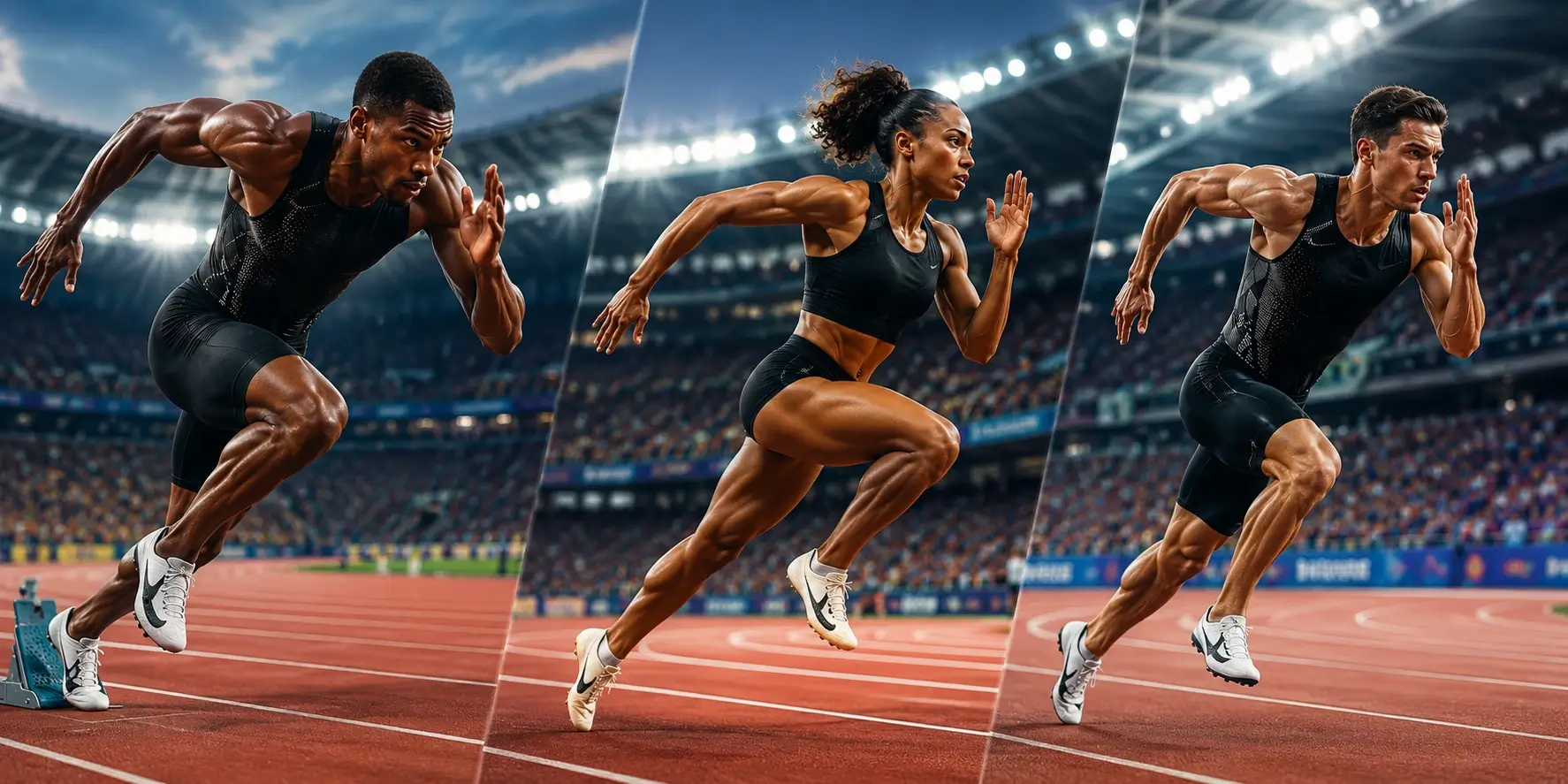
Sprint events are built around acceleration, power, top-end speed, and the ability to hold form at extremely high intensity.
For many runners, sprinting looks simple from the outside. Start fast, run fast, finish fast. But at the Olympic level, these races are deeply technical. Start mechanics, stride frequency, relaxation, posture, and timing all matter.
100 Meters
The 100m is the shortest Olympic running event. It is run on the straightaway and is often considered the purest test of speed.
Athletes need a powerful start, rapid acceleration, and the ability to stay relaxed while moving at maximum velocity. There is almost no time to recover from a mistake. A poor start, a tight upper body, or one technical error can change the entire race.
200 Meters
The 200m is half a lap around the track. It starts on the curve and finishes on the straightaway.
This race asks athletes to combine speed with control. Running the curve well takes rhythm and body awareness. Athletes need to accelerate hard, manage the bend, and still have the strength to finish powerfully down the straight.
400 Meters
The 400m is one full lap of the track. It is technically a sprint, but it requires a serious amount of speed endurance.
This event has a reputation for being brutally difficult because athletes are running near maximum effort for long enough to accumulate major fatigue. The best 400m runners are powerful, efficient, and mentally tough enough to keep moving well when their body is asking them to slow down.
Olympic Hurdle Events
Hurdle events add rhythm, coordination, and technical precision to sprinting.
The main Olympic hurdle events include the women’s 100m hurdles, men’s 110m hurdles, and 400m hurdles for both men and women. These races are not just sprint races with obstacles placed in the way. They require athletes to maintain speed while clearing barriers with as little disruption as possible.
In the short hurdles, rhythm between barriers is everything. In the 400m hurdles, athletes need the speed endurance of a 400m runner plus the technical skill to clear hurdles while fatigued.
Olympic Middle-Distance Running Events
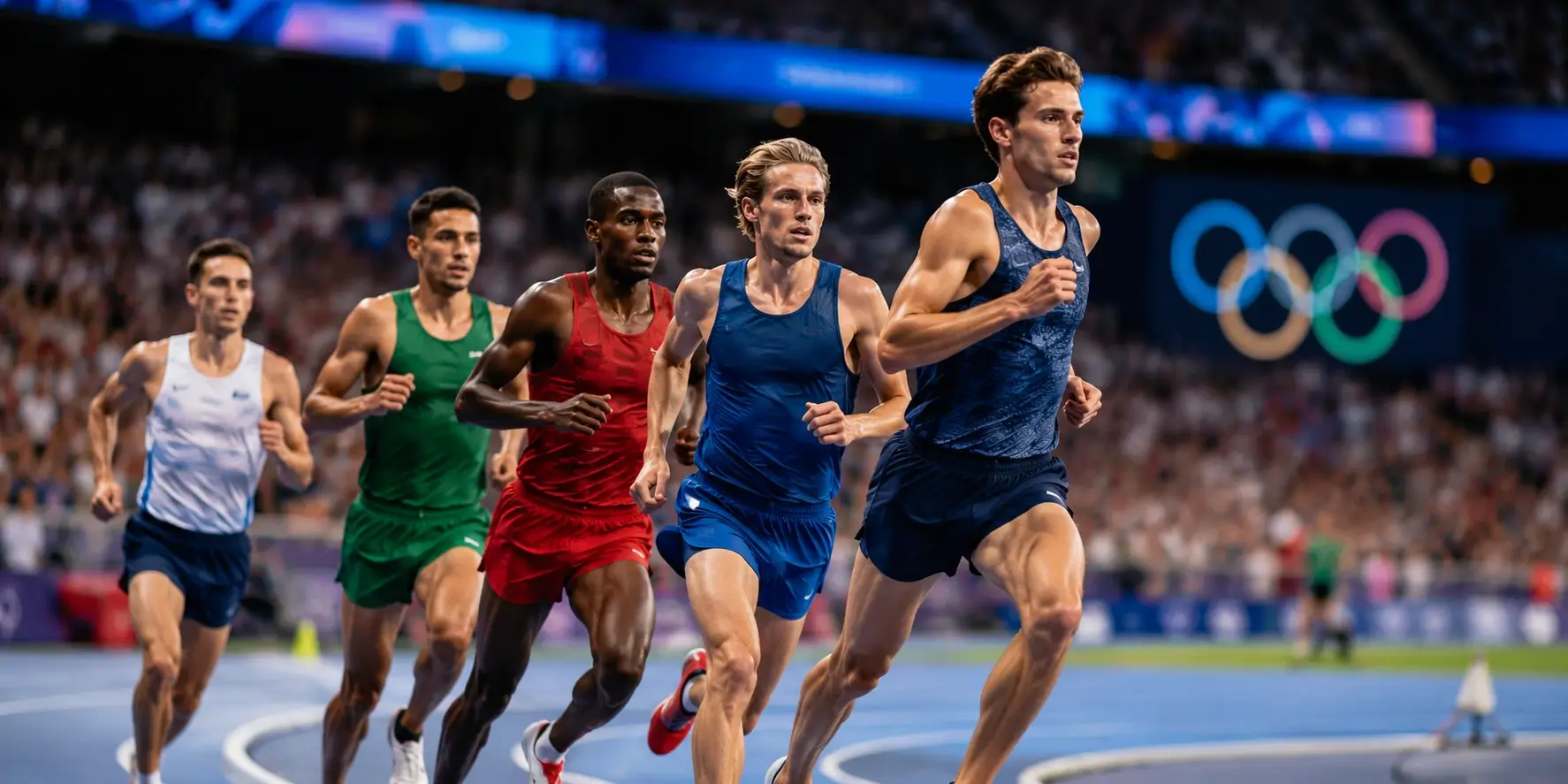
Middle-distance races sit between sprinting and endurance running. They require speed, aerobic strength, tactical awareness, and a strong finishing kick.
These races are fascinating because they are rarely just time trials. Positioning matters. Surges matter. Patience matters. Athletes must decide when to conserve energy, when to respond, and when to commit.
For everyday runners, middle-distance events are a reminder that fitness is not only about going longer. Sometimes progress comes from learning how to run smoother, faster, and more efficiently at controlled discomfort.
800 Meters
The 800m is two laps around the track. It is one of the most intense Olympic running events because it blends speed and endurance in a way that leaves very little room to hide.
Athletes must run fast from the beginning, but not so fast that they fall apart before the finish. The first lap requires control. The second lap requires courage, efficiency, and the ability to maintain form through rising fatigue.
1500 Meters
The 1500m is 3.75 laps around the track and is often called the metric mile. It is shorter than a true mile, but it plays a similar role in international championship racing.
This event rewards runners who can combine aerobic strength with speed and tactics. Some races are fast from the gun. Others are slow and strategic before exploding into a furious final lap.
The 1500m is a beautiful example of why running is not only physical. It is also tactical, emotional, and deeply responsive to what is happening in the moment.
Is There An Olympic Mile?
There is no Olympic mile race in the current Olympic program.
The closest Olympic event is the 1500m, which is often called the metric mile. A true mile is 1609.34 meters, so the 1500m is slightly shorter.
This can be confusing for runners in countries where the mile is a familiar race distance. But at the Olympic level, the 1500m is the standard middle-distance event.
Olympic Long-Distance Track Events
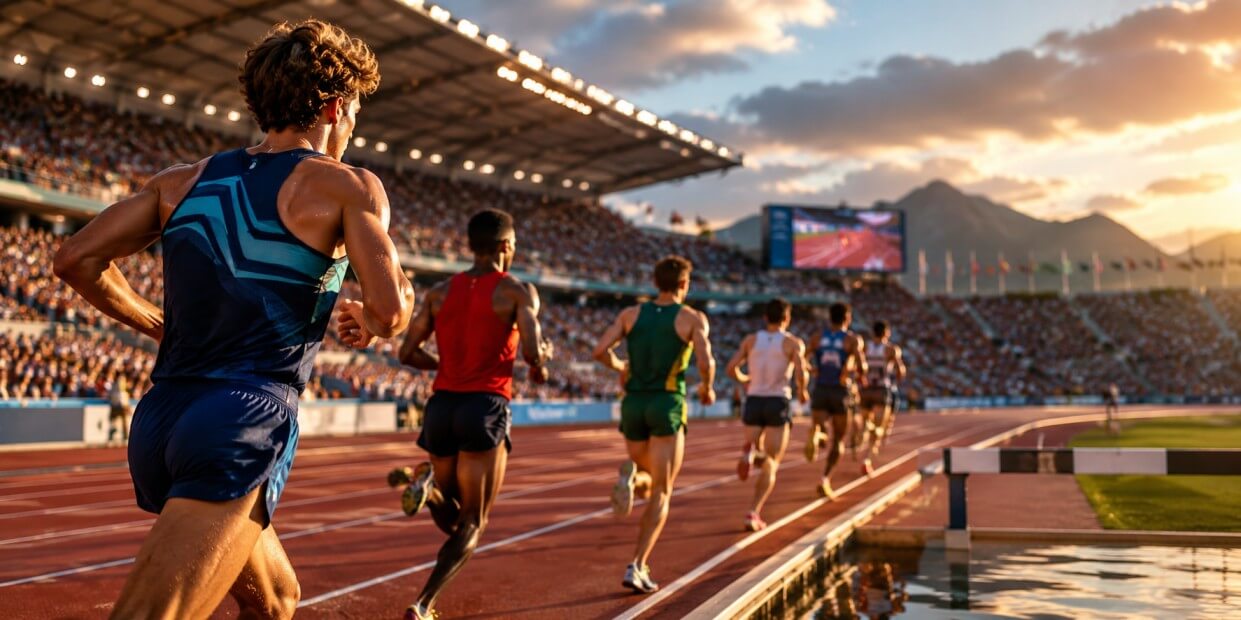
Long-distance track events require aerobic capacity, pacing discipline, efficient mechanics, and the mental ability to stay engaged for many laps.
These races are not simply about who can suffer the longest. At the Olympic level, the 5000m and 10000m are tactical, fast, and often decided by small moves. Athletes need to know when to respond, when to stay calm, and when to trust their training.
This is where endurance runners can take a lot of inspiration. Long-distance racing is about patience, but it is also about readiness. You build the engine over time so you can respond when the race asks a question.
3000m Steeplechase
The 3000m steeplechase is 7.5 laps around the track with barriers and water jumps.
It is one of the most unique Olympic running events because it combines endurance, coordination, rhythm, and obstacle clearance. Athletes must maintain momentum while repeatedly jumping barriers, including a water jump that disrupts stride and rhythm.
The steeplechase rewards runners who are strong, adaptable, and comfortable with controlled chaos.
5000 Meters
The 5000m is 12.5 laps around the track. It is the same distance as a common 5K road race, but Olympic 5000m racing is much faster and more tactical.
This event requires aerobic power, strong mechanics, and the ability to change gears late in the race. Many 5000m races come down to a fast final kilometer or final lap, which means athletes must arrive at the end tired but not broken.
For recreational runners, the 5000m is one of the easiest Olympic distances to understand because many people have raced a 5K. But the Olympic version shows how much speed, tactics, and efficiency can live inside an endurance event.
10000 Meters
The 10000m is 25 laps around the track. It is the longest Olympic running event held on the track.
This race demands deep aerobic strength, patience, and concentration. Athletes must manage pace while staying alert to every move around them. A small lapse can mean losing position, covering an unnecessary surge, or missing the decisive break.
The 10000m is a reminder that endurance is not passive. It is active attention over time.
Olympic Marathon Distance
The Olympic marathon is 42.195 kilometers, or 26.2 miles. Unlike the track events, it is raced on the roads.
The marathon is often seen as the ultimate Olympic endurance running event because it asks athletes to balance speed with restraint for more than two hours. Pacing, fueling, hydration, weather, course profile, and emotional control all matter.
A great marathon is not built from one heroic workout. It is built from months and years of consistency, recovery, long runs, aerobic development, and learning how to manage effort.
That is one reason so many athletes eventually seek structured marathon coaching. The distance rewards commitment, but it also rewards smart planning, honest feedback, and a training process that fits the full reality of an athlete’s life.
Olympic Relays
Olympic relays are team events where speed meets timing.
The 4x100m relay features four athletes each running 100 meters. It is incredibly fast, but the baton exchanges are just as important as raw speed. A team with four great sprinters can still lose if the exchanges are inefficient or poorly timed.
The 4x400m relay features four athletes each running 400 meters. This event combines speed endurance, strategy, and team energy. The closing leg often becomes one of the most dramatic moments in track and field.
Relays are a powerful reminder that running is not always solitary. Even in a sport built around individual effort, community and trust can change the outcome.
Olympic Running Distances Vs Olympic Triathlon Distances
Some searchers confuse Olympic running distances with Olympic-distance triathlon. They are not the same thing.
Olympic running events are standalone races within track and field. These include events like the 100m, 1500m, 5000m, 10000m, and marathon.
Olympic-distance triathlon is a multisport event that includes swimming, cycling, and running. The run portion of an Olympic-distance triathlon is 10K, but it comes after the swim and bike.
That distinction matters because the training demands are different. A pure 10K runner can organize training around running performance. A triathlete has to balance three sports, fatigue across disciplines, and transitions.
For athletes who enjoy blending endurance sports, thoughtful cycling coaching and gravel riding support can be a valuable part of building durability without making every aerobic session another run.
Which Olympic Running Distance Is The Hardest?
There is no single hardest Olympic running distance. The answer depends on the athlete.
The 100m requires explosive power and precision. The 400m asks athletes to sprint through deep fatigue. The 800m blends speed and pain tolerance in a uniquely demanding way. The 5000m and 10000m require aerobic strength, tactics, and finishing speed. The marathon demands patience, fueling, durability, and the ability to keep making good decisions late in the race.
The better question is not which event is hardest overall. It is which event asks the most from a specific athlete.
That same idea applies to everyday training. A 5K can be a huge goal. A first marathon can be life-changing. A mountain ultra can ask for months of patient preparation. The distance matters, but the human behind the distance matters more.
How Runners Can Use Olympic Distances In Their Own Training
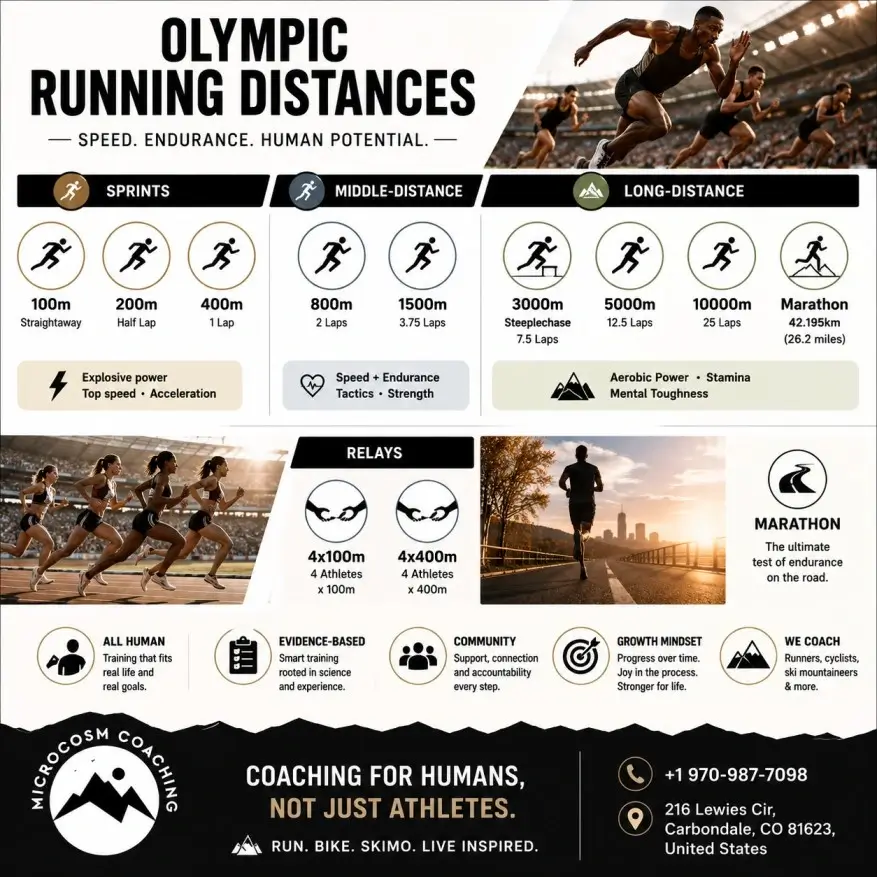
Most runners are not training for the Olympics. That is perfectly fine.
Olympic running distances can still teach us a lot. They show that running development is not only about adding more miles. Speed, strength, mechanics, recovery, confidence, and long-term consistency all play a role.
A marathoner can benefit from strides and short intervals. A trail runner can benefit from aerobic base work and controlled tempo efforts. A newer runner can use track distances to understand pacing, effort, and progression.
This is where individualized coaching becomes powerful. A good plan does not copy what elite runners do. It translates sound training principles into the life of the athlete in front of the coach.
Microcosm Coaching takes that human-first approach through personalized running coaching for busy athletes, daily check-ins, feedback, and adjustments based on real life. The goal is not to force an athlete into a rigid system. The goal is to build a process that supports long-term growth, joy, and consistency.
For runners moving toward longer trail or ultra goals, the Olympic distances can still be useful reference points. Shorter efforts build power and efficiency. Longer aerobic work builds durability. A thoughtful ultra trail running coach can help connect those pieces into a sustainable path toward bigger mountain and endurance goals.
Final Thoughts
Olympic running distances show the whole spectrum of the sport.
The 100m celebrates explosive speed. The 1500m rewards control, tactics, and finishing power. The 5000m and 10000m showcase endurance and patience on the track. The marathon asks athletes to manage effort, fueling, and resilience over 26.2 miles.
For runners watching at home, the lesson is not to compare yourself to Olympians. The lesson is to appreciate how many ways there are to grow as an athlete.
You can work on speed. You can build endurance. You can improve pacing. You can become more durable, more confident, and more connected to the process.
And whether your goal is a first 5K, a faster marathon, a trail race, an ultra, or a lifetime of sustainable movement, the right training should meet you where you are and help you keep going.
FAQs
What Running Distances Are In The Olympics?
The main Olympic running distances include 100m, 200m, 400m, 800m, 1500m, 3000m steeplechase, 5000m, 10000m, and the marathon. The Olympics also include hurdle and relay events.
What Is The Longest Olympic Running Distance?
The marathon is the longest Olympic running event. It is 42.195 kilometers, or 26.2 miles, and is raced on the roads.
What Is The Longest Olympic Track Running Event?
The 10000m is the longest Olympic running event held on the track. It is 25 laps around a standard 400-meter outdoor track.
Is There An Olympic Mile Race?
No, the Olympics do not currently include a mile race. The closest event is the 1500m, which is often called the metric mile.
How Many Laps Is The Olympic 5000m?
The Olympic 5000m is 12.5 laps around a standard 400-meter track.
How Many Laps Is The Olympic 10000m?
The Olympic 10000m is 25 laps around a standard 400-meter track.
What Is The Olympic Marathon Distance?
The Olympic marathon distance is 42.195 kilometers, which is 26.2 miles.
What Is The Difference Between Olympic Running And Olympic Triathlon?
Olympic running events are standalone track or road races. Olympic-distance triathlon is a multisport event that includes swimming, cycling, and a 10K run.
What Is The Shortest Olympic Running Event?
The 100m is the shortest Olympic running event. It is run on the straightaway of the track.
Which Olympic Running Event Is Best For Beginner Runners To Understand?
The 5000m is often easiest for recreational runners to understand because it matches the common 5K race distance, although Olympic 5000m racing is much faster and more tactical.