
July 25, 2026
Race Day Strategies: Start Line Time Management
You trained for months, tested your fueling, chose your race shoes, and worked through the final taper. Then race morning arrives, and suddenly you are watching the clock while sitting in traffic, searching for a bathroom, or trying to find a corral that closes in eight minutes.
Start line time management may not feel like part of athletic performance, but it can shape how you begin the race. A thoughtful race morning routine protects your energy, lowers unnecessary stress, and helps you reach the starting line physically warm, mentally settled, and ready to follow your plan.
Why Start Line Time Management Matters
Race day creates a type of pressure that is difficult to recreate during training. Roads are closed, parking areas fill up, bathroom lines grow, and thousands of athletes may be moving through the same space. Even experienced runners can feel overwhelmed when a familiar routine is placed inside an unfamiliar environment.
Feeling rushed can raise your heart rate, shorten your warm-up, interrupt your fueling, and tempt you to make reactive decisions. Arriving far too early can create different problems. You may spend hours standing, get cold, become hungry, or use emotional energy before the race even begins. The goal is not to arrive as early as possible. It is to create the right buffer for your race.
Build Your Race Morning Timeline Backward
The most reliable race day strategy is to build your schedule backward from the moment you must enter your assigned corral. Do not start with the general race time listed on the event website. Large races often have multiple waves, separate start zones, security checkpoints, and corral closures.
Find your personal start time and identify when your corral closes. From there, subtract the time needed for your final bathroom visit, warm-up, gear check, clothing removal, fueling, and walk to the start. Then add transportation and an appropriate delay buffer.
Start With Your Corral Deadline
Treat the official corral closing time as a firm deadline. A race may begin at 8:00 a.m., but your wave might not start until 8:45. Alternatively, your corral could close well before the first runners cross the line.
Review the participant guide and confirm your wave number, corral location, entry route, security requirements, and estimated walk from the race village. Save these details on your phone so you can access them even if cellular service becomes unreliable.
Add Your Final Pre-Race Tasks
Work backward from corral entry and assign realistic time to every task. Your final routine might include a bathroom stop, five to ten minutes of light movement, removing extra clothing, taking a gel, setting your watch, and walking to the correct entrance.
Avoid packing these activities into the final ten minutes. A small delay at the bathroom or gear-check area can quickly consume that window. When each task has its own place in the schedule, you are less likely to feel rushed.
Review The Race Logistics Before Race Morning
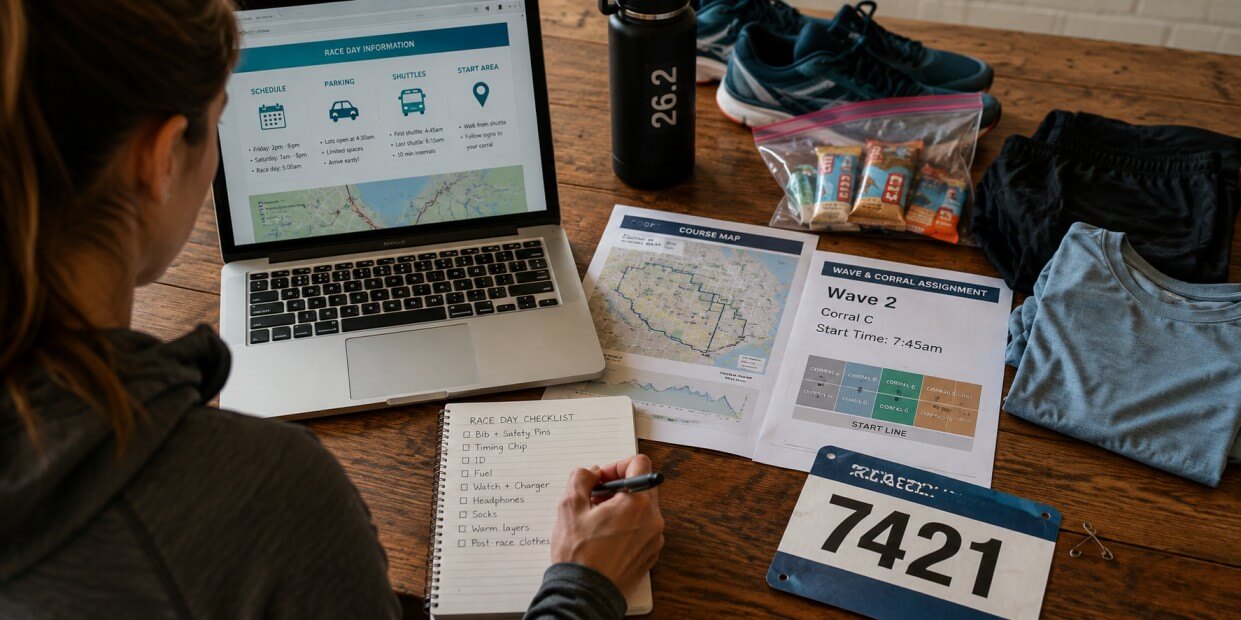
Race logistics deserve the same attention as pacing and fueling. Read the participant guide several days in advance and revisit it the night before. Look for updates involving road closures, shuttle schedules, parking restrictions, security rules, bag-drop deadlines, and weather-related changes.
This kind of preparation is especially important for destination races, point-to-point courses, and large city marathons. Microcosm’s guide to race and adventure logistics offers a deeper framework for reviewing the course, aid stations, equipment, and event details before a major effort.
Confirm Transportation And Parking
Normal travel time is rarely enough on race morning. Closed roads, unfamiliar parking areas, rideshare restrictions, shuttle lines, and long walks can add significant time. Map your route in advance and identify a backup option where possible.
When the race controls transportation, taking an earlier shuttle is usually safer than depending on the final available departure. You can always spend a little extra time staying warm at the venue, but you cannot recover time after a missed bus.
Save Essential Details Offline
Take screenshots of your parking confirmation, shuttle pass, bib assignment, corral map, and start-area layout. Include your post-race meeting point if friends or family will be waiting for you.
Large crowds can weaken mobile service, and event apps do not always load quickly. Offline information removes one more source of uncertainty when you are trying to stay calm and conserve energy.
Set Your Wake-Up And Breakfast Times
Your wake-up time should reflect your practiced breakfast routine, digestion needs, transportation plan, and assigned start. Many runners feel best when they finish breakfast two to three hours before racing, but your long-run experience should guide the final decision.
Race morning is not the time to copy another runner’s routine. Eat foods you have already tested, use the same caffeine strategy you practiced in training, and avoid drinking excessive fluid simply because you feel nervous.
Prepare Your Equipment The Night Before
Lay out everything you need before going to bed. Attach your bib, charge your devices, organize your fuel, and check the weather one final time. This reduces the number of decisions you must make while you are still waking up.
Your preparation should cover:
- Race shoes, socks, and clothing
- Bib, timing chip, and identification
- Fuel, hydration, and required equipment
- Watch, phone, and headphones where permitted
- Throwaway layers or rain protection
- Dry clothing for after the finish
For marathon runners, these details should be rehearsed throughout the training cycle rather than introduced during race week. A well-structured first marathon training blueprint gives you opportunities to test your gear, fueling, pacing, and morning routine before the event.
Manage Bathroom Lines Strategically
Bathroom lines are one of the most common causes of race morning panic. Use the restroom before leaving home or your hotel, then locate the facilities shortly after arriving at the race venue.
Do not assume the line will become shorter closer to the start. It usually grows as more athletes arrive. If you think you may need another visit, make it earlier rather than waiting until your corral is about to close.
Know When To Leave The Line
A final bathroom stop may feel essential, but it should not cause you to miss a hard entry deadline. Decide in advance how much time you are willing to spend waiting and when you will leave the line.
This is another reason to arrive with a buffer. You want enough flexibility to manage a legitimate need without turning it into a crisis. Stay aware of the clock and move toward the corral before your remaining options disappear.
Time Your Warm-Up For The Distance
Your warm-up should prepare you for the intensity of the race without wasting energy. The right duration depends on the distance, weather, available space, and how your body responds to movement.
A fast 5K usually requires more activation than a marathon. A trail ultramarathon may begin at a controlled effort, but cold weather, technical terrain, and mandatory gear can still make some pre-race movement valuable.
Warm-Up For A 5K Or 10K
Shorter races begin at a higher intensity, so your body should be ready to move quickly from the start. An easy jog, dynamic mobility, drills, and a few short strides may help you feel more responsive.
Time the final strides close enough to the start that you remain warm, but leave enough room to reach the corral. If the starting area is crowded, finish the active portion of your routine before entering it.
Warm-Up For A Half Marathon Or Marathon
Long-distance runners generally need a shorter, lower-cost warm-up. A few minutes of easy movement, mobility, and light activation may be enough, particularly when the opening miles will be controlled.
Avoid turning the warm-up into an additional workout. You have already built your fitness. Race morning movement should help you feel ready without creating unnecessary fatigue, sweating through your clothes, or using fuel before the race begins.
Handle Gear Check And Clothing Efficiently
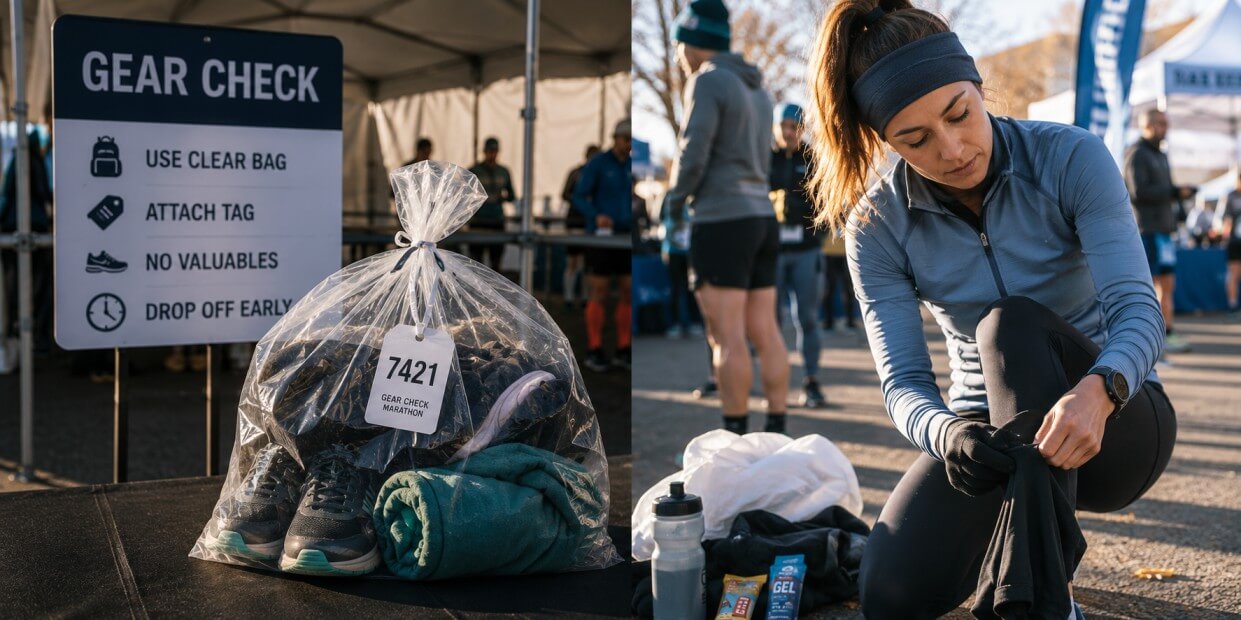
Gear check can be useful during cold races, destination events, or point-to-point courses. However, it also creates another deadline and another potential line. Decide whether you need it before race morning.
When possible, arrive wearing only what you need or use old clothing that can be removed in an approved donation area. Throwaway gloves, an old sweatshirt, or a disposable rain layer can help you stay comfortable while waiting.
Organize Your Race Essentials
Keep essential items in consistent, easy-to-reach locations. Know which pocket contains your first gel, where your identification is stored, and how you will carry your phone.
Avoid opening your entire bag in the corral to search for something small. Simple organization preserves focus and reduces the chance of leaving an important item behind.
Enter The Corral At The Right Time
A general recommendation to enter the chute ten minutes before the start may work at a small local event. It may be far too late for a major marathon with security checks and controlled access.
Follow the race’s official instructions rather than relying on a universal rule. Once inside, position yourself near runners with similar goals so you are less likely to weave around others during the opening minutes.
Complete Your Final Equipment Check
Before the race begins, confirm that your shoes are tied securely, your bib is visible, and your fuel is accessible. Set up your watch screen and allow the device time to find a GPS signal.
Then stop checking everything. Repeatedly adjusting equipment can become a nervous habit. Once you know the essentials are ready, bring your attention back to your breathing and your opening race plan.
Settle Your Nervous System
Waiting in the corral can make the race feel bigger than it is. Use slow breathing, relax your shoulders, and notice where you are holding tension. Focus on one or two simple cues for the opening miles.
You do not need to feel completely calm to race well. Nervousness often reflects care and excitement. The goal is to prevent that energy from controlling your pace or pulling your attention away from the plan.
Protect Your Energy During A Delayed Start
Weather, transportation issues, or course safety concerns can delay the starting gun. If that happens, stay warm and continue moving gently without repeating your full warm-up.
Take small sips or use a planned backup snack if the delay becomes substantial, but avoid eating or drinking out of anxiety. Reset your timeline based on the information available and focus on the tasks you can still control.
Start The Race With Patience
The first minutes may feel crowded and chaotic. Your GPS pace can be inaccurate, runners may stop suddenly, and the excitement of the start can make your planned effort feel unusually easy.
Avoid weaving aggressively or surging to recover a few lost seconds. Those choices cost energy and can disrupt your rhythm. The principles in this guide to race strategy for runners can help you connect your start-line routine with smarter pacing once the race is underway.
Do Not Race The First Mile
A stressful morning can create an urge to make up time immediately. Resist it. A few seconds lost in congestion rarely determine the final result, but an overly aggressive opening can affect the entire race.
Settle into your planned effort, check your breathing, and give the field time to spread out. Your race does not need to feel perfect from the first step. It needs to remain manageable long enough for your preparation to matter.
Common Start Line Time Management Mistakes
Even prepared runners can lose time by focusing on the wrong details. Most start-line problems come from underestimating transitions or depending on a schedule with no room for delays.
Common mistakes include:
- Planning around the first gun instead of your assigned wave
- Underestimating the walk from parking to the start
- Waiting too long to use the restroom
- Leaving gear check until the final minutes
- Warming up too early and getting cold again
- Drinking too much while waiting
- Ignoring corral closing times
- Starting too fast after feeling rushed
Build A Routine That Works For You
There is no single perfect race morning timeline. Athletes have different digestion patterns, mobility needs, anxiety responses, family responsibilities, transportation challenges, and accessibility requirements. Your routine should reflect your actual needs, not an idealized checklist.
Microcosm Coaching uses a human-first running coaching approach to help athletes rehearse pacing, fueling, logistics, and mental strategies within training. With individualized planning and regular feedback, race morning becomes less about managing surprises and more about executing familiar steps with confidence.
Frequently Asked Questions
What Time Should I Arrive Before A Race Starts?
For a small local race, arriving 45 to 60 minutes early may provide enough time. Large races may require 90 minutes or more after you reach the venue because of transportation, security, gear check, and corral access.
Always follow the official event instructions. Calculate your arrival from your corral deadline rather than relying only on the advertised starting time.
What Time Should I Wake Up Before A Marathon?
Work backward from your transportation departure and breakfast routine. Many runners wake three to four hours before their assigned start so they can eat, digest, prepare, and travel without rushing.
Your tested routine matters more than a universal recommendation. The day before the race, review your equipment, timing, meals, and transportation so fewer decisions remain in the morning. These day-before marathon strategies can help you complete that preparation.
When Should I Enter My Race Corral?
Enter before the official closing time listed in the participant guide. Small races may allow runners to join shortly before the gun, while large events can close access much earlier.
Allow time for the walk from the race village, security checks, and crowds. Treat the deadline as firm rather than planning to arrive at the final possible minute.
Should I Warm Up Before A Marathon?
Yes, but the warm-up is usually brief. Easy walking, light jogging, and dynamic movement can help you feel ready without wasting energy.
The opening miles should still be controlled. Your marathon warm-up should prepare your body, not prove your fitness.
What Should I Do If I Am Running Late?
Prioritize essential tasks. Move toward the required security point or corral, skip unnecessary gear adjustments, and shorten the warm-up rather than trying to complete everything at high speed.
Once the race begins, do not sprint to compensate for a stressful morning. Settle into the planned effort and allow yourself to reset.
How Can I Stay Calm At The Start Line?
Use slow breathing, relax your face and shoulders, and focus on one simple cue for the opening section. Avoid repeatedly checking the clock, weather, or other runners.